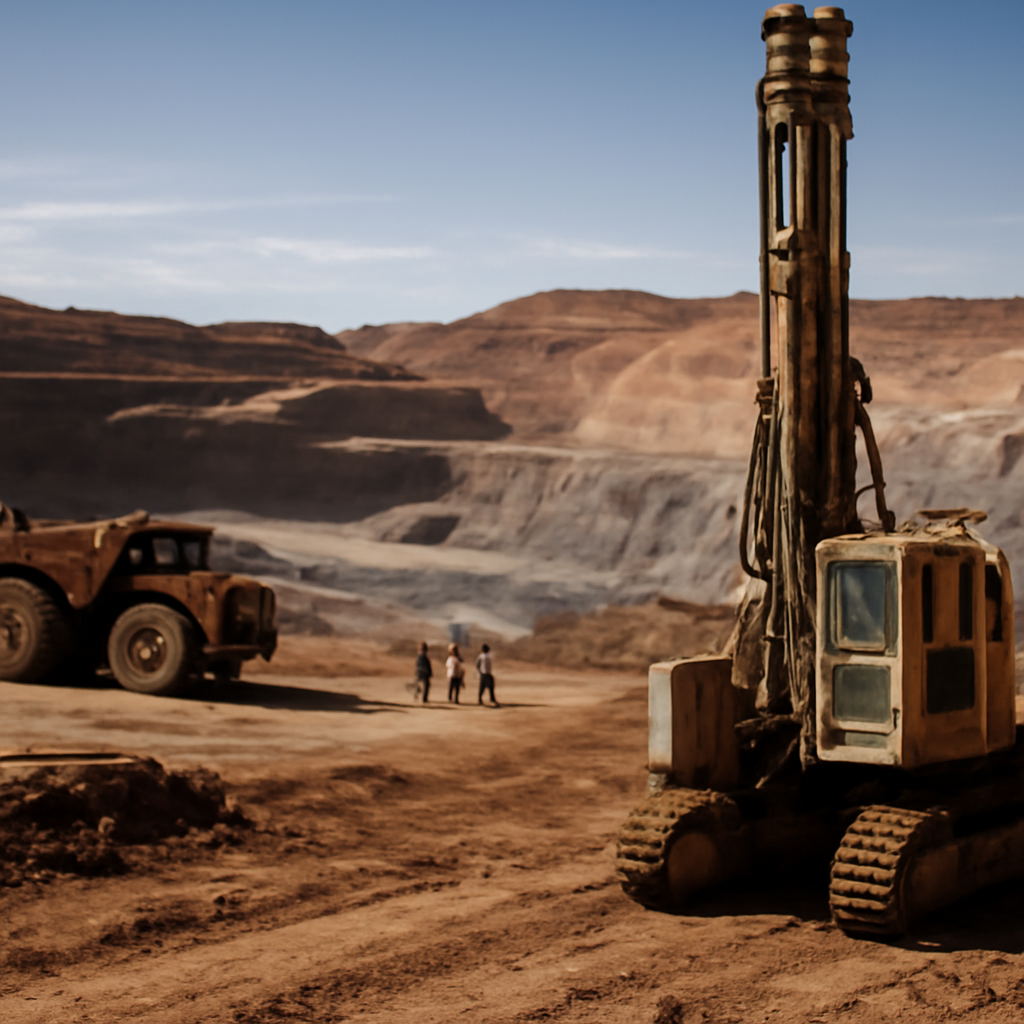
Global antimony mine production reached about 110,000 tonnes in 2025; China produced around 40,000 tonnes, and Australia about 1,300 tonnes.
The market and Beijing’s leverage
The global antimony market is small, concentrated and increasingly geopolitical. Those 2025 production figures come from the US Geological Survey and mask a critical change: control over access, not just production, has become the key lever. Beijing imposed export controls on antimony-related products and technologies in September 2024 and later restricted exports to the United States. While China subsequently suspended some US-specific restrictions, the broader licensing regime remains intact. Exporters still require Chinese approval, and military end-use restrictions continue to apply. In short, China has shown it can influence supply, pricing and market confidence even without producing the majority of antimony.
The Critical Minerals Sovereignty Test
Policy debate often freezes at the first question — who mines it. The source proposes a five-question test that forces a strategic view: who mines it, who processes it, who buys it, who stockpiles it and who can deny it. Strategic competition, the argument goes, begins at questions two through five. Treating critical minerals primarily as a mining opportunity misses where real vulnerabilities and levers of power sit: refineries, processing technology, purchasing relationships, stockpiles and export controls.

The cyber insurance questionnaire just landed. Now what?
SOC 2, HIPAA, insurance renewals - someone has to own security strategy. Nubivance provides fractional CISO leadership without the full-time salary.
Get a security leadHillgrove: a mine that could be more
Larvotto Resources’ Hillgrove antimony‑gold project in New South Wales is positioned to become Australia’s largest antimony producer. The company plans to commence production in 2026 and has stated Hillgrove could eventually supply around 7 percent of global antimony demand. Hillgrove’s existing infrastructure, operating history and established processing facilities give it advantages many critical‑minerals developments lack. Available evidence suggests the mine will almost certainly be built — the strategic choice is what comes after that.
Policy levers beyond the pit
A mine that only exports concentrate creates revenue; it does not, by itself, secure supply. The policy prescription in the source shifts emphasis toward industrial architecture. Canberra is urged to map the full antimony value chain from mine to military end‑user and to support long‑term processing partnerships with trusted allies in the United States, Japan, South Korea and Europe. Defence planners should identify antimony‑dependent systems and connect procurement decisions with industrial policy. Policymakers are also asked to examine whether strategic reserves could provide additional decision time during disruptions. The piece argues the highest‑return interventions may not be additional mining subsidies but support for non‑Chinese processing, refining, strategic purchasing arrangements and allied stockpiling.
What this means for defence planners, Larvotto Resources, and allied partners
- Defence planners — Identify systems that depend on antimony and align procurement so purchases bolster domestic or allied processing capacity rather than perpetuate vulnerabilities through concentrate exports.
- Larvotto Resources — The company’s Hillgrove project can be framed either as a conventional ore exporter or as the nucleus of an allied antimony ecosystem that includes processing, stockpiling and defence‑industrial demand.
- Allied partners (United States, Japan, South Korea, Europe) — Long‑term processing partnerships and strategic purchasing arrangements are singled out as practical levers to convert Australian production into resilient, non‑Chinese supply chains.
A practical litmus test for Australian strategy
Australia’s debate, the source warns, remains trapped at the level of geology. The country has already shown it can find critical minerals; the unanswered and consequential question is whether it can build the processing, stockpiling, industrial coordination and allied partnerships required to turn those deposits into sovereign capability. Hillgrove is presented as a tangible opportunity to answer that question: not merely to dig another hole, but to demonstrate whether Australian policy will prioritise the industrial systems that determine who can endure, mobilise and prevail when specific mineral supply chains come under pressure.