“Religious motives featured in 58 percent of terrorism charges since 2020,” AFP data show — a statistic that has shaped the federal government’s decision to keep explicit references to religion in Australia’s terrorism law.
Prime Minister Anthony Albanese’s decision
The prime minister has chosen to resist a recommendation from the Independent National Security Legislation Monitor (INSLM) to remove religious motivation from the statutory definition of terrorism. According to the source, that choice follows advice from the intelligence and policing agencies responsible for national security and is presented as a decision intended to protect public transparency rather than to expand covert powers.
Independent National Security Legislation Monitor Jake Blight
INSLM Jake Blight recommended, as reported, that references to religious motivation be removed from the Criminal Code and instead covered by the broader term “ideology.” Blight’s report was begun before the Bondi attack and, the source says, will likely be his last before his term ends this month. The INSLM’s statutory role is to review and, where necessary, challenge national security laws to ensure extraordinary powers remain necessary, effective and proportionate.

Audit-ready is a season. It shouldn't be.
Evidence in spreadsheets, controls drifting between audits, frameworks multiplying on flat headcount. Nubivance runs continuous compliance on Rapid7 Cyber GRC - SOC 2, HIPAA, ISO 27001, PCI, CMMC.
End the scrambleAustralian Federal Police and the Australian Security Intelligence Organisation
Both the Australian Federal Police (AFP) and the Australian Security Intelligence Organisation (ASIO) warned against the proposed change, the source reports. Their operational perspective is framed in the piece as a test ministers must weigh when deciding whether to accept independent reviewers’ recommendations; in this case, the government concluded the agencies’ objections outweighed the INSLM’s proposal.
Criminal Code definition of terrorism and courtroom implications
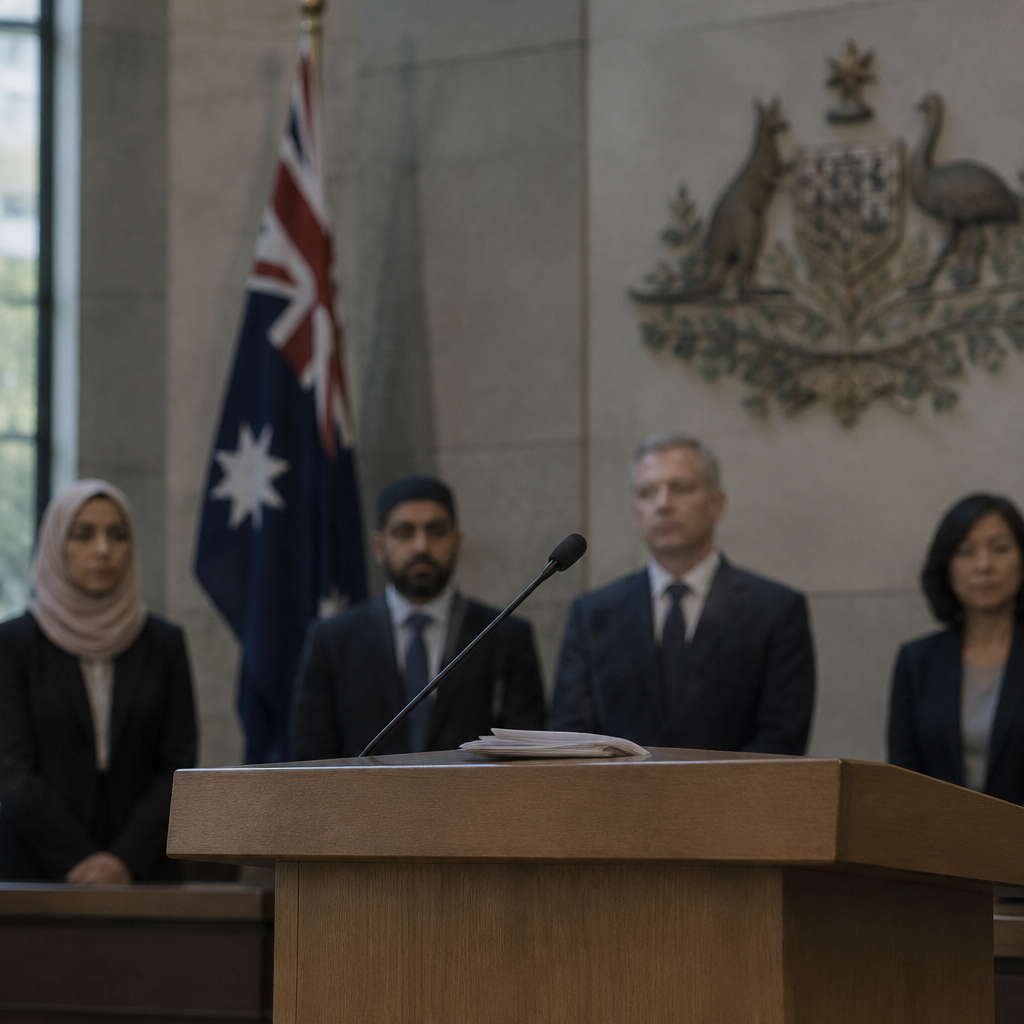
The Criminal Code defines terrorism, as cited in the source, as serious violence or threats intended to advance “a political, religious or ideological cause” and to intimidate the public or coerce governments. The article raises a practical question: if “religious” were removed from this statutory language, how would prosecutions and public characterisations of incidents such as the Bondi attack be handled? It argues that, even if a court could establish an ideology without naming religion, the public record and media reporting would still likely identify religious motivation, while official public updates might avoid it — a dynamic the source suggests would foster speculation and potentially undermine social cohesion.
Public transparency, social cohesion and the terror threat level
The source frames openness about motivation as central to Australia’s counter‑terrorism approach. It points to the long‑standing practice of publishing a terror threat level that, the piece notes, informs Australians each day that there is “a greater than 50 percent chance of an attack or attack planning in Australia.” That transparency, the argument continues, has been designed to keep the public “alert, not alarmed,” and to reassure citizens that governments and security agencies are working on the threat. Removing explicit reference to religion, the piece contends, would be the opposite of that transparency and could be read by the public as an institutional attempt to hide the truth.
What this means for the public, security agencies, and parliament
- The public: According to the source, maintaining religion in the definition preserves an official, transparent framework for communicating the motives behind terrorism incidents and may reduce speculation that could fracture social cohesion.
- Security agencies (AFP and ASIO): The agencies, the article reports, recommended against the change; keeping the current wording aligns law with their operational assessments and with the AFP data point that religious motives featured in 58 percent of terrorism charges since 2020.
- Parliament and elected government: The source frames the outcome as an example of representative democracy in action — independent reviewers assess laws, security agencies offer operational advice, elected governments decide, and parliament provides legislative checks, with the public able to hold politicians accountable.
The debate, as presented here, turned less on whether laws should be reviewed — the piece accepts that they must be — and more on whether a change would deliver a public benefit that outweighs security agencies’ advice and the value of transparency. The government has chosen to keep religious motivation in the Criminal Code’s definition of terrorism; the source argues that this choice preserves clarity in prosecutions, public communications, and the broader aim of social cohesion.
https://www.aspistrategist.org.au/why-pm-is-right-to-keep-religious-motivation-in-terrorism-law/