[SPONSOREDNUBIVANCE]
Rapid7 deployed right the first time.
Full-platform Rapid7 rollouts - InsightVM, InsightIDR, event sources, agents, tuning - by a Registered Partner who has done it at state-agency scale, including OT/SCADA.
Talk deploymentCybersecurity intelligence, threat analysis, and national security reporting.

The UK is set to supercharge its space defense capabilities with a whopping $10.6 billion spending plan, aiming to protect its interests and outmaneuver adversaries in the cosmos. Britain's national space strategy will focus on defense, national security, and economic growth, with a major push in satellite communications and other key areas.
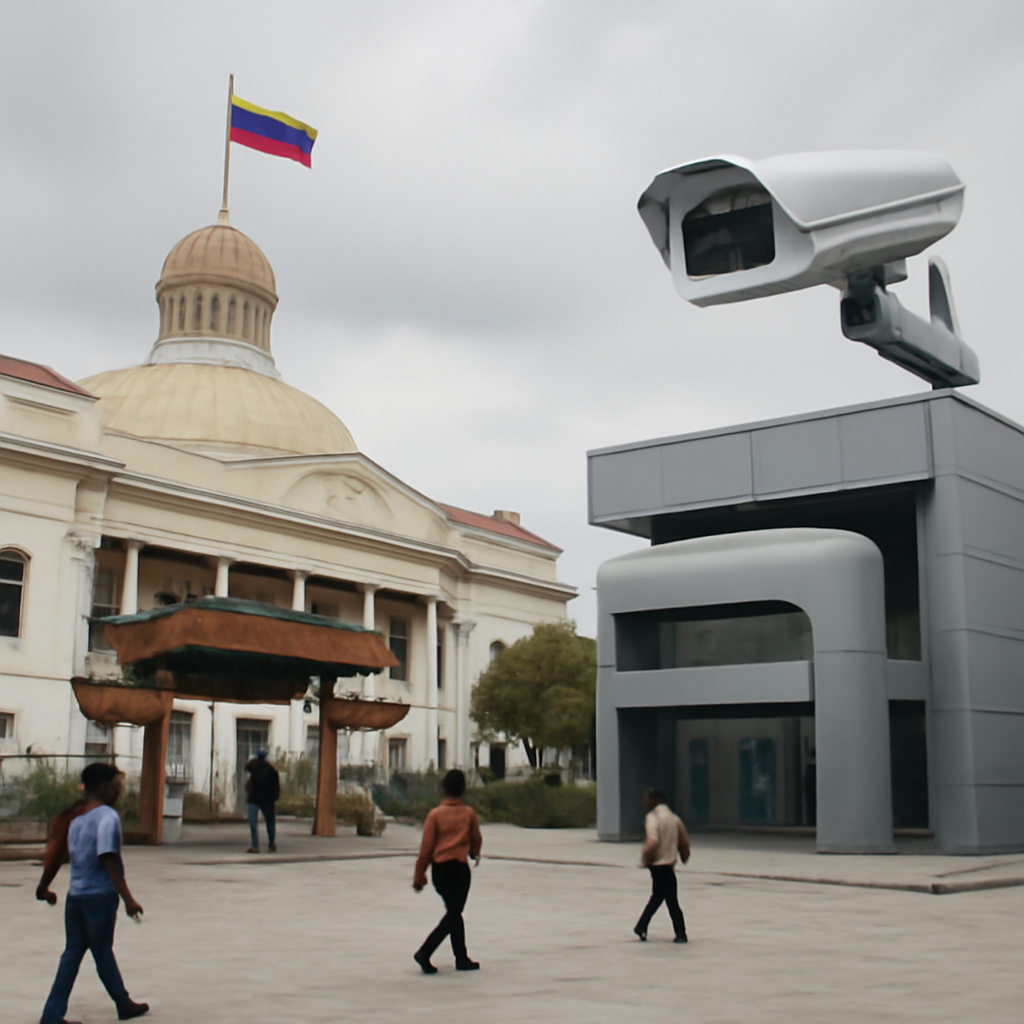
Venezuela is turning to China to upgrade its AI surveillance capabilities, with Vice President Delcy Rodriguez praising China's ability to provide AI for development, not domination. The country's existing surveillance infrastructure, built over two decades with significant Chinese tech support, includes a digital identity system, public-security cameras, and internet-control technology.

The US Army is bolstering its defenses against pandemic and biological threats with a new strategy that ensures global health events won't hinder its operations. By 2035, the Army aims to implement five key initiatives, starting with building a team of expert scientists, medical professionals, and operators to tackle biodefense challenges.

The NSA is turning to artificial intelligence to supercharge its data analysis, aiming to free up analysts from tedious manual work and get them straight to the most critical threats. By leveraging AI triage, the agency hopes to rapidly sift through vast amounts of data and prioritize urgent follow-ups.

Iran's Islamic Revolutionary Guard Corps pulled off a daring heist, capturing a cutting-edge US underwater drone near the Strait of Hormuz in a stealthy operation. The stunning footage shows the sleek submersible being recovered from the depths and displayed for all to see.

The US Navy is considering foreign frigate designs from Japan, South Korea, and Turkey for its new fleet, with a review process that could lead to building up to two ships overseas before production shifts to US yards. This development has sparked a friendly competition between Japan and South Korea, with both nations showcasing their advanced shipbuilding technologies.

Microsoft just dropped a massive Patch Tuesday update, fixing a whopping 974 vulnerabilities across its product lineup - including two zero-day flaws that hackers were actively exploiting before the fixes were even released. The update tackles critical issues, including privilege escalation bugs that could let attackers gain a foothold in your system.

Australia's mining sector is on a mission to ditch diesel and go electric, driven by a pressing need to reduce its staggering 32 million litres-per-day fuel consumption - and a sobering wake-up call from the Iran crisis that left the industry vulnerable to soaring diesel prices.
Full-platform Rapid7 rollouts - InsightVM, InsightIDR, event sources, agents, tuning - by a Registered Partner who has done it at state-agency scale, including OT/SCADA.
Talk deployment
Microsoft's new Age-Awareness APIs help keep young users safe in Windows apps by providing age ranges without revealing sensitive info like birthdays. This clever tech shares just the right amount of info, so apps know if you're a kid, teen, or adult, without exposing your personal details.

Microsoft just dropped a record 974 patches, including fixes for two vulnerabilities already being exploited as zero-days, forcing companies to scramble to keep up. This massive update is a stark reminder to stay vigilant, with experts warning of a vulnerability apocalypse.

Security researchers just uncovered a sneaky data-stealing vulnerability in ChatGPT, allowing hackers to secretly send instructions and swipe sensitive info from other users' accounts without leaving a digital trail. Fortunately, the issue was quickly reported to OpenAI and the affected system was swiftly shut down.

Get ready for a new era of cyber transparency: by September 11, 2026, EU manufacturers with digital products must report vulnerabilities to ENISA within 24 hours of discovery, and provide a detailed report within 72 hours. This mandate is just the beginning, with stricter engineering requirements kicking in on December 11, 2027.

A massive network of 119,000 fake online shops, dubbed DoppelCart, has been uncovered, stealing credit card info and personal data on a huge scale. This enormous operation dwarfs previous scams, with over 105,000 of the shops still active and snaring unsuspecting victims.

Hackers are exploiting a critical F5 BIG-IP flaw, known as CVE-2025-53521, to deploy a sneaky Linux rootkit that allows them to execute code on vulnerable servers. This alarming attack vector has already exposed 795 endpoints online, putting countless systems at risk.
Microsoft just dropped a major security update, KB5122878, for Windows 10, packing fixes for a whopping 966 vulnerabilities across its products - a must-install for anyone on long-term servicing and paid support tracks! If you're running Windows 10 Enterprise LTSC or part of the ESU program, you can easily grab the update through Windows Update.

Microsoft just dropped a massive Patch Tuesday update, fixing a record-shattering 966 vulnerabilities, including two zero-day exploits that hackers are actively using to cause trouble. This September 2026 update is a big deal, with the most flaws patched in a single update ever.
No IT department, no security budget, real exposure. Nubivance builds right-sized security foundations for small companies. Send them this.
Send it along
Microsoft just dropped urgent updates for Windows 11, releasing KB5124008 and KB5122880 to squash security flaws, fix bugs, and add some exciting new features. These cumulative updates are specifically designed for Windows 11 versions 25H2/24H2 and 23H2.

A massive data breach has hit the Florida DMV, with hackers allegedly stealing over 200,000 driver records from the state's database after exploiting a password-reset flaw. The breach, which began on September 3rd, has been claimed by the notorious extortion gang ShinyHunters, who are now threatening to release the sensitive information unless they're paid.

OpenAI is currently investigating a frustrating outage that's disrupting ChatGPT's image generation capabilities, leaving users unable to upload files or generate images. The issue, tied to a recent internal change, is causing a spike in errors and hangs for hundreds of users.

Recent data breaches at the Pokémon Center, McKesson, and other major players in freight, retail, airports, finance, and healthcare reveal a disturbing trend: third-party vulnerabilities and social engineering are leaving supply chains exposed. A staggering 284 million records were allegedly stolen, highlighting the urgent need for stronger security measures.

Meet Slim Spider, a cunning cyber threat actor with a laser-like focus on Brazilian finance, expertly infiltrating cloud environments to steal sensitive credentials and target cryptocurrency assets and instant payment accounts. With a sophisticated grasp of Brazil's financial infrastructure, this adversary has been wreaking havoc on the country's financial sector since at least March 2026.

Boston Scientific's operations have been significantly disrupted by a cyberattack, forcing the company to revise its financial outlook and warning investors of a potential material impact on its third-quarter and full-year results. The incident, detected on August 25, has left the company's net sales growth and earnings guidance in jeopardy.

Threat actors are supercharging their attacks with AI, using it to scale up credential harvesting and launch more sophisticated campaigns. Google Threat Intelligence Group reports that financially motivated and espionage-focused attackers are increasingly turning to AI to target high-value sectors like healthcare, government, and media.

The water and wastewater sector is under attack, with over 100 compromised systems identified in July alone, often due to vulnerable controllers linked directly to cellular modems. This alarming trend has prompted joint warnings from CISA, the FBI, and the EPA, highlighting the urgent need for utilities to bolster their network defenses.