“In 2025, the Space Force saw a drastic increase in mission requirements across space access, global mission operations, and space control. This trend shows no signs of slowing,” Gen. Chance Saltzman told House lawmakers last week.
Cape Canaveral and Vandenberg: a surge from dozens to hundreds — and a projection to thousands
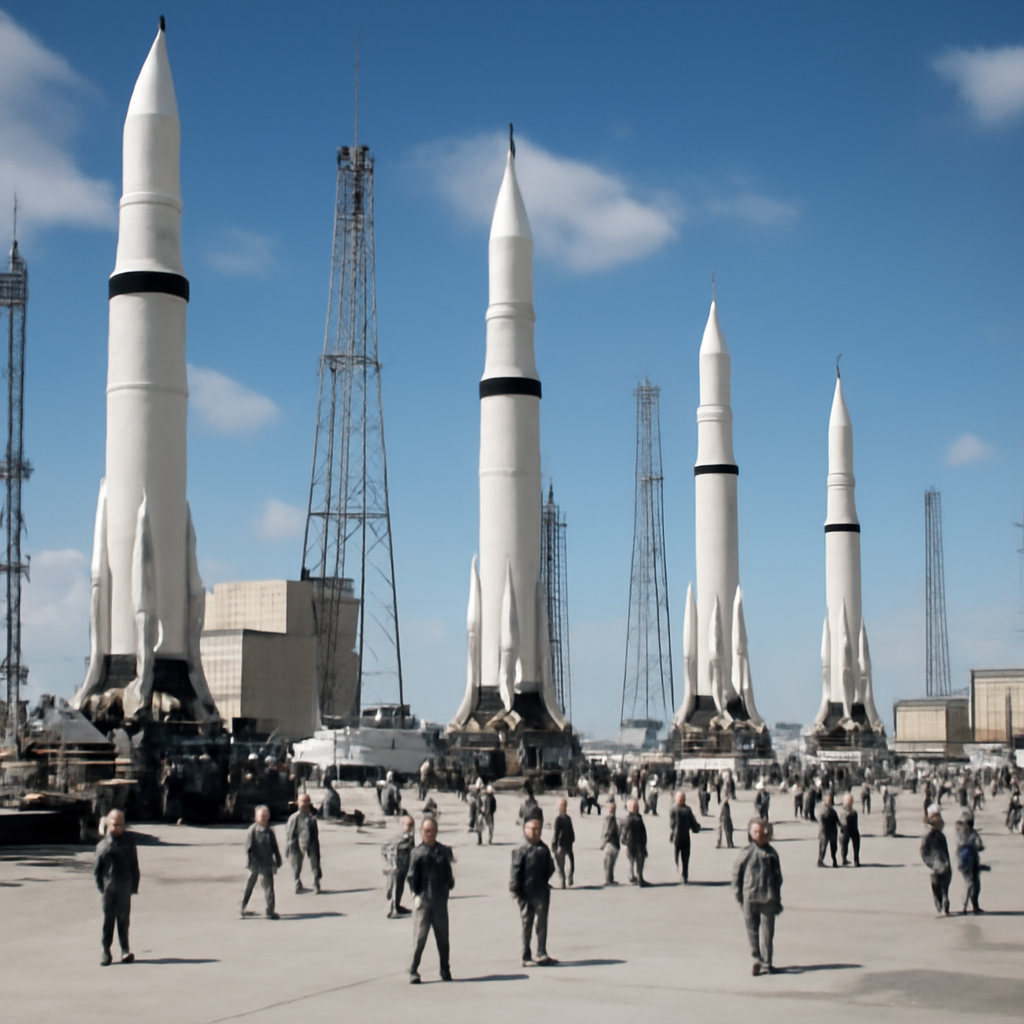
The Space Force is operating from launch sites that were built decades ago even as demand for launches accelerates. Cape Canaveral Space Force Station, which launched 36 rockets in 2021—the first year it operated under the Space Force—sent 110 rockets into orbit last year. Vandenberg Space Force Base launched another 65. This year the service intends to launch more than 200 rockets from those two primary sites, and a Space Force document released last month projects the pair could be launching as many as 3,000 rockets annually by 2036.
Searching for new pads: Wallops, Alaska, New Mexico, and private sites on the table
Service leaders acknowledge that the two legacy sites alone cannot absorb the projected growth. Col. Ryan Hiserote of Space Systems Command’s System Delta 80 said the team has been examining other launch locations and initially focused on sites for smaller vehicles, using Rocket Lab’s work out of NASA’s Wallops Island flight facility as an example. Walt Lauderdale, System Delta 80’s system program director for the Falcon product line, said the service might also use private sites such as SpaceX’s Starbase in Texas.
Lawmakers have floated potential alternative national-security launch sites including Wallops Island; the Pacific Spaceport Complex, Alaska; and Spaceport America in New Mexico. The Space Force’s planning document, “Objective Force 2040,” explicitly says the service will “expand and certify state, commercial, and private launch sites to address routine launches, increase surge capacity, and provide geographic diversity,” while warning that some spaceports “won’t be fully suitable for some missions” because security and mission assurance needs will limit their suitability for the most sensitive national-security launches.
Defense space analyst Todd Harrison noted the strategic motivation for dispersion: “It would make sense to diversify, because right now we are incredibly dependent on just two locations,” he said, pointing to natural-hazard risks faced by the two bases.

Audit-ready is a season. It shouldn't be.
Evidence in spreadsheets, controls drifting between audits, frameworks multiplying on flat headcount. Nubivance runs continuous compliance on Rapid7 Cyber GRC - SOC 2, HIPAA, ISO 27001, PCI, CMMC.
End the scrambleInfrastructure, money, and a congressional reporting deadline
Expanding launch cadence will require investments in pads and support infrastructure. Last year’s National Defense Authorization Act directed the Space Force to analyze the long-term suitability of Cape Canaveral and Vandenberg and to develop a list of alternative locations. This year’s NDAA added specific reporting requirements: the service was directed to report on the maintenance costs and age of infrastructure at Cape Canaveral and Vandenberg, and to identify “potential strategies to mitigate adverse environmental effects.” The statutory deadline for that report was March 31.
Space Force launch officials said in April that their extensive report had not yet been delivered to Congress. A service spokesperson did not respond to a request for an update.
People, AI, and operational change: doubling end-strength and “operating at machine speed”
Leaders say facilities and funding are only part of the problem; people and tools are equally central. Top officers have recently called for doubling the Space Force’s end-strength over the next decade, and commanders at the launch pads argue that even a larger force will need technological augmentation. Col. Douglas Oltmer, commander of Cape Canaveral’s 45th Weather Squadron, said: “We’re going to have to leverage technology, AI tools a lot more than we’re doing now.”
The Objective Force 2040 document envisions a service that can “operate at machine speed, leveraging artificial intelligence and autonomous systems while maintaining the primacy of human judgment for critical decisions.” Back at System Delta 80, Hiserote described a stopgap approach: “It will mean more missions for us, so we’re working through how to balance that with the resources that we have and look at areas where we can accept more risk that maybe traditionally we haven’t before,” and he added that automation could help a smaller team manage a larger manifest.
What this means for Congress, launch operators, and guardians at Cape Canaveral
- Congress: lawmakers have already mandated analyses and a report on infrastructure age, costs, and environmental mitigation, and the March 31 deadline for that report remains unmet as of April—raising questions about timing and budget decisions that will follow.
- Launch operators (SpaceX, Rocket Lab, private spaceports): may be called on to provide alternative or commercial launch facilities for routine or surge launches, though the Space Force concedes private and state sites “will increase overall launch capacity” but may not meet mission assurance and security standards for the most sensitive national-security launches.
- Guardians at Cape Canaveral and Vandenberg: will have to balance rising manifests with current resources, accept some risk shifts, and pursue automation and AI tools to manage the projected cadence while leaders seek more manpower and money.
The arithmetic in the Space Force’s planning document is stark: from dozens of launches at legacy bases to hundreds this year and a theoretical ceiling in the low thousands by 2036. That projection frames a series of concrete tradeoffs—build more pads, certify commercial and state spaceports, increase end-strength, or lean on automation and AI—each with its own costs, operational limits, and security implications. The next steps are bureaucratic and practical: choose sites for heavy lifts, deliver the congressionally mandated infrastructure report, and fund the expansions that the service’s leaders say are necessary. In the meantime, guardians at Cape Canaveral are already recalibrating how they work and what risks they can accept to keep launches flying.