AI Control Tower: From visibility to a full life‑cycle command center
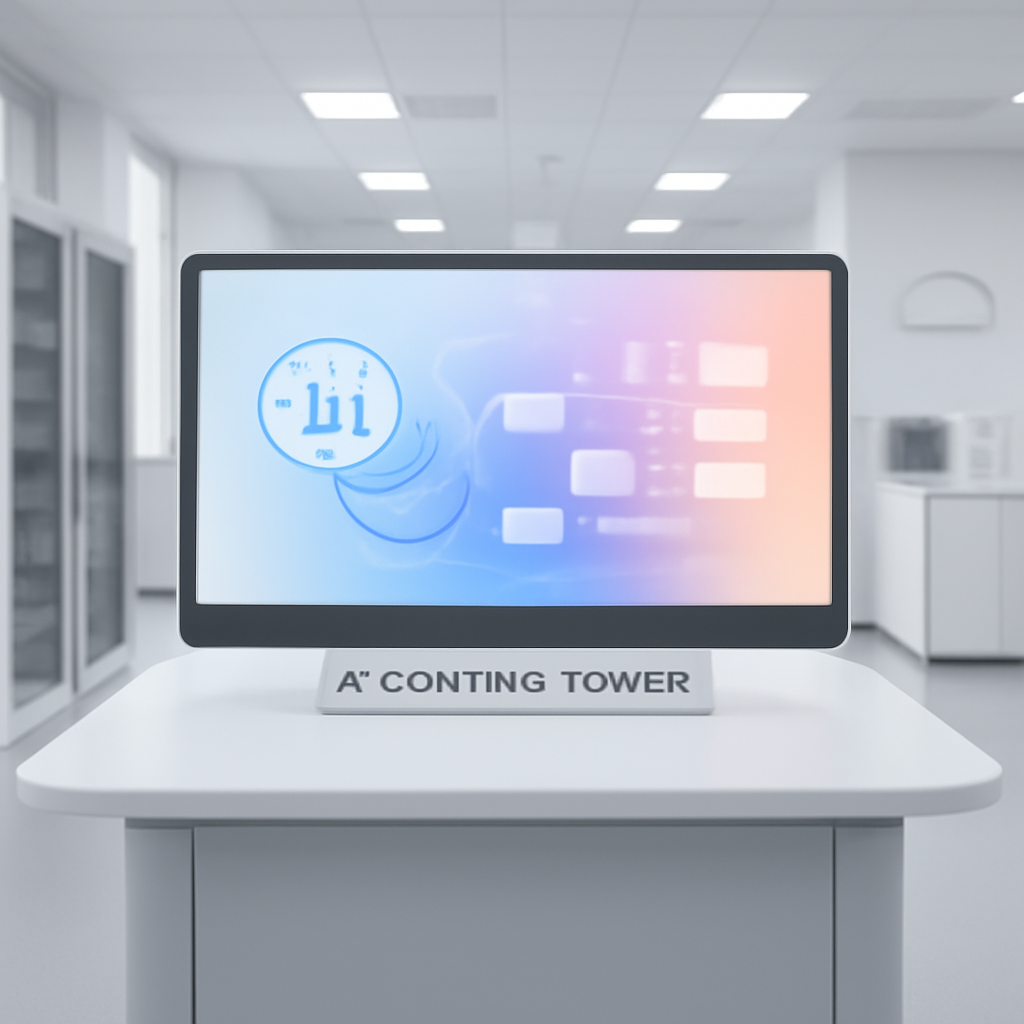
ServiceNow presented a redesigned AI Control Tower at Knowledge 2026, recasting a governance dashboard into a five‑dimensional command center: discover, observe, govern, secure and measure. The company says the Control Tower now discovers, monitors, governs, secures and measures AI agents, models and workflows not only inside ServiceNow but across platforms including AWS, Microsoft Azure, Google Cloud, SAP, Oracle, Workday and 25 more enterprise systems.
ServiceNow frames the redesign as a response to "runaway AI spend," with new cost‑tracking and ROI dashboards aimed at finance and IT leaders. The product rests on two decades of operational data—ServiceNow cited "over 20 years of enterprise operational data, including 100 billion workflows and 7 trillion workflow transactions each year"—all supported by the CMDB and the Context Engine. "Enterprises are under pressure to deploy AI and show results, but there's a major gap between adoption and accountability," Jon Sigler, executive vice president and general manager for AI platform at ServiceNow, said. "The AI Control Tower will provide unified governance across the entire enterprise AI stack."
Action Fabric and Anthropic: Any agent can execute governed work
ServiceNow's Action Fabric extends the platform's action system—flows, playbooks, approvals and catalogs—to AI agents built anywhere using a model context protocol or server. Each action is controlled by the AI Control Tower, which the company says enforces identity verification, permission control and full auditability. Anthropic is the first design partner, connecting Claude Cowork to ServiceNow's governed execution layer so agents built on Claude, Microsoft Copilot or homegrown tools can trigger the same enterprise workflows without manual ticketing or file‑opening.
"The gap between knowing what needs to happen and making it happen is where productivity dies. Connecting Claude Cowork to ServiceNow's system of action closes that gap by enabling enterprise execution, directly in the flow of work," Boris Cherny, head of Claude Code at Anthropic, said.

Audit-ready is a season. It shouldn't be.
Evidence in spreadsheets, controls drifting between audits, frameworks multiplying on flat headcount. Nubivance runs continuous compliance on Rapid7 Cyber GRC - SOC 2, HIPAA, ISO 27001, PCI, CMMC.
End the scrambleAutonomous workforce: ServiceNow's production claims and scale metrics
ServiceNow highlighted multiple internal and customer deployments as evidence the platform can run AI at scale. Internally, the company said its L1 IT Service Desk AI Specialist handles cases "99% faster than human agents." Its Autonomous CRM reportedly manages over 100 million customer cases each month, coordinates more than 16 million orders, and configures over 7 million quotes monthly.
"Enterprises need AI that senses, decides and acts securely in line with organizational guardrails," Amit Zavery, president, chief product officer and chief operating officer at ServiceNow, said. Customer testimony included performance gains at PayPal: "Today, database tasks are twice as fast, and our longest‑running operations are five times faster. ServiceNow has become a key part of our enterprise AI and automation strategy," Matthew Kritzer, principal platform architect at PayPal, said.
Autonomous Security and Risk: Armis, Veza and measurable containment gains
ServiceNow consolidated its security assets into Autonomous Security and Risk, folding Armis and Veza into a single offering. According to the company, Armis supplies agentless, real‑time asset intelligence across IT, OT, IoT, code and connected devices that feeds the CMDB, while Veza maps every identity—human and non‑human—enforcing least‑privilege at the point of action and creating an audit trail.
"Today's CISOs have to not only neutralize threats in real time but also report risk to the board with conviction. Autonomous Security & Risk replaces that fragmented stack with a single graph that maps every identity, every permission and every connected asset," John Aisien, senior vice president and general manager for security and risk at ServiceNow, said. ServiceNow cited customer outcomes: a global energy company cut threat containment time by 97%; a major U.S. financial institution eliminated 96% of dormant non‑human identities; and a Fortune 100 aerospace manufacturer reduced control attestation time by 75%.
Partnerships with Microsoft and Nvidia: governance that stretches across clouds and data centers
ServiceNow expanded integrations with major cloud and AI vendors. The AI Control Tower now covers the Microsoft Agent 365 ecosystem, including Copilot Studio and Azure Foundry agents, and ServiceNow's AI specialists will appear as digital employees in the Microsoft Agent 365 Marketplace with defined roles and permissions. "Together, we're helping customers act on insights more quickly and drive meaningful outcomes across their business processes," Charles Lamanna, executive vice president for Copilot, agents and platform at Microsoft, said.
With Nvidia, ServiceNow announced Project Arc—an enterprise autonomous desktop agent protected by Nvidia's OpenShell runtime and managed by AI Control Tower—and integration with the Nvidia Enterprise AI Factory validated design to extend governance to model workloads at data center scale. "Together, we will bring agents that feature the security of the Nvidia OpenShell runtime and the power of Nvidia AI factory solutions with the ServiceNow AI Control Tower," Kari Briski, vice president of generative AI for enterprise at Nvidia, said.
What this means for CIOs, HDFC Bank, and PayPal
- CIOs: the company pitched AI Control Tower as a single governance layer to tame dispersed agent fleets, add financial controls and consolidate workflows via Action Fabric—features ServiceNow describes as immediately relevant to organizations already on its platform.
- HDFC Bank: "As India's largest private sector bank, AI governance is foundational," Ramesh Lakshminarayanan, Group CIO at HDFC Bank, said. The bank told ServiceNow AI Control Tower provides the visibility required to manage every AI use case and scale with confidence.
- PayPal: ServiceNow's platform performance claims are echoed in PayPal's report of faster database tasks and shorter long‑running operations, suggesting customers will judge the new offerings by throughput and resilience as much as governance.
ServiceNow set a financial bar tied to this pivot: at its financial analyst day the company established a $30 billion‑plus subscription revenue target for 2030, with AI solutions expected to represent more than 30% of annual contract value. Cybersecurity crossed $1 billion in annual contract value last year, the company said—numbers that frame the Control Tower as a strategic bet on governance as a growth engine.
ServiceNow has put a governance layer over an expanding cast of models, clouds and marketplace partners, promising to convert visibility into enforced action across "any model, any cloud and any data source." The practical test will be whether the AI Control Tower can consistently bind identity, permissions, cost and auditability across the dozens of platforms ServiceNow now links—while delivering the performance and savings the company cites.