"Under our future roadmap, 160 projects are under development, and Insha’Allah, they will soon contribute to the defence forces of Pakistan," Air Vice Marshal Tariq Mahmood Ghazi told reporters on 7 May, offering the most detailed public outline yet of the Pakistan Air Force's procurement priorities after May 2025.
Near‑term fighter sequencing: additional J‑10CEs and upgraded JF‑17s
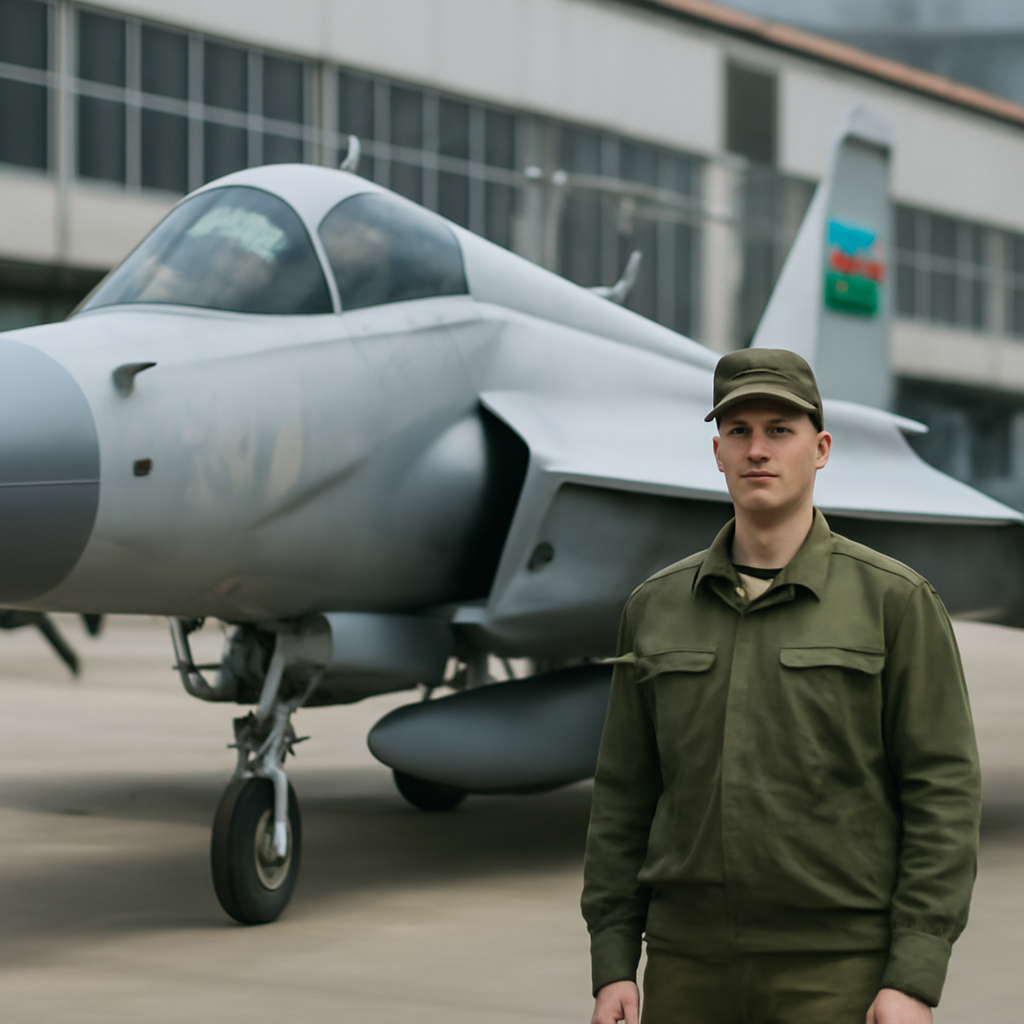
AVM Ghazi confirmed that the PAF is prioritizing "additional J‑10C aircraft and highly upgraded JF‑17 platforms" in the near term, placing these 4+/4.5‑generation types ahead of any fifth‑generation acquisition in sequencing. The PAF currently operates 20 J‑10CEs, meaning that training, maintenance and support infrastructure for that type already exists; the reporting notes Air Headquarters would likely have planned for at least 80–90 J‑10CE units based on past procurement patterns. On the JF‑17 side, the reference to "highly upgraded" variants aligns with Project PFX Alpha, an upgrade of the Block‑3 that incorporates a NASTP‑designed gallium nitride (GaN) AESA radar, updated avionics, and integrated ECM arrays built into the airframe.
J‑35AE as a long‑term, collaborative programme
AVM Ghazi described an "initial collaborative mechanism" for the Shenyang J‑35AE fifth‑generation fighter aircraft, framing any NGFA acquisition as "a long‑term effort with multiple options under consideration, including indigenous ambitions and collaborations." The account notes that Aviation Industry Corporation of China (AVIC) only recently rolled out the first prototype or demonstrator unit of the J‑35AE at the start of May, and that the type has not yet been field‑tested in Pakistani airspace nor supported by Pakistani training, maintenance and logistics infrastructure. The PAF’s stated approach is therefore stepwise: build a much larger fleet of 4+/4.5‑generation fighters first, then add a stealth‑led capstone such as the J‑35AE — which would be configured to incorporate locally designed subsystems from NASTP and NESCOM where possible.

Audit-ready is a season. It shouldn't be.
Evidence in spreadsheets, controls drifting between audits, frameworks multiplying on flat headcount. Nubivance runs continuous compliance on Rapid7 Cyber GRC - SOC 2, HIPAA, ISO 27001, PCI, CMMC.
End the scrambleISTAR, sensor densification, and the 160 in‑house programmes
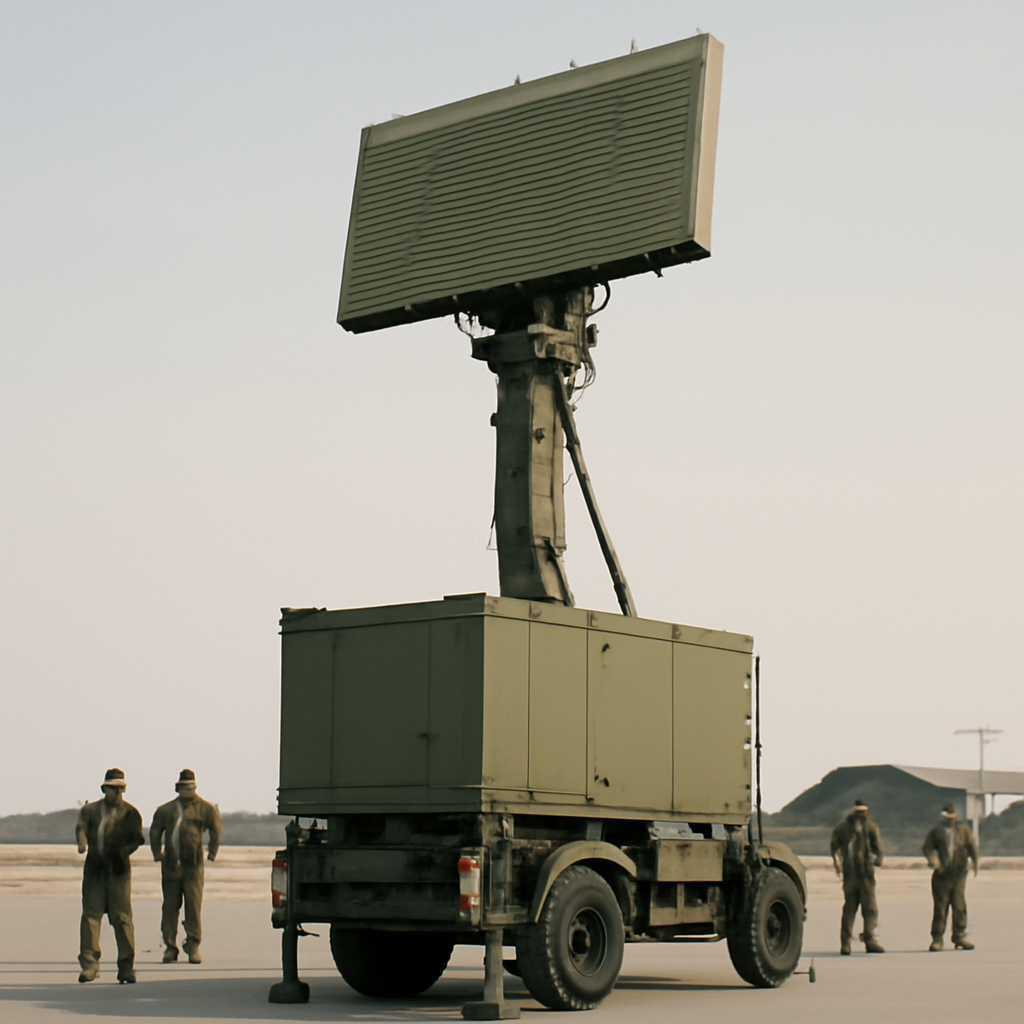
Ghazi characterized the PAF's integrated air defence system (IADS) as having "newly acquired full‑spectrum surveillance and response capabilities" that have "fused multi‑domain layers," underscoring a shift toward an ISTAR‑led posture. The PAF is investing in satellite imaging — including the PRSC‑S1 SAR satellite, a planned 20‑satellite interferometric SAR (InSAR) constellation, and a triad of electro‑optical and hyperspectral imaging satellites — alongside airborne, ground and passive sensors. NASTP has disclosed work on nine original radar programmes, among them a multi‑function radar and an airborne early warning (AEW) radar; passive sensors like the VERA‑NG can geolocate emitters without active transmissions; and drone programmes add both active radar and passive ESM/ELINT feeds. The report uses the PFX Alpha example to illustrate how a single platform upgrade can spawn many discrete projects — antenna arrays, TRMs, signal processors, cooling systems and software — explaining how a 160‑project count sits plausibly within NASTP’s broader indigenization push.
Long‑range precision weapons: Taimoor, CM‑400AKG, and mixed munitions
AVM Ghazi confirmed the PAF is pursuing "long‑range precision weapons" as a category. The Taimoor air‑launched cruise missile (ALCM), developed by NESCOM and marketed by GIDS, has been operational since the May 2025 conflict and was test‑fired by the Pakistan Navy in April 2026 from what appears to have been a PAF combat aircraft. The Taimoor offers a 500–600 km range with INS/GNSS mid‑course guidance, TERCOM/DSMAC terrain‑following and an imaging infrared (IIR) terminal seeker, giving the PAF a credible subsonic cruise capability from in‑service airframes such as the JF‑17. The PAF is also expanding deployment of AZB‑series precision‑guided bombs and range‑extension kits to convert MK‑80 GPBs into GPS/INS‑guided gliding munitions, while pursuing lighter guided options such as the Rasoob 250 and AZB‑81 LR so a single lightweight jet can carry multiple long‑range weapons per sortie. The CM‑400AKG air‑launched ballistic missile, already integrated on the JF‑17, provides a high‑speed option but requires high‑altitude launch and thus exposes the host aircraft to long‑range SAM threats; the report notes the PAF could look at an air‑launched variant of the Fatah‑3 (described as a licence‑built derivative of the Chinese HD‑1) to deliver supersonic cruise performance from lower altitudes.
What this means for NASTP, Air Headquarters, and regional militaries
- NASTP and NESCOM: Expect continued emphasis on subsystem design — GaN AESA radars, ECM arrays and integration software — as a means to insert local industry into major platforms and to realize the PAF’s 160‑project count.
- Air Headquarters (AHQ): Will likely focus procurement sequencing on acquiring volume (additional J‑10CEs, upgraded JF‑17s) to establish "quantitative mass" ahead of introducing stealth‑led capabilities such as the J‑35AE in the early 2030s.
- Regional militaries and planners: The PAF’s mix of ISTAR investments, long‑range subsonic and supersonic options, and AESA‑equipped 4+/4.5‑generation fleets changes the balance between detection, attribution and the number of munitions available per mission.
The PAF’s public roadmap presents a clear logic: build sensor density and a large, modernized fleet of 4+/4.5‑generation fighters now, integrate indigenous subsystems where possible, and reserve stealth fighters as a later, complementary capability. The next concrete milestones to watch on this schedule are further production batches of J‑10CEs and PFX Alpha fielding, operational integration of the Taimoor across services, and whether the J‑35AE demonstrator moves from prototype displays to field trials in Pakistani airspace.