The most dangerous assumption in current contingency planning is that any war, even a regional war involving the United States, would be short. That clear warning underpins a longer argument: when four structural forces interact — regime legitimacy pressures, alliance dynamics, operational stalemate and nuclear escalation limits — they create a “protraction trap” that can make a high‑intensity regional conflict hard to terminate.
Regime legitimacy constraints
Political costs shape military choices. The article argues that leaders who commit forces face a stark logic: retreat can be more politically dangerous than continuing the fight. Where territorial seizure is framed as an issue of sovereignty or territorial integrity, negotiated withdrawal after a stalled invasion carries profound domestic consequences. The targeted country, similarly, would confront strong expectations to resist coercion and defend sovereignty. Across governments, these legitimacy pressures narrow the space for compromise and increase the odds that national leaders will prefer persistence to perceived humiliation.
Alliance dynamics and horizontal escalation
Alliances can deter, but they can also expand and prolong conflict. The piece stresses that a regional confrontation involving the US would likely draw in regional allies and partners because they host bases and operational infrastructure. That involvement increases geographic scope and political complexity: allies that initially refrain from kinetic action may nonetheless be drawn in by humanitarian or operational impulses — for example, accepting dispersed aircraft at their airfields. Those decisions can expose neighbouring countries to attack, harden domestic pressures, and complicate coalition agreement on de‑escalation or settlement terms.

This site is the portfolio.
OSINTSights runs on Cloudflare Workers, D1, R2, and Vectorize, with an AI pipeline on Hetzner ARM. Nubivance designed, built, and operates it. We do the same for clients.
See what we buildOperational stalemate and the logistics challenge
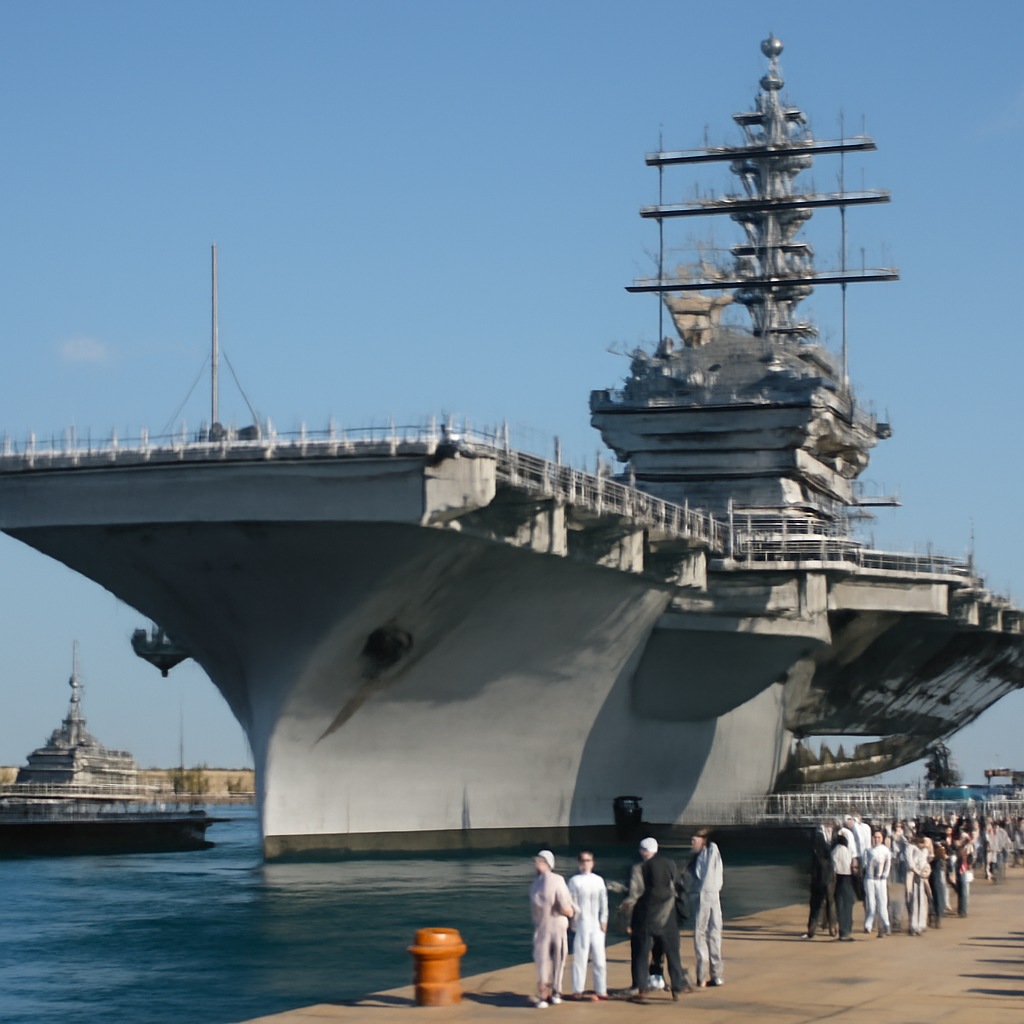
Military operations across contested maritime and air domains favor endurance as much as initial shock. An attacker attempting an amphibious invasion faces sustained logistical demands — continuous flows of ammunition, fuel and reinforcements across exposed sea lines and vulnerable ports or temporary piers. Even if landings succeed, follow‑on momentum is hard to maintain. The article notes a structural asymmetry: a force projected across water is more vulnerable than defenders who can contest supply lines from distance. By contrast, the US and its allies may draw on rear‑area bases as hubs that can be repaired and replenished repeatedly, potentially outlasting an attacker’s forward operations. All of this raises the risk of a costly operational stalemate in which neither side achieves a decisive battlefield victory.
The nuclear escalation ceiling
Underlying conventional choices is a deterrent logic that caps escalation. If the adversary is a nuclear power, the article explains, both sides would avoid conventional steps that risk dragging the conflict toward nuclear release. That ceiling can be constraining: strikes on mainland bases or critical command nodes might yield decisive advantage but are likely to be avoided for fear of escalation. The result is a strategic bind where escalation could be necessary for military decision but is politically and strategically blocked by the risk of nuclear escalation.
Implications for deterrence
Taken together, these dynamics produce a self‑reinforcing loop — the “protraction trap” — in which political pressures, alliance entanglement, logistic vulnerabilities and escalation limits tie parties to continuing the fight. The article draws clear policy implications: deterrence must emphasise endurance as well as the ability to impose rapid costs. Practical preparations include enlarging munitions stocks, creating effective alliance decision mechanisms, transforming forward headquarters into more operational commands, and designating allies as hubs for logistics, repair and coordination. Political resilience and coordinated strategic messaging are also central; governments must be prepared to communicate clearly about costs and stakes to sustain public and allied cohesion and to blunt coercive diplomacy and grey‑zone pressures.
What this means for the US, regional allies, and targeted countries
- The US: Should plan for sustained logistics and industrial mobilisation, and invest in alliance command integration so operations can be coordinated over months rather than weeks.
- Regional allies: Will need to prepare to act as hubs for basing, repair and supply, and to balance domestic political pressures about exposure to attack against alliance commitments.
- Targeted countries: Will face acute domestic expectations to resist, amplifying regime‑legitimacy constraints that make negotiated withdrawal politically costly.
The article’s central caution is straightforward and politically uncomfortable: the outcome of a regional high‑intensity war may depend less on the opening battle than on which side can outlast the other. Preparing for a long conflict — expanding munitions, hardening logistics, and building decision mechanisms and political resilience — may therefore be the most effective way to prevent one falling into the protraction trap.
https://www.aspistrategist.org.au/the-protraction-trap-why-a-regional-conflict-could-be-hard-to-end/