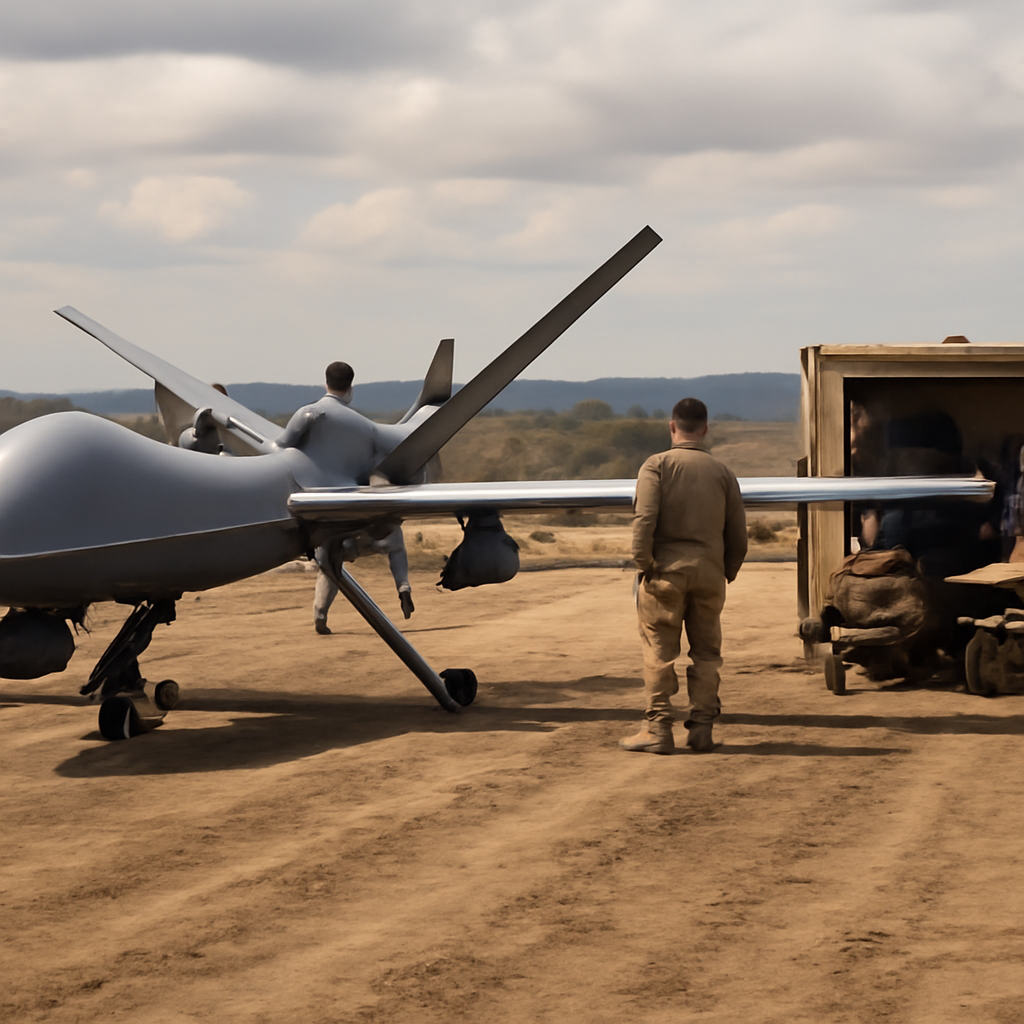
"We will seek optimal combinations of lower-cost (and sometimes lower-tech or attritable) platforms that can be deployed in larger numbers and complement more limited numbers of sophisticated platforms," the National Security Science & Technology Strategy says.
Top priorities: undersea superiority, space, and AI and autonomy
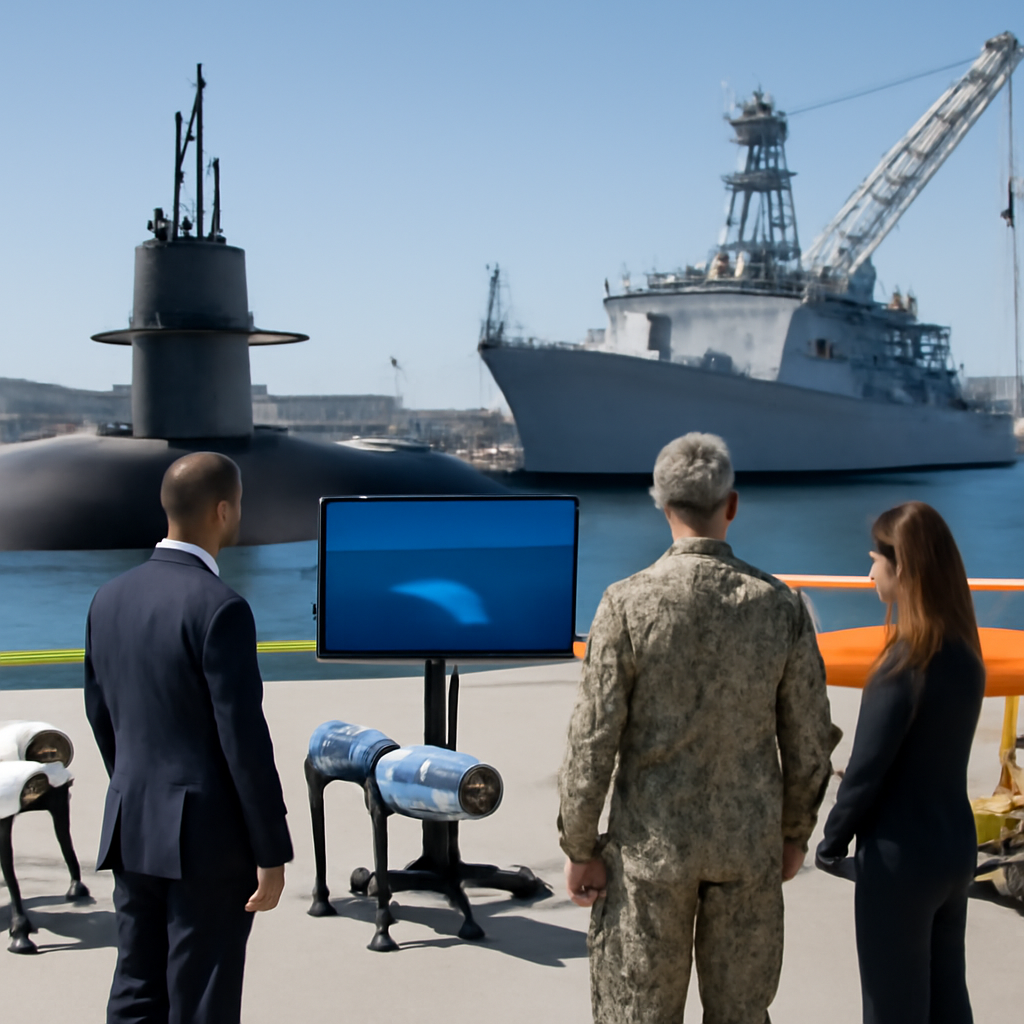
The 24-page National Security Science & Technology Strategy (NSSTS) places three areas at the apex of U.S. military-technology priorities: undersea superiority, space, and artificial intelligence and autonomy. The document describes undersea work as encompassing both submarines and anti-submarine warfare, and space as extending from low orbit to the Moon with an emphasis not only on detection but on the ability to "counter" threats.
The strategy treats AI and autonomy differently in tone: it labels the field a "rapidly evolving area" and does not define it as narrowly as the other two priorities. It notes a continuum in Pentagon usage that ranges "from strategic planning software to swarming drones." The NSSTS also draws a distinction in ambition: it calls for "clear technological superiority" in outer space and undersea, but only a "competitive advantage" in AI and autonomy.
Acquisition approach: attritable systems alongside "exquisite" programs
The NSSTS explicitly updates the long-standing "hi-lo mix" approach to acquisition. While endorsing "the new wave of high-speed, low-cost innovations the Pentagon is pursuing, especially in expendable drones," the strategy also emphasizes "the continued importance of traditional high-cost, 'exquisite' mega-programs — even when the threat they're countering is relatively cheap." The document frames the preferred approach as combinations of lower-cost, sometimes lower-tech or attritable platforms deployed in larger numbers to complement fewer sophisticated systems.
The strategy references the historical hi-lo example from the 1970s — the Air Force's decision to buy both expensive F-15s and larger numbers of cheaper F-16s — to situate the updated thinking.

This site is the portfolio.
OSINTSights runs on Cloudflare Workers, D1, R2, and Vectorize, with an AI pipeline on Hetzner ARM. Nubivance designed, built, and operates it. We do the same for clients.
See what we buildCritical supporting areas: airpower, long-range strike, and C5ISR
Immediately below the top-tier priorities, the NSSTS identifies three additional but still "critical" areas that support battlefield dominance. These are:
- Airpower — described as being underwritten by stealth, electronic warfare, and anti-air defense.
- Long-range strike — defined as the ability to penetrate an enemy defense-in-depth with speed and precision.
- C5ISR — spelled out as "Command, control, communications, computers, cyber, intelligence, surveillance, and reconnaissance," the document calls this the "eyes, ears, brain, and nervous system of the force."
The strategy notes overlap and synergy among these three; long-range strikes are usually carried out by aircraft and directed by C5ISR systems.
Key enabling technologies and the OSPT CET appendix
At the base of the NSSTS pyramid sits a long list of "key enabling technologies" intended to support the higher-priority areas. The main body names a dozen such enablers, citing examples that include advanced manufacturing (for example, 3D printers), hypersonics, nuclear energy, and semiconductors. An appendix updates a formal Office of Science and Technology Policy (OSPT) list of Critical and Emerging Technologies (CETs) and runs for three pages.
The structure in the document is four-tiered: immediate first-order needs; second-tier but still "critical" technologies; a third tier of "key enabling technologies;" and a fourth tier labeled "potentially transformative emerging technologies" to watch over the long term.
What this means for technologists, procurement leaders, and adversaries
- Technologists and security teams: Expect investment signals that favor projects tied to undersea sensors and countermeasures, space capabilities that can "detect" and "counter," and AI/autonomy projects framed to deliver competitive advantage rather than unequivocal superiority.
- Procurement leaders: The NSSTS endorses both attritable, low-cost systems (notably expendable drones) and continued support for high-cost, "exquisite" platforms; program managers will need to balance quantity and sophistication in acquisition plans consistent with the strategy's "optimal combinations" language.
- Adversaries and competitors: The document explicitly links the three top areas to current strengths that are nonetheless "challenged by competitors, especially China," signaling that investments and posture in undersea and space will be prioritized to regain or preserve superiority.
In a separate section described as focused on "building technological resilience," the NSSTS flags three examples of potentially transformative technologies that could change the strategic balance if breakthroughs occur: biotechnology (notably to enhance human performance and to counter hostile bio-weapons), quantum technologies (quantum computers, sensors, and communications), and Artificial General Intelligence — effectively AI and autonomy considered at a future scale. The strategy states, "the United States will build long-term technology resilience by leading in potentially transformative emerging technologies, where the national security implications and timelines remain uncertain."
The NSSTS combines a clear set of near-term battlefield priorities with a pluralistic acquisition mindset and a long-term resilience posture. Whether the emphasis on "clear technological superiority" in undersea and space, a "competitive advantage" in AI and autonomy, or the three-page OSPT CET appendix will reshape budgets and procurement practices is the concrete challenge the strategy poses to planners and program managers tasked with execution.