VTOL
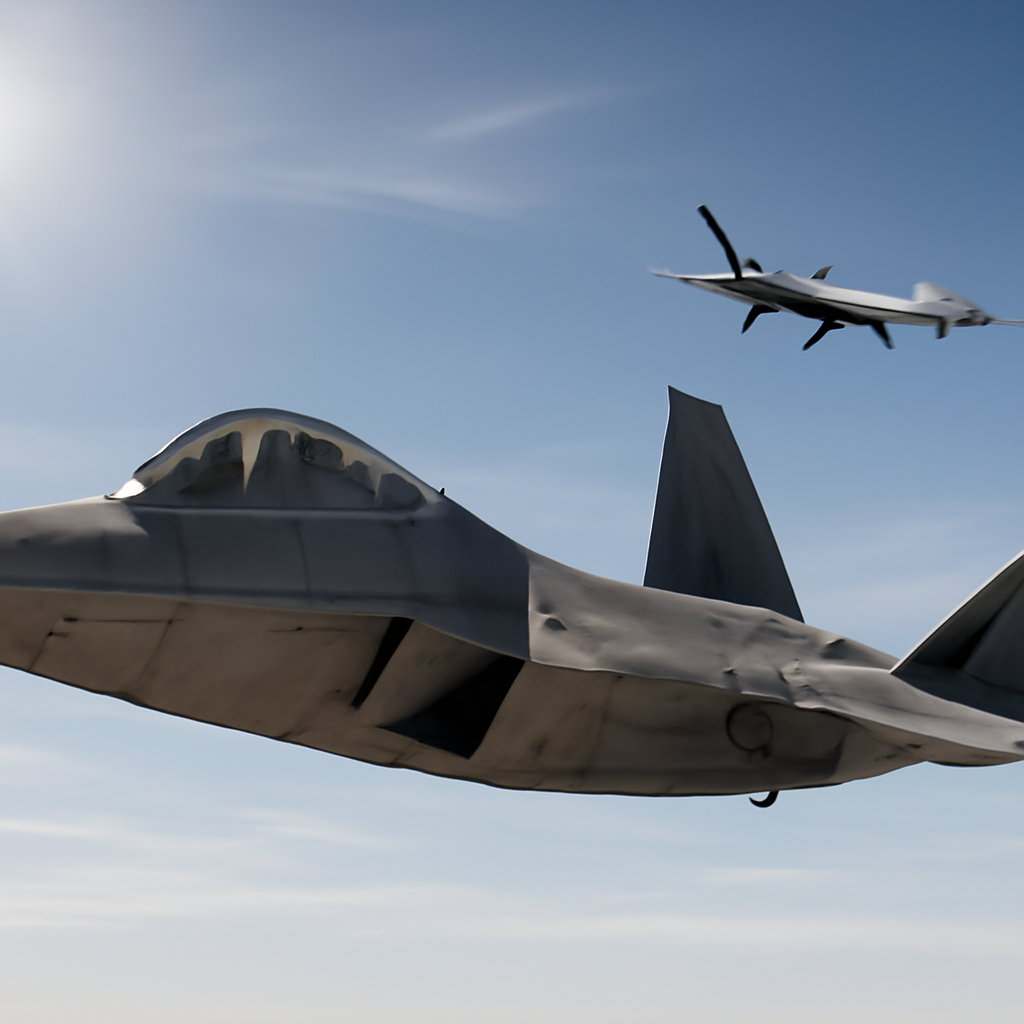
What do you do when the runway is the enemy’s first target? That question now lives in briefings and boardrooms after Shield AI — the U.S. defense-tech company behind autonomous systems for the military — said it can build a jet‑powered, vertical take‑off and landing (VTOL) fighter drone that needs no runway to operate. The claim promises a new kind of airpower: fast, dispersed, and less dependent on fixed infrastructure — but also more complicated in ethics, logistics and escalation dynamics .
The background: autonomy, propulsion and the end of the runway
– Over the past decade, unmanned aerial systems have moved from simple reconnaissance workhorses to increasingly capable systems that fuse autonomy, sensors and weapons. Shield AI’s announcement sits at the intersection of three trends: greater autonomy, more powerful propulsion in smaller packages, and military demand for decentralised, resilient operations that reduce reliance on fixed airfields .
– Technically, a jet‑powered VTOL fighter must reconcile two hard engineering problems: a propulsion system that gives speed and range, and a vertical‑lift capability that enables takeoff and landing in constrained locations. On top of that comes an autonomy stack capable of safe, reliable takeoffs, landings and combat actions without a pilot aboard — a combination that raises difficult tradeoffs among endurance, payload, detectability and cost .
What Shield AI says and what that would mean operationally
Shield AI frames the platform as a way to launch combat air assets from ships, forward sites or improvised clearings, thereby shrinking decision and response times and complicating an adversary’s defense planning. The company argues runway independence can:
– shorten sensor‑to‑shooter timelines by launching closer to the point of interest,
– increase the number of potential launch points and thus complicate enemy targeting,
– and reduce mission vulnerability tied to fixed airbases, which are often attractive targets in high‑intensity conflict .
Why this matters — and who should care
Technologists: They must solve autonomy problems that are explainable and robust. Systems must resist spoofing, jamming and data‑poisoning, and they must behave predictably in degraded, contested environments. Building autonomy that is auditable and resilient to deception is a technical and design imperative if these platforms are to be trusted in combat .
Policymakers and legal advisers: Autonomous, lethal systems raise questions about command‑and‑control, accountability and the delegation of lethal authority. Debates now center on whether and how “commander’s intent” can be embedded into machine decision‑making, how operators will retain meaningful human oversight, and how to certify and audit lethal autonomy so legal responsibility is traceable .
Users (soldiers and commanders): Acceptance depends on trust. Units will need new training, maintenance models and doctrine to integrate runway‑free VTOL fighters into task forces. Practical questions — sustainability in austere environments, spare‑parts supply, maintenance cycles and the cost per flight hour — will determine whether these systems are transformative or niche .
Adversaries and strategic effects: A dispersed launch capability forces defenders to widen sensor coverage and invest in point defenses, integrated air defenses and counter‑autonomy measures. That can spur an arms‑race dynamic: as one side fields more mobile and autonomous strike systems, the other side invests in detection, jamming and counter‑drone tools. Historically, novel military advantages invite rapid countermeasures; technological superiority can be fleeting without accompanying doctrine, logistics and diplomatic controls .
Risks and limits to the promise
– Technical risk: True runway‑free jet VTOL fighters must solve complex flight‑control, thermal, and propulsion problems while keeping weight and signature manageable. Integrating sensors and survivability features into a compact frame involves trade‑offs that may constrain endurance and payload .
– Operational risk: Fielding such systems is expensive and logistically demanding. Cheaper and widely proliferated loitering munitions and rotary‑wing drones already do many tactical jobs; high‑end VTOL fighters may remain mission‑specific unless costs and reliability favor broader adoption .
– Strategic and ethical risk: Autonomous weapons that can identify and engage without timely human intervention are contentious. Without clear frameworks for oversight, rules of engagement, and auditing, these systems could increase the chance of unintended escalation or legal and moral accountability gaps .
Voices and context
Shield AI’s announcement arrives as militaries worldwide race to combine artificial intelligence with unmanned systems — a competition as much about doctrine and logistics as about hardware. Analysts note that while the near‑term proliferation risk for high‑end systems is lower than for commercial drones, the ideas and components can diffuse. The consequential question is not whether the tech is possible, but whether institutions can match capability with doctrine, law and sustainment models robust enough to manage both opportunity and risk .
Conclusion
Runways may be less central to airpower’s future, but the disappearance of the runway does not make the underlying dilemmas vanish: who controls lethal force, how machines are held accountable, and how states prevent rapid escalation in a crowded, contested electromagnetic environment. Shield AI’s VTOL claim points toward a future of more dispersed, faster air operations — and forces a question as plain and urgent as any newsroom lede: do we have the legal, ethical and logistical architecture in place to use such a tool wisely, or are we building speed without a trustworthy steering wheel?
Source: https://go.theregister.com/feed/www.theregister.com/2025/10/24/shield_ai_x_bat/