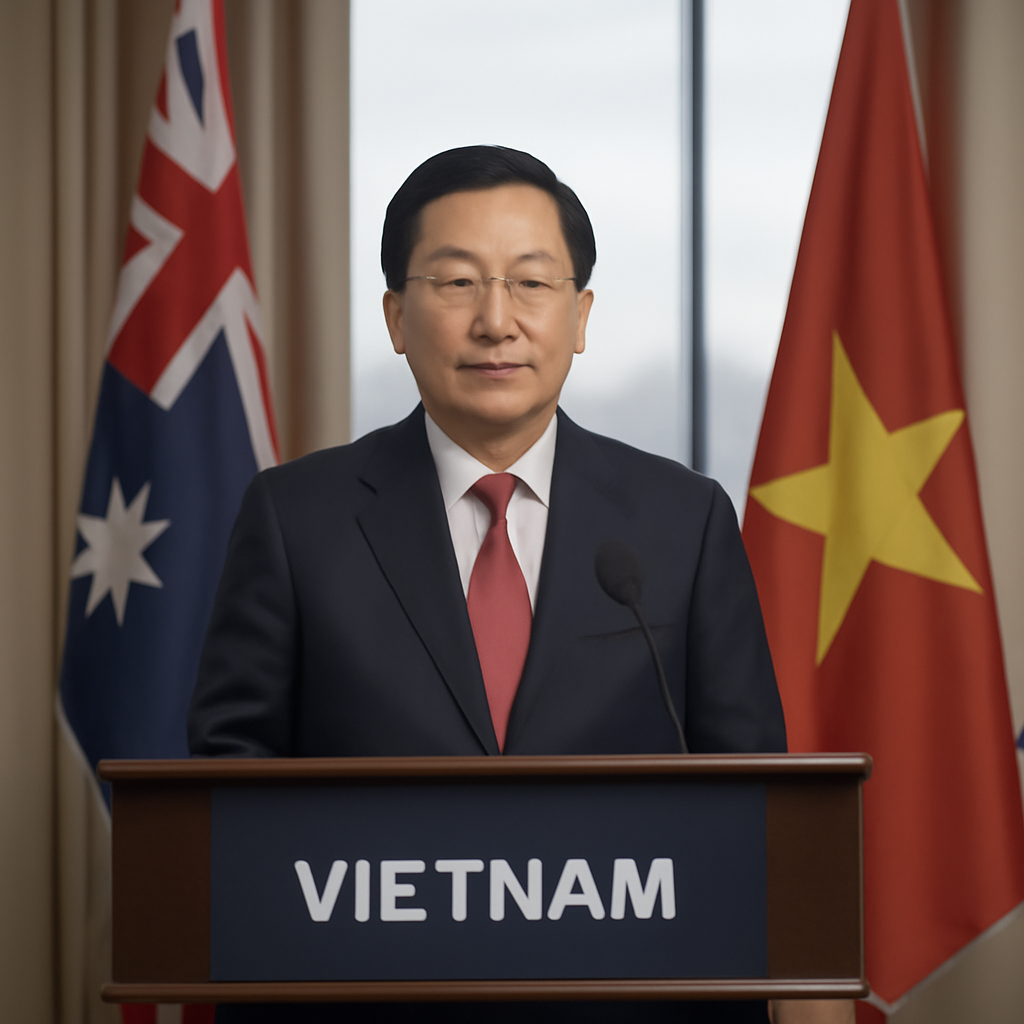
"an ‘era of national rise’," To Lam has tied his leadership to that phrase and carried it into diplomacy as he arrived in Australia for his first state visit since becoming party chief in late 2024.
To Lam’s strategic purpose: diversification and leverage
The visit is plainly transactional. According to the reporting, To Lam has come to broaden Vietnam’s portfolio of partners, identify where Australia offers leverage others cannot, and convert cordial ties into concrete opportunities. Since 2024 he has linked his leadership to economic transformation, institutional reform and technological upgrading, and his foreign policy has followed that economic logic: travel for capital, expertise and technology while preserving the long-standing Vietnamese approach of safeguarding sovereignty, avoiding formal alignment and keeping every door open.
How Hanoi manages great-power pressures
The visit sits inside a deliberate balancing act. Early in 2026 To Lam visited Washington for the inaugural meeting of Donald Trump’s Board of Peace and then travelled to Beijing, where he spoke of defending the global free‑trading order. The pattern, as the source describes it, is engagement with major powers without allowing either to dictate Hanoi’s choices—especially fraught with China, given the sharpening pressure of Chinese coercion at sea and reclamation in the Paracel Islands. Diversification, therefore, is Hanoi’s chosen answer; Australia is one of the partners that helps make that diversification meaningful.

Audit-ready is a season. It shouldn't be.
Evidence in spreadsheets, controls drifting between audits, frameworks multiplying on flat headcount. Nubivance runs continuous compliance on Rapid7 Cyber GRC - SOC 2, HIPAA, ISO 27001, PCI, CMMC.
End the scrambleEconomic and practical substance of the partnership
The bilateral relationship has real scale and unrealised potential. Two‑way trade in goods and services reached around A$30 billion in 2025, and bilateral investment stood at US$1.9 billion as of December 2025. Australia supplies Vietnam with energy, education, critical minerals, agricultural expertise and technology, while Vietnam offers Canberra a consequential Southeast Asian partner that is economically exposed, uneasy about coercion and determined to preserve room for independent action.
Defence ties and maritime cooperation
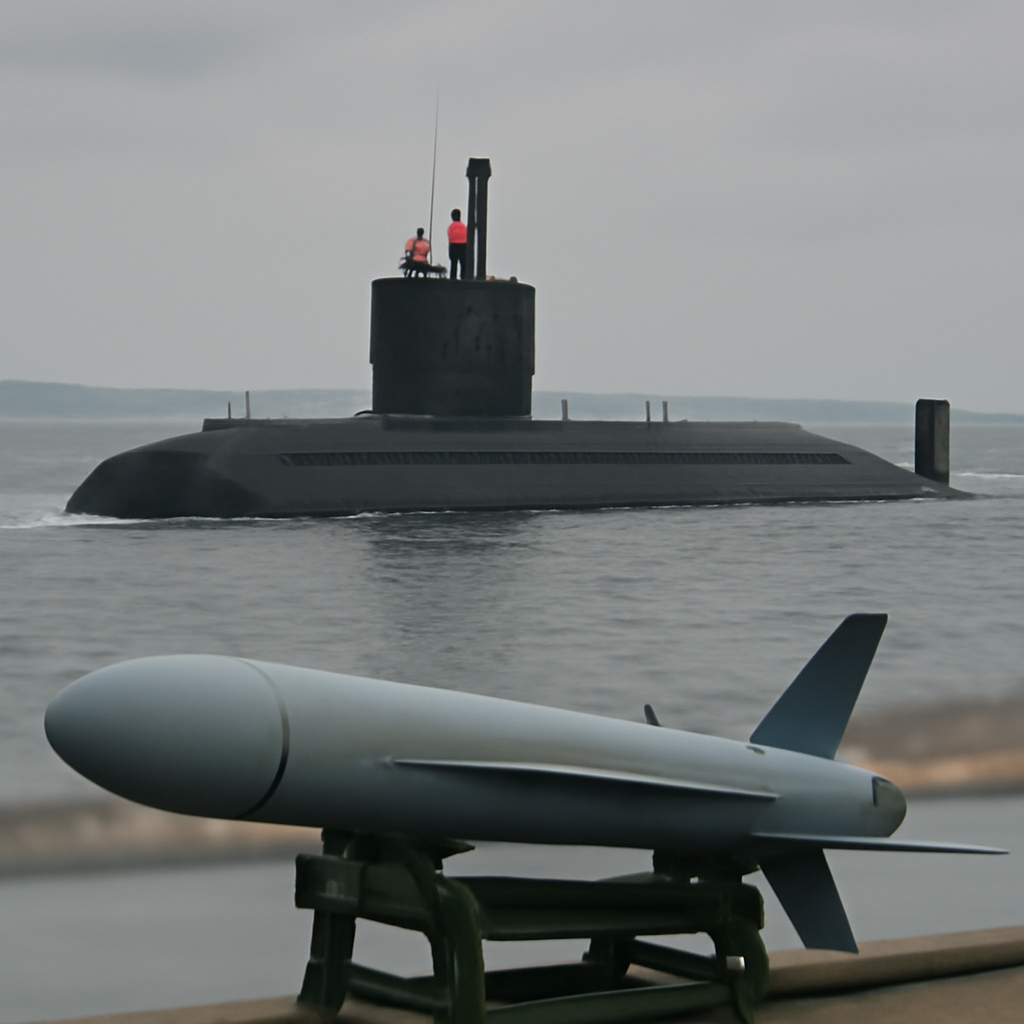
Defence cooperation already has a practical foundation rather than theoretical promise. Australia has provided military education, English‑language and peacekeeping training for more than two decades. Vietnamese personnel train in Australia; the Vietnamese navy participates in Exercise Kakadu and receives Australian ship visits. The source cites April, when a Vietnamese warship joined Kakadu, and later when HMAS Toowoomba visited Da Nang and trained with the Vietnamese navy in the South China Sea. Both capitals, the reporting notes, share an interest in stability, freedom of navigation and respect for international law—so any agreement on maritime awareness, coastguard cooperation, training or information‑sharing would matter more than its technical presentation suggests.
Shangri‑La Dialogue: differing hedges, similar endgames
The divergence in Canberra’s and Hanoi’s hedging strategies was visible at this year’s Shangri‑La Dialogue. To Lam framed the moment around three converging crises—international order, development and strategic trust—and prescribed ASEAN centrality and confidence‑building. Australian Deputy Prime Minister Richard Marles, addressing the maritime session a day later, emphasised deterrence, defence capability and a durable American presence. The approaches are not interchangeable, the source argues, but they both point to a shared preference: an Indo‑Pacific in which no single power can dictate terms and smaller and middle powers retain room for manoeuvre.
What this means for Canberra, Hanoi, and navies and coastguards
- Canberra: Continue to invest where Australia provides differentiated value—markets, energy, critical minerals, education and maritime training—while treating Vietnam as a partner that Canberra should support without expecting formal alignment.
- Hanoi: Persist with diplomatic flexibility and portfolio diversification, seeking Australian capital, technology and training to support economic transformation while avoiding binding choices that would undercut its non‑alignment approach.
- Navies and coastguards: Maintain practical exchanges—Exercise Kakadu participation, ship visits and joint training—and pursue information‑sharing or maritime‑awareness cooperation that can stabilise encounters at sea without forcing political commitments.
For Canberra and Hanoi alike, the test of the visit will not be ceremonial warmth but concrete follow‑through: whether memoranda and training convert into sustained cooperation on energy, technology and maritime awareness—and whether those practical links shore up Vietnam’s options without pulling it into a single camp. Any agreement on maritime awareness, coastguard cooperation, training or information‑sharing would therefore be more significant than its technical presentation suggests; that is the measure against which this state visit will be judged.