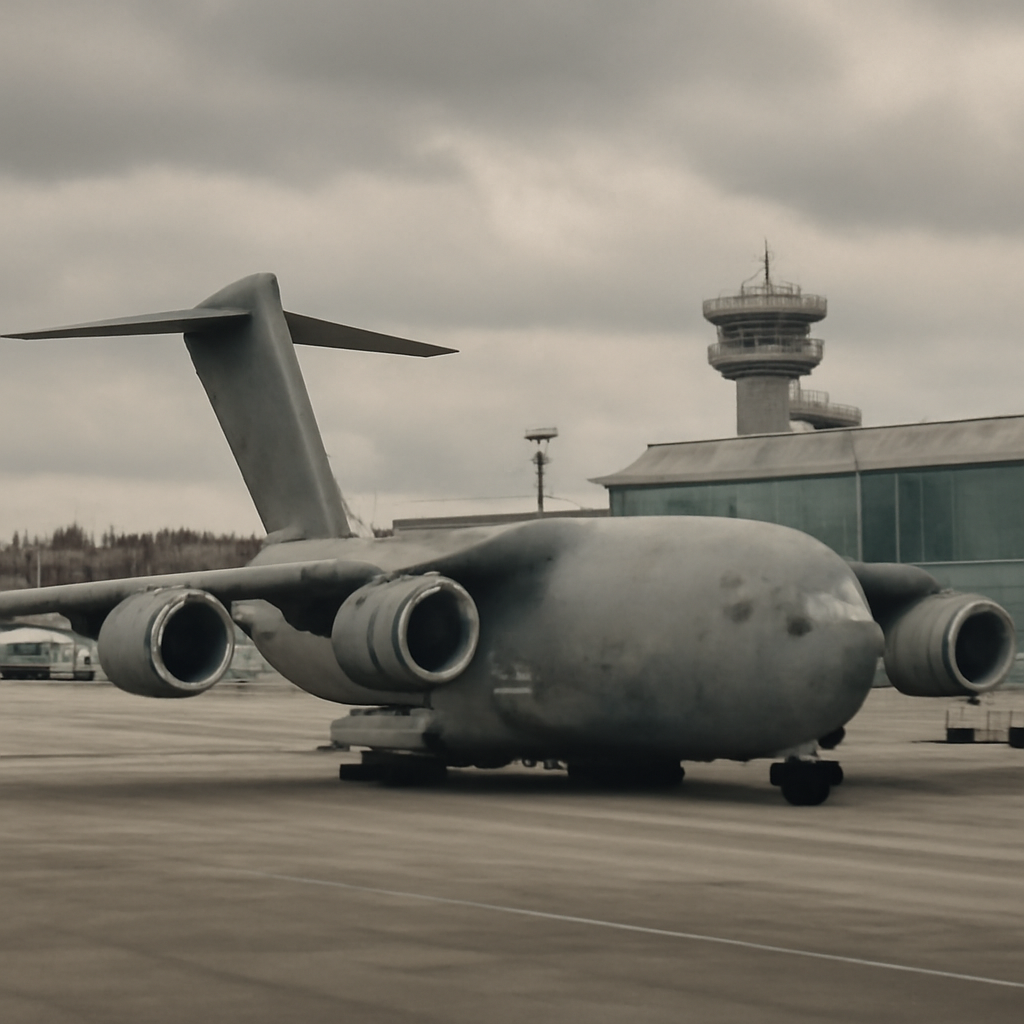
A U.S. Air Force C-17 Globemaster III, operating under callsign RCH4555, departed Riga at approximately 8:50 a.m. Moscow time and landed at Vnukovo International Airport at around 10:04 a.m. on August 25, 2026, according to flight‑tracking data and multiple ground videos shared on social media.
Flight details and recent itinerary
Open-source flight records show the C-17’s movements over the past days as follows: August 22 — Joint Base McGuire‑Dix‑Lakehurst (McGuire/Wrightstown) to Joint Base Lindsey Graham (formerly Charleston); August 23 — Charleston to Joint Base Andrews; August 23 — Andrews to Riga, Latvia; August 25 — Riga to Moscow‑Vnukovo. Social-video captures, geolocation of imagery that includes the Tu‑104B gate guard at Vnukovo, and observers’ reports corroborate the aircraft’s arrival in Moscow.
Why a C-17 in Moscow is exceptional
The presence of an active‑duty U.S. strategic airlifter in the Russian capital is described in the reporting as "highly unusual." The C-17’s capabilities and role are relevant: its primary mission is strategic airlift of personnel, equipment, and cargo; it can carry defensive systems including expendable decoys and a laser‑based Large Aircraft Infrared Countermeasure System; and, when required, certain C-17s can host Roll‑On Conference Capsules (ROCC) that provide mobile secure communications and working space for senior leaders. The aircraft’s August 23 stop at Joint Base Andrews is notable because that base houses the 89th Airlift Wing and the Air Force’s Special Air Mission fleet, which supports travel for senior U.S. officials and foreign dignitaries.

This site is the portfolio.
OSINTSights runs on Cloudflare Workers, D1, R2, and Vectorize, with an AI pipeline on Hetzner ARM. Nubivance designed, built, and operates it. We do the same for clients.
See what we buildPublic reporting, Russian response, and open-source signals
Open-source intelligence observers and aviation trackers quickly highlighted the movement. Social posts suggested an additional U.S. aircraft — likely a C-40B — may have been on the ground in Riga earlier the same day; the C-40B is a militarized Boeing 737 variant often used to transport high‑ranking officials. A convoy with U.S. diplomatic license plates and a local police escort was later reported on Moscow streets.
Russian outlets and spokespeople made immediate statements. Russkaya Pravda reported the Russian government said it had no information about the C-17 flight, and Kremlin spokesman Dmitry Peskov claimed no meetings with U.S. administration representatives were scheduled that week. Kommersant noted this was reportedly the first U.S. Air Force C-17 arrival in Moscow since 2017 and recalled that a U.S. Gulfstream C‑37B landed at Vnukovo in February 2025 after departing Andrews, carrying Russian citizen Alexander Vinnik after his release as part of a prisoner exchange that also involved American Marc Fogel.
Named reporting, potential explanations, and allegations
Media outlets offered different, often unconfirmed explanations. CBS, citing multiple unnamed sources, reported the C-17 brought CIA Director John Ratcliffe to Moscow for undisclosed meetings. CNN likewise reported Ratcliffe traveled to Moscow overnight, citing a U.S. official familiar with his travel, while offering no details on the meetings’ substance. The Financial Times reported that Trump administration officials had sought last week to persuade Kyiv not to strike Moscow, St. Petersburg, and northern regions with long‑range missiles and drones on Monday through Wednesday because Washington planned to send an aircraft carrying a senior‑level official to the Russian capital, according to people familiar with the request.
Other hypotheses circulating among observers and in the Russian press include a prisoner exchange link — with unconfirmed Russian reports suggesting American citizen Charles Wayne Zimmerman could be involved — or diplomatic or intelligence meetings intended to warn against escalation. The source material stresses these remain unconfirmed at the time of reporting.
How U.S. intelligence, the Russian government, and Kyiv are implicated
- U.S. intelligence and diplomatic travel: Media reports that CIA Director John Ratcliffe may have flown on the C-17 place U.S. intelligence leadership centrally in contemporary explanations and raise immediate interest in the agenda and interlocutors for any Moscow meetings.
- Russian government and media: Russian outlets reported no official knowledge of the flight, even as geolocated videos and reports of a U.S. diplomatic motorcade circulated; Kommersant referenced precedent exchanges involving U.S. military aircraft and released prisoners.
- Kyiv and diplomatic openings: Ukrainian President Volodymyr Zelensky was cited as saying he saw a window for new diplomatic efforts and has drafted a page of proposals with U.S. and European officials to present to Moscow, a detail offered alongside reportage of the C-17 movement and possible high‑level U.S. engagement.
Conclusion
The visible facts are straightforward: a U.S. Air Force C-17, callsign RCH4555, landed at Vnukovo on August 25 after a multi‑stop trip that began in New Jersey earlier in the week. Beyond that, reporting diverges — from claims that the CIA director was aboard to unconfirmed prisoner‑exchange links and diplomatic maneuvering tied to recent outreach from Kyiv. Official U.S. statements were not publicly confirmed in the reporting; Russian officials told at least one outlet they had no information. The next public clarifications likely will come from official statements and from tracking the aircraft’s departure, destination, and any accompanying movements or disclosures.