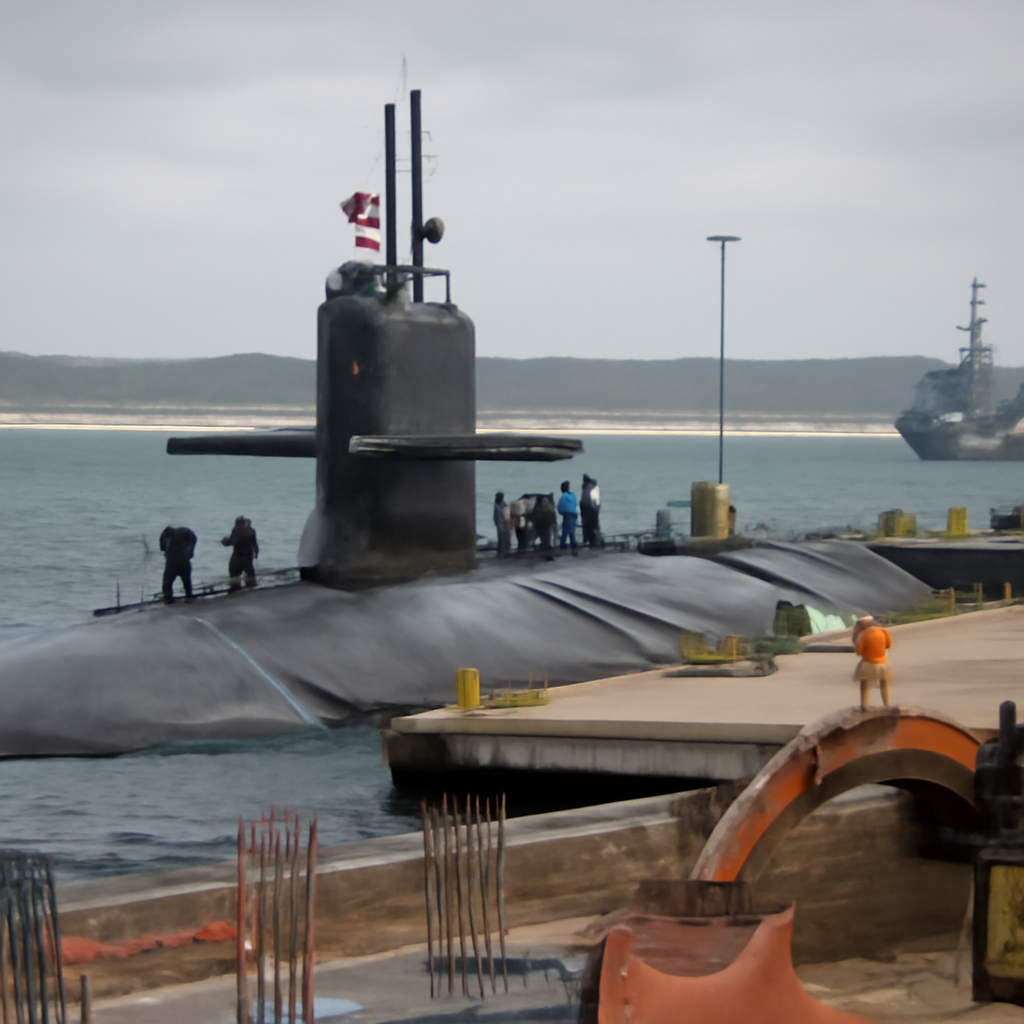
From 2027, Australia will host under AUKUS a US submarine force at HMAS Stirling, and what is at stake is how a US combat squadron based there would be used in war and how that use would align with Australia’s legal and political commitments.
What will be based at HMAS Stirling
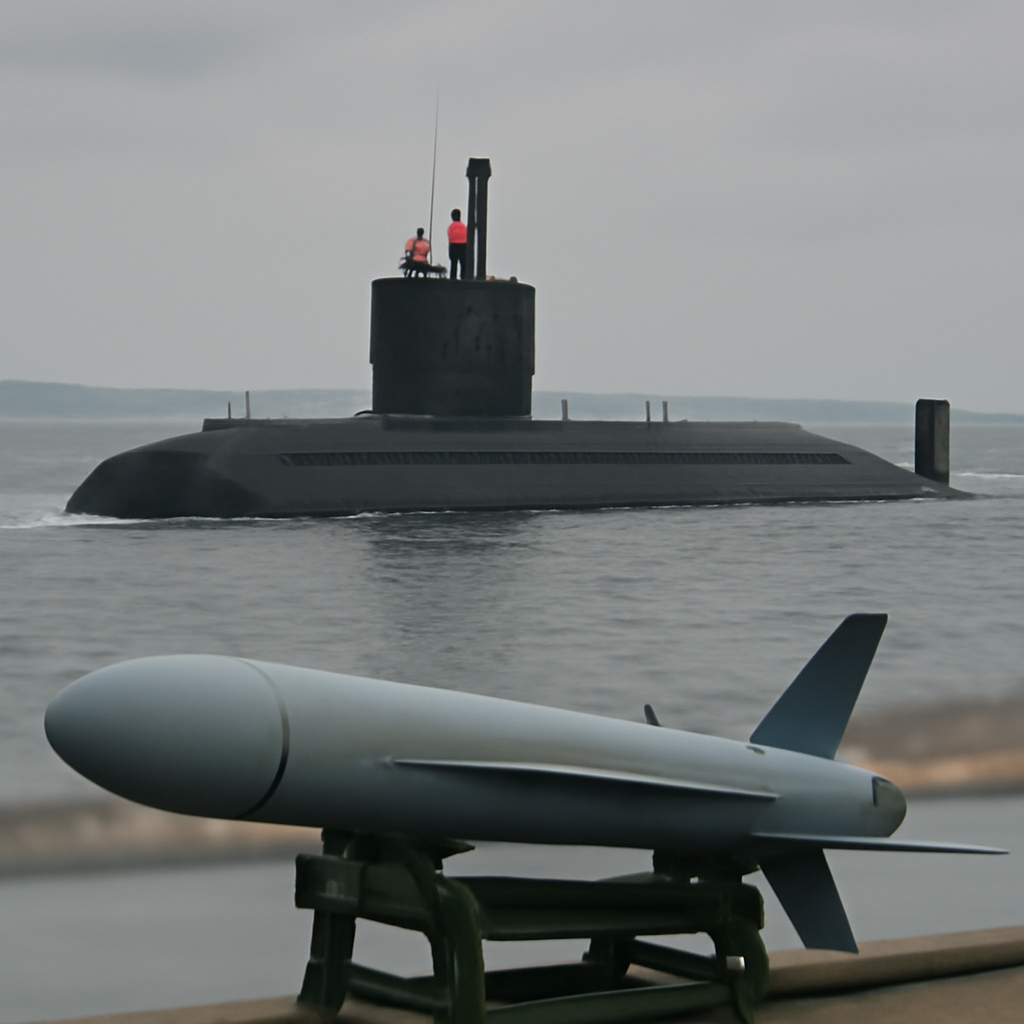
Under the AUKUS agreement, Submarine Rotational Force–West (SRF–W) will be established at HMAS Stirling, near Perth. The force is described as consisting of up to four US attack submarines and will be supported by a US “naval support activity” — the shore-based administrative entity for personnel and families. Purpose-built infrastructure, repair, sustainment and resupply facilities, shore amenities and housing are being provided at HMAS Stirling, with additional shipyard capability planned at nearby Henderson to assist sustainment and maintenance.
How the United States has organised the deployment
The US Navy has reactivated Submarine Squadron 3 — decommissioned in 2012 — to serve as the command headquarters for the rotational force and has stated the squadron will be based at HMAS Stirling from 2027. That organisational choice makes the Perth-based rotation functionally part of the US Pacific Fleet. The source describes a US military command chain that flows “from the president, through commander, Pacific Command, and then to the various naval taskforces to which the squadron’s submarines would be assigned during wartime.” Reported wartime tasks include anti-submarine and anti-surface warfare; land strike; intelligence and surveillance; and support to special forces.

This site is the portfolio.
OSINTSights runs on Cloudflare Workers, D1, R2, and Vectorize, with an AI pipeline on Hetzner ARM. Nubivance designed, built, and operates it. We do the same for clients.
See what we buildThe strategic rationale and wartime geometry
The analysis in the source frames HMAS Stirling as a classical operating location for sea power: a long coastline, defensible harbour, and industrial base that allow US submarines to access the Indian Ocean and swing between the Pacific and Indian oceans without transiting archipelagic waters to Australia’s north. From HMAS Stirling, US submarines would be able to conduct operations across maritime choke points from the Arabian Sea, across the Indian Ocean and in littoral waters of Southeast Asia and the Western Pacific. The source also situates this posture in the context of US operational concepts that began to crystallise around about 2010 under initiatives such as “Air–Sea Battle,” and notes that the AUKUS pact of September 2021 was the vehicle by which the submarine rotational force was agreed.
South Pacific Nuclear Free Zone Treaty, SLCM‑N, and a political crossroads
An acute policy dilemma identified in the source arises in the early 2030s. Congress has appropriated funding for an initial deployment in 2032 of a nuclear variant of the long‑range strike cruise missile — the sea‑launched cruise missile (nuclear), or SLCM‑N — to be fired from US ships and submarines, including Virginia‑class attack submarines. The South Pacific Nuclear Free Zone Treaty (signed in 1985 and introduced into domestic law in 1986) prohibits nuclear weapons being stationed in Australia, although naval visits by warships that may be carrying nuclear weapons are allowed. The source argues that rotations supported by permanent infrastructure and the establishment of Submarine Squadron 3 would be functionally indistinguishable from stationing, and that an argument would inevitably be mounted that rotations of SLCM‑N‑capable submarines through HMAS Stirling would breach the treaty.
The source also notes that the US policy of “neither confirm nor deny” a nuclear presence is not universal: in NATO nuclear‑sharing arrangements allies are informed and some participate in protection or launch arrangements. It adds that the US is unlikely to accept a blanket Australian request not to have SLCM‑N loaded on submarines rotating through Stirling, because doing so would reduce the deterrent effect of a fleet‑wide deployment whose adversary could not know which platforms carried the weapons.
What this means for the Australian government, the US Navy, and the Australian public
- The Australian government: Must reconcile hosting US sustainment and basing infrastructure with treaty obligations and sovereign decision autonomy over going to war. The source urges formal clarification now about whether Australia has authorised wartime planning that would allow use of Stirling for US combat missions, while keeping operational details secret.
- The US Navy: Has organised SRF–W as an operational combat element by reactivating Submarine Squadron 3 and providing shore support; it will seek operational flexibility, including the ability to deploy SLCM‑N across the fleet, and to avoid restrictions that would blunt deterrent effects.
- The Australian public: Will face a future national conversation over whether Australia can continue to host a rotational submarine squadron if those rotations include platforms capable of carrying nuclear cruise missiles — and whether existing domestic law and treaty commitments should be reinterpreted or changed.
The central fact pattern is straightforward: from 2027 HMAS Stirling will host a US rotational submarine element backed by permanent infrastructure and a US squadron headquarters. The harder questions are political and legal. The source calls for Australians to be told, in general terms, whether their government has authorised joint wartime planning and to prepare for a broader debate in the 2030s about SLCM‑N and treaty obligations. As the source frames it, without high degrees of prior planning and agreement between the allies there is a risk of strategic rupture; with planning, the choices required of Australian decision‑makers will at least be explicit rather than improvised “on the day.”