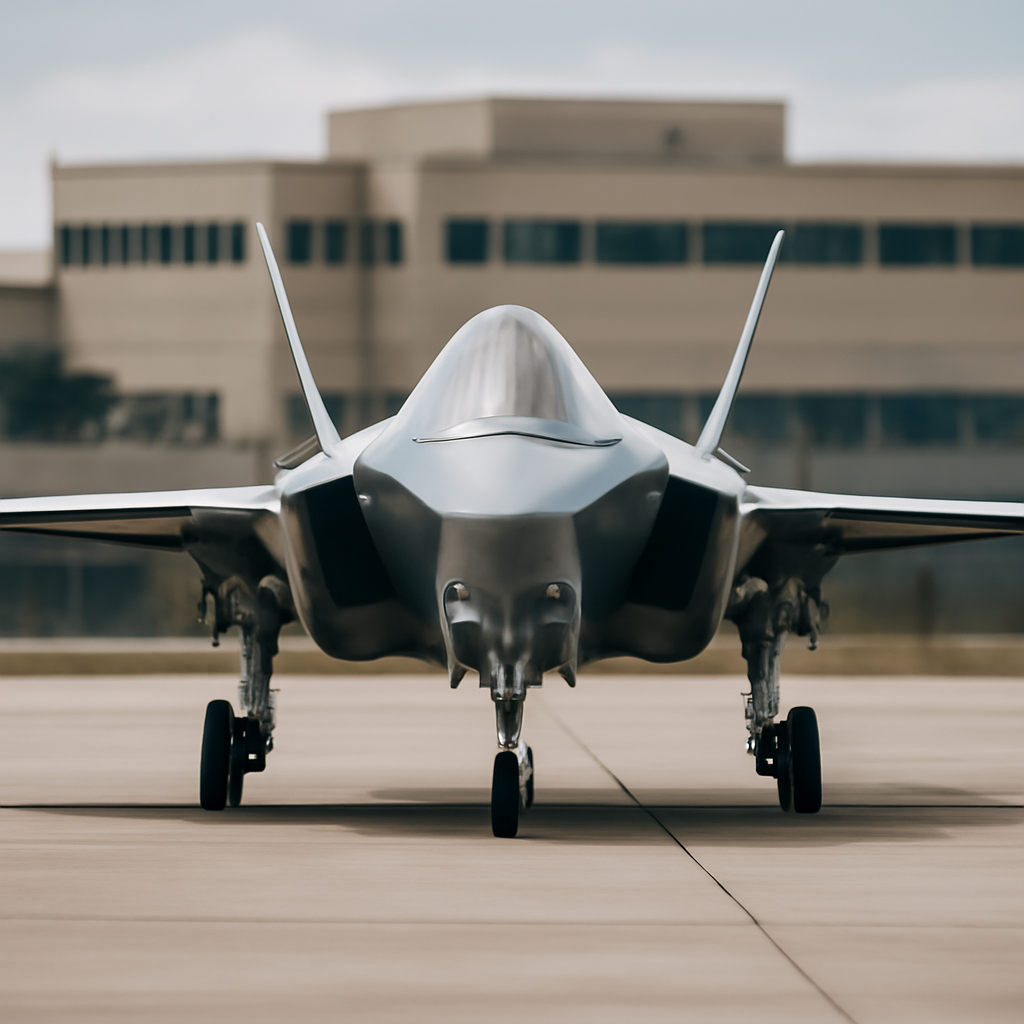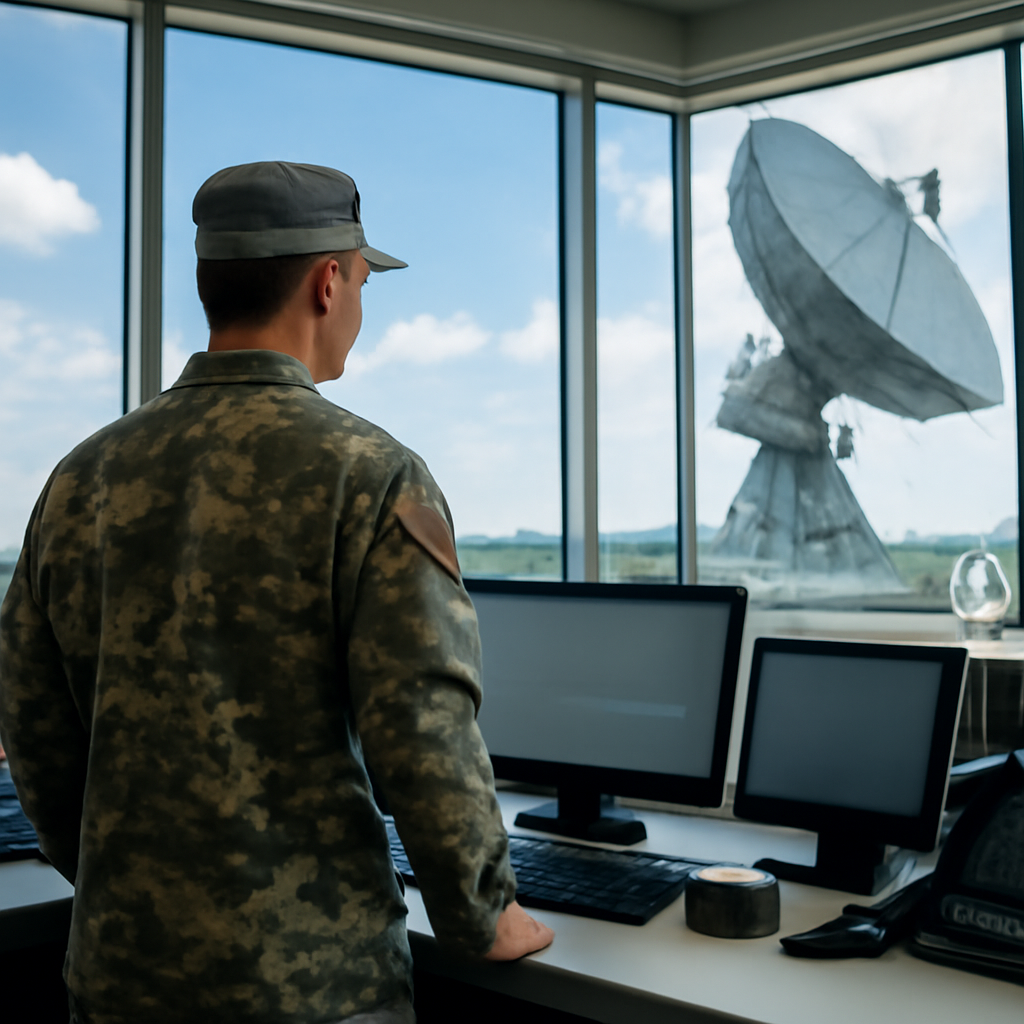
On 14 September, US Secretary of the Air Force Troy Meink publicly announced that the US Space Force had deployed “space control weapons” in response to growing threats to American and allied space systems.
The announcement punctuated an argument the source makes plainly: the competition over space capabilities did not begin that day. For more than two decades, China and Russia have been developing and deploying tools intended to disrupt, degrade or destroy satellites and the services they provide. What recent fighting in Ukraine and the Middle East shows is that those space-enabled effects now shape events on Earth in ways that matter directly to the Indo‑Pacific.
Troy Meink’s announcement and the continuity of counterspace competition
The 14 September announcement drew predictable criticism from Russia and China, which accused Washington of accelerating an arms race in space. The source counters that criticism by underscoring continuity: China has spent decades building direct‑ascent anti‑satellite missiles, electronic warfare systems, cyber capabilities, directed‑energy weapons and rendezvous-and-proximity satellites; Russia has pursued many of the same capabilities. The piece frames “space control” not as an appetite for conflict in orbit but as recognition that adversary space capabilities can directly affect terrestrial military operations.
Commercial space and Starlink: lessons from Ukraine for resilience
One of the clearest lessons the source draws from Ukraine is the role of commercial space in preserving military effectiveness under attack. At the start of Russia’s 2022 full-scale invasion, Moscow sought to disrupt Ukrainian communications and command-and-control networks. Ukraine maintained critical connectivity in significant part because of Starlink’s proliferated low‑Earth‑orbit satellite architecture: thousands of terminals provided communications far harder to destroy than ground networks.
The source stresses two points. First, Starlink “did not determine the outcome of the war” but it helped prevent Russia from achieving a key early objective — severing the communications needed for an organised Ukrainian defence. Second, the resilience commercial constellations can provide is applicable across the Indo‑Pacific, where Australia, Japan, South Korea and the US “operate across enormous distances.” The caveat: governments cannot assume commercial services will be available in crisis; contractual arrangements, technical integration and operational concepts must be in place before a crisis begins.

This site is the portfolio.
OSINTSights runs on Cloudflare Workers, D1, R2, and Vectorize, with an AI pipeline on Hetzner ARM. Nubivance designed, built, and operates it. We do the same for clients.
See what we buildGNSS — GPS, Galileo, GLONASS and BeiDou — as capability and vulnerability
The source emphasises that Global Navigation Satellite Systems — the US’s GPS, the EU’s Galileo, Russia’s GLONASS and China’s BeiDou — now enable much more than simple navigation. They underpin precision weapons, drones, dispersed operations, communications networks and sophisticated unmanned systems. Both the Ukraine and Middle East conflicts have featured extensive jamming and spoofing, demonstrating that reliance on satellite navigation creates acute vulnerabilities for missiles, drones, logistics, command networks and even civilian aviation and maritime traffic.
China’s BeiDou is singled out for reducing Beijing’s dependence on GPS and strengthening the resilience of the Chinese military’s precision‑strike network. The source urges that US and allied forces therefore need not only more resilient GPS access but alternative sources of positioning, navigation and timing and the ability to operate when satellite signals are degraded or denied — a task the source explicitly says Australia should be part of.
Commercial imagery, transparency, and how bases must operate
Commercial overhead imagery has transformed battlefield visibility. High‑quality imagery that was once the preserve of governments is now widely available commercially. The source warns that those services benefit democracies and their militaries but also enable adversaries to observe aircraft movements, port activity, troop deployments, logistics hubs and forward bases.
For the Indo‑Pacific, the implication is stark: major bases in Australia, Japan, Guam and elsewhere “must increasingly be treated as observable.” The recommended responses are operational: dispersion, mobility, deception, concealment, hardened infrastructure and tighter operational security rather than abandoning facilities.
What this means for Australia, Japan, and commercial satellite providers
- Australia and Japan: build more resilient, distributed space architectures; integrate commercial systems into military planning; strengthen positioning, navigation and timing resilience; and participate in mechanisms for sharing space‑domain awareness and commercial satellite data in crises.
- Commercial satellite providers (for example, providers of proliferated LEO communications): expect governments to require contractual arrangements, technical integration and operational concepts before a crisis; their constellations can materially affect the resilience of allied forces under attack.
- The US and its allies collectively: develop credible, non‑debris‑generating means of denying adversaries effective military use of space services when those services are used to attack allied forces, and continue diplomatic efforts to reduce the most dangerous forms of counterspace competition — especially debris‑generating anti‑satellite testing and any deployment of nuclear weapons in orbit. The source calls attention to Russia’s reported development of a nuclear anti‑satellite capability as highlighting the stakes.
Ukraine and the Middle East show a pivotal shift: space has migrated from a supporting domain to one that can determine outcomes on Earth. For the Indo‑Pacific, the central fact is simple and stark as written in the source: in the next major conflict, control of the terrestrial battlefield may increasingly depend on the ability to protect, exploit and, when necessary, contest the space domain.