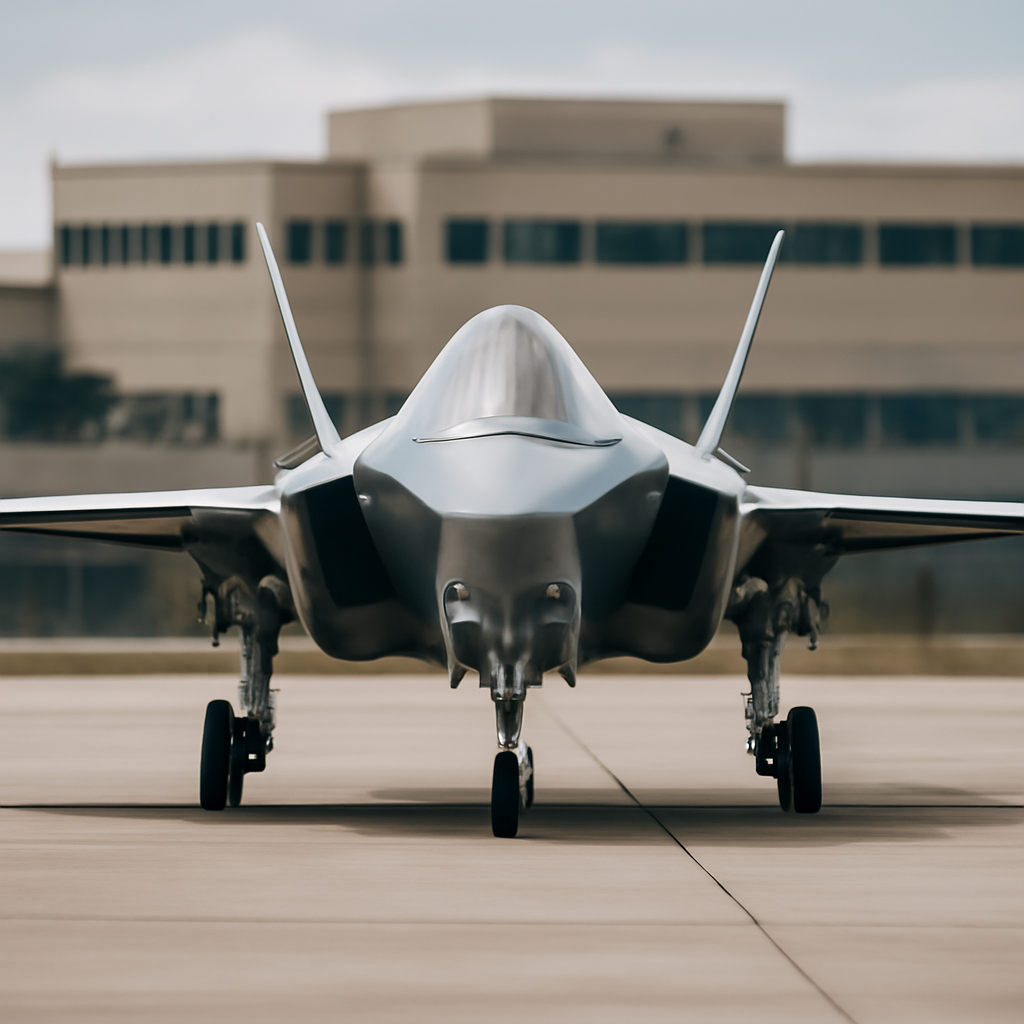
"At this stage, we have neither defined the precise mission requirements nor the spectrum of options that could fill it," an Air Force spokesperson told TWZ — a candid line that captures where the service stands on a persistent idea: buying new-build F-16s for U.S. service.
Lockheed Martin's F-16G proposal
Lockheed Martin has pitched an enhanced Block 70 derivative reportedly called the F-16G as a potential option for U.S. service. The configuration under discussion would add conformal fuel tanks, 600-gallon wing tanks, an infrared search-and-track (IRST) system, a Sniper targeting pod, and a drag chute — all systems that have appeared on earlier F-16s or are fielded today. Company spokes and reporting frame the proposal as a way to replace F-16s approaching the end of their useful lives without inventing a brand-new program.
Numbers: the fighter shortfall the Air Force faces
The service’s 2025 long-term fighter force-structure assessment set a 2035 requirement of 1,558 combat-coded manned fighters. By May 2026 the Air Force had 1,098 fighters on the books, below a statutory minimum of 1,145. Those gaps are driving a complex procurement picture in which the Air Force must manage retirements, expand F-35A buys, introduce the F-47, add F-15EXs, and field Collaborative Combat Aircraft (CCA) — all while constrained by budgets, industrial capacity, personnel, and infrastructure.

Audit-ready is a season. It shouldn't be.
Evidence in spreadsheets, controls drifting between audits, frameworks multiplying on flat headcount. Nubivance runs continuous compliance on Rapid7 Cyber GRC - SOC 2, HIPAA, ISO 27001, PCI, CMMC.
End the scrambleGreenville production line and industrial constraints
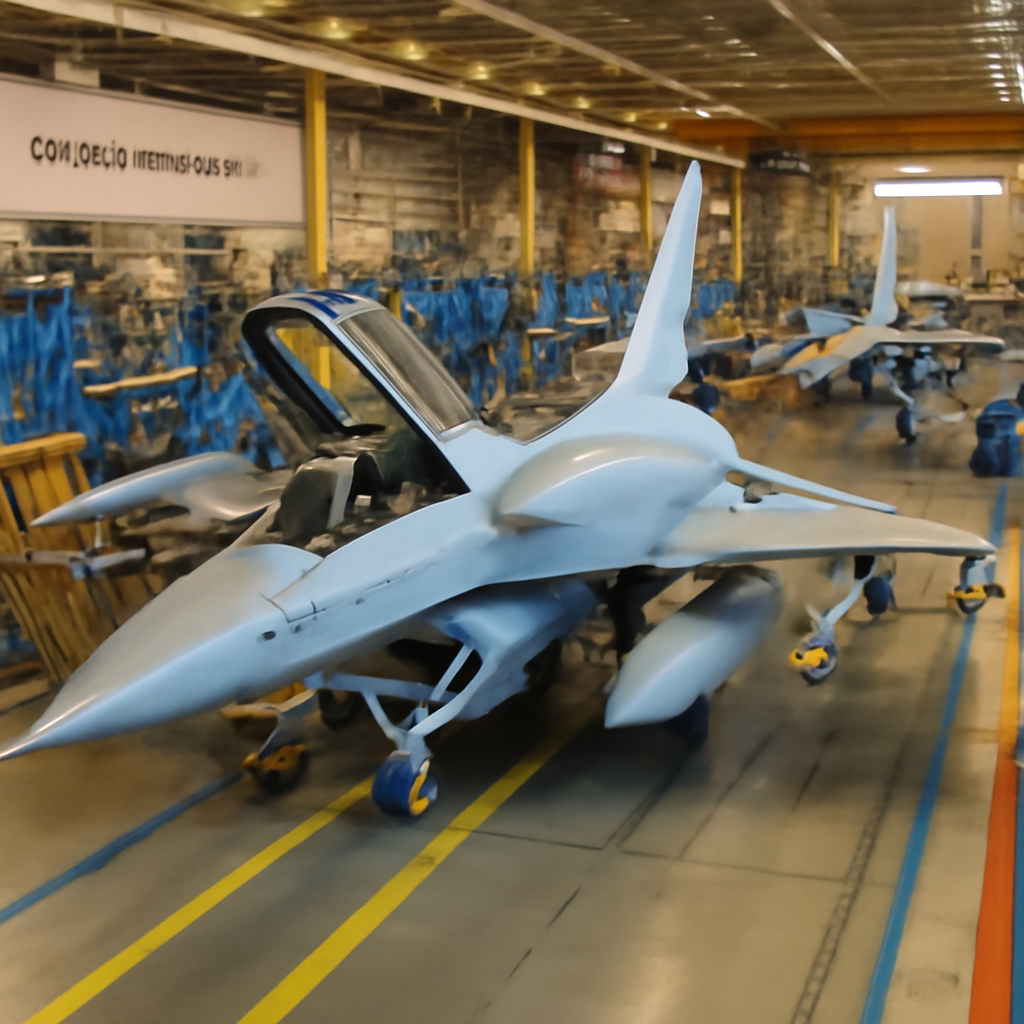
One practical reason the F-16G keeps resurfacing is that Lockheed Martin already operates an F-16 production facility in Greenville, South Carolina, producing Block 70/72 aircraft for foreign customers. The line carries a significant foreign-order backlog — reported at more than 100 aircraft — and was created to sustain the F-16 industrial base through foreign military sales. That means a U.S. buy would not require reviving a dormant line, but it would have to compete for capacity with existing international orders and may involve only modest modifications rather than a major engineering program.
How CCAs and force mix change the calculus
CCAs (Collaborative Combat Aircraft) are a recurring part of the debate. The Air Force intends CCAs to augment rather than replace crewed fighters; pairing CCAs with fourth-generation fighters could push sensing and some risk forward onto uncrewed platforms. TWZ notes this could materially improve the survivability and lethality of a modernized F-16 in more contested scenarios. The reporting cites two CCA prototypes by name: General Atomics’ YFQ-42 (nicknamed Vengeance for the first increment) and the YFQ-44A Fury, which has flown as part of experimental operations and ACE testing through mid-2026.
What this means for the Air National Guard, Congress, and Lockheed Martin
- Air National Guard: A Block 70-derived F-16 would let Guard units recapitalize in place, retaining much of their existing infrastructure, simulators, and maintenance procedures and avoiding the conversion costs tied to more complex airframes.
- Congress: Lawmakers will have to weigh whether buying new jets is preferable to upgrading existing F-16s, and whether the acquisition forecast should prioritize additional F-35s, F-15EXs, CCAs, or new F-16s. December 2025 reporting flagged that members want to see economic and operational justification before funding new-build Block 70s.
- Lockheed Martin: A U.S. order could keep the Greenville line lively and defend industrial capacity, but any large U.S. procurement would have to be balanced against a substantial foreign military sales backlog and the company’s existing production commitments.
Choices, costs, and the path forward
Arguments in the source material are pragmatic rather than romantic. A new-build Block 70 variant is presented as cheaper to buy and far cheaper to operate and sustain over its service life than an F-35 — a financially consequential point when multiplied across a fleet. Lockheed’s Block 70 development has largely been funded by foreign customers, making it an off-the-shelf option that could deliver modern fourth-generation capability quickly. Proponents also point to structural life: a new F-16 airframe would offer on the order of 12,000 flight hours without structural upgrades, far more remaining life than legacy jets that have accumulated decades of fatigue.
Still, the idea faces practical and political hurdles. Gen. David Allvin told a May 2025 hearing he needed to study the time to adapt Block 70 designs, where a U.S. aircraft could fit on the production line, and what the industrial base could support; he also warned the line was heavily occupied by foreign orders. Inside Defense reporting in December 2025 framed the conversations as exploratory, and TWZ notes the Air Force could not realistically add a Block 70 buy into the Future Years Defense Program until at least fiscal 2028 because FY2027 budget work was already too far advanced.
The proposal remains a clear policy choice: prioritize more fifth- and sixth-generation platforms and uncrewed systems, or preserve and extend a large, affordable, modernized fourth-generation segment that can be produced from an existing U.S. line. Given the service’s force-structure shortfall, the Greenville facility’s capacity and backlog, the relative cost and sustainment profile of Block 70s, and the potential force-multiplier role of CCAs, the F-16G has moved from theory into practical consideration — even if it is not yet a funded program.