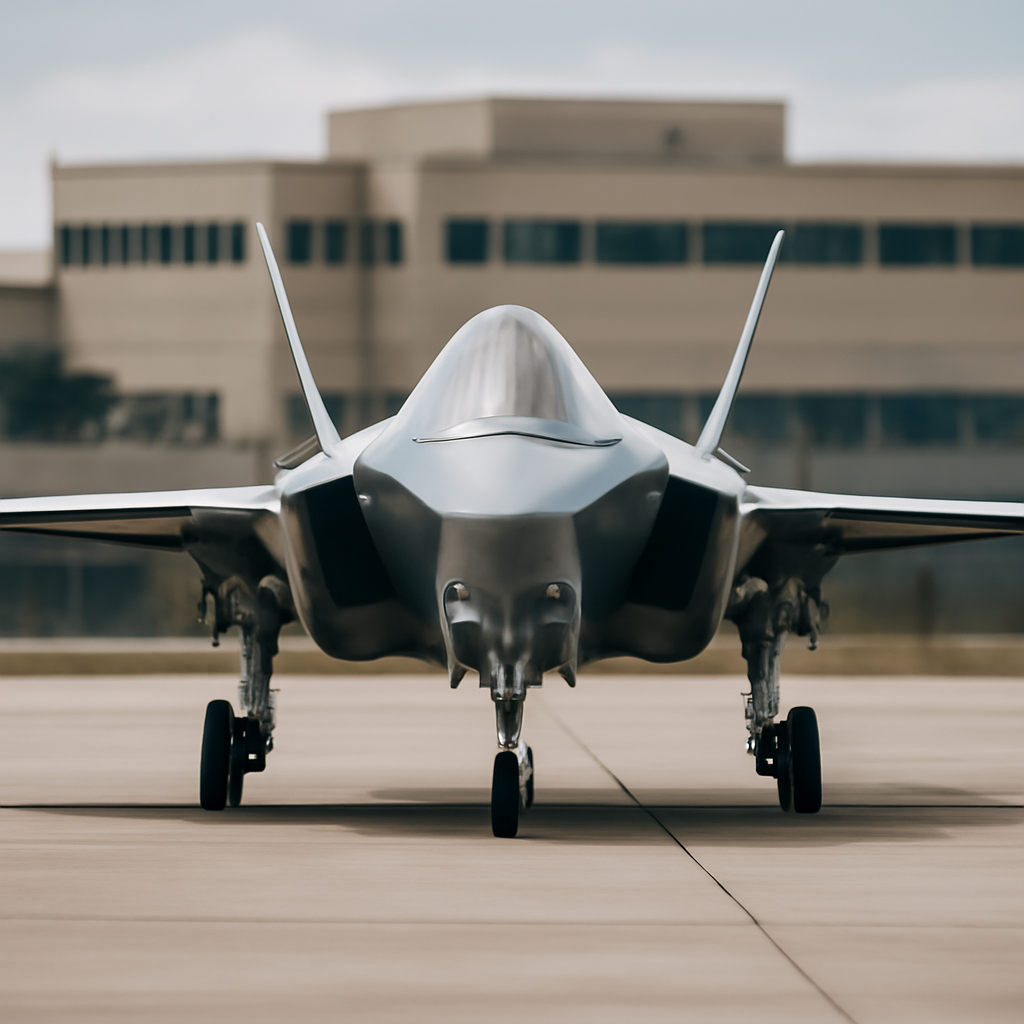
"The government‑to‑government agreement to provide F‑35 aircraft exemplifies our shared commitment to enduring security, stability, and long‑term cooperation," Lockheed Martin said in a statement.
State Department clears a conditional sale, Congress gets 30 days
The U.S. State Department has cleared a potential sale that would permit Saudi Arabia to buy up to 48 F‑35A aircraft and 49 F135 engines in a package valued at up to $24.3 billion, the agency said in a notice published on Sept. 17, 2026. The notice triggers a 30‑day congressional review period during which lawmakers can move to block the deal. The department also warned the sale “will not alter the military balance in the region” and said it “will support the foreign policy and national security objectives of the United States by improving the security of a major non‑NATO ally that is a force for political stability and economic progress in the Gulf region.”
Package specifics: aircraft, engines, training and support
The proposed sale covers the conventional takeoff and landing F‑35A variant, 49 F135 engines, and additional items that the State Department described broadly as support equipment and training. The notice made clear that prices and quantities are not yet final and can change during negotiations. The F‑35 is manufactured by Lockheed Martin; the jet’s engine is produced by Pratt & Whitney, a subsidiary of RTX.

The cyber insurance questionnaire just landed. Now what?
SOC 2, HIPAA, insurance renewals - someone has to own security strategy. Nubivance provides fractional CISO leadership without the full-time salary.
Get a security leadIndustry response and program notes
Lockheed Martin offered a public statement welcoming the government‑to‑government agreement and saying the aircraft’s capabilities “directly support” Saudi Arabia’s “Vision 2030.” Pratt & Whitney referred questions about the transaction to the Pentagon’s F‑35 Joint Program Office, according to the updated report. The State Department update on Sept. 17 also noted the addition of Lockheed’s comments and the referral by Pratt & Whitney to the Joint Program Office.
Security concerns and congressional scrutiny
The F‑35 sale has attracted heightened legislative scrutiny compared with routine arms transfers. A New York Times report this week, cited in the State Department notice, said U.S. intelligence warned the transfer could give Beijing access to the jet’s “highly sensitive technology.” That intelligence assessment has prompted public concerns from some lawmakers, though the notice notes it remains unclear whether enough members of Congress will oppose the sale to block it. The 30‑day review window is the immediate procedural test for opponents.
Regional and operational context: Saudi, Iran, and ongoing conflict
The notice framed the sale as arriving at a critical time for Riyadh and the Gulf. The report says conflict with Iran has drawn Saudi Arabia — which hosts U.S. bases — into open conflict with Tehran. The war has damaged oil exports crucial to the Saudi economy, including attacks by Iranian proxies on a critical Saudi oil pipeline that has been taken offline, the notice states. The F‑35 has been used heavily by the United States and Israel during the war; one Air Force F‑35A was reportedly hit by ground fire after flying combat missions over Iran, though the pilot managed to land safely.
What this means for Congress, the Saudi military, and Lockheed Martin
- Congress: Lawmakers have 30 days to review and potentially block the sale. Some have publicly raised concerns about intelligence warnings regarding technology transfer to Beijing; whether those concerns will translate into a successful legislative block is uncertain.
- Saudi military: If finalized, Saudi Arabia would gain access to an advanced stealth fighter fleet — entry into a group of 20 international operators, including the United States, of “the only fifth‑generation Western stealth fighter currently in production,” according to the notice. The package would include training and support meant to integrate the jets into Riyadh’s forces.
- Lockheed Martin and U.S. suppliers: Lockheed framed the deal as supporting long‑term cooperation and Saudi “Vision 2030,” while Pratt & Whitney directed interaction about the sale to the Pentagon’s F‑35 Joint Program Office. The final terms — quantities and pricing — remain subject to negotiation.
The immediate next step is procedural: the conclusion of the 30‑day congressional review and any action lawmakers take. Beyond that, the sale’s terms can still change in negotiation, and key questions flagged in the notice — technological security, congressional opposition, and how the State Department weighed Israel’s qualitative military edge requirement — remain in play. The State Department’s published finding says the transfer “will not alter the military balance in the region,” but whether that assessment will satisfy Capitol Hill scrutiny is the unresolved hinge on which the deal now turns.