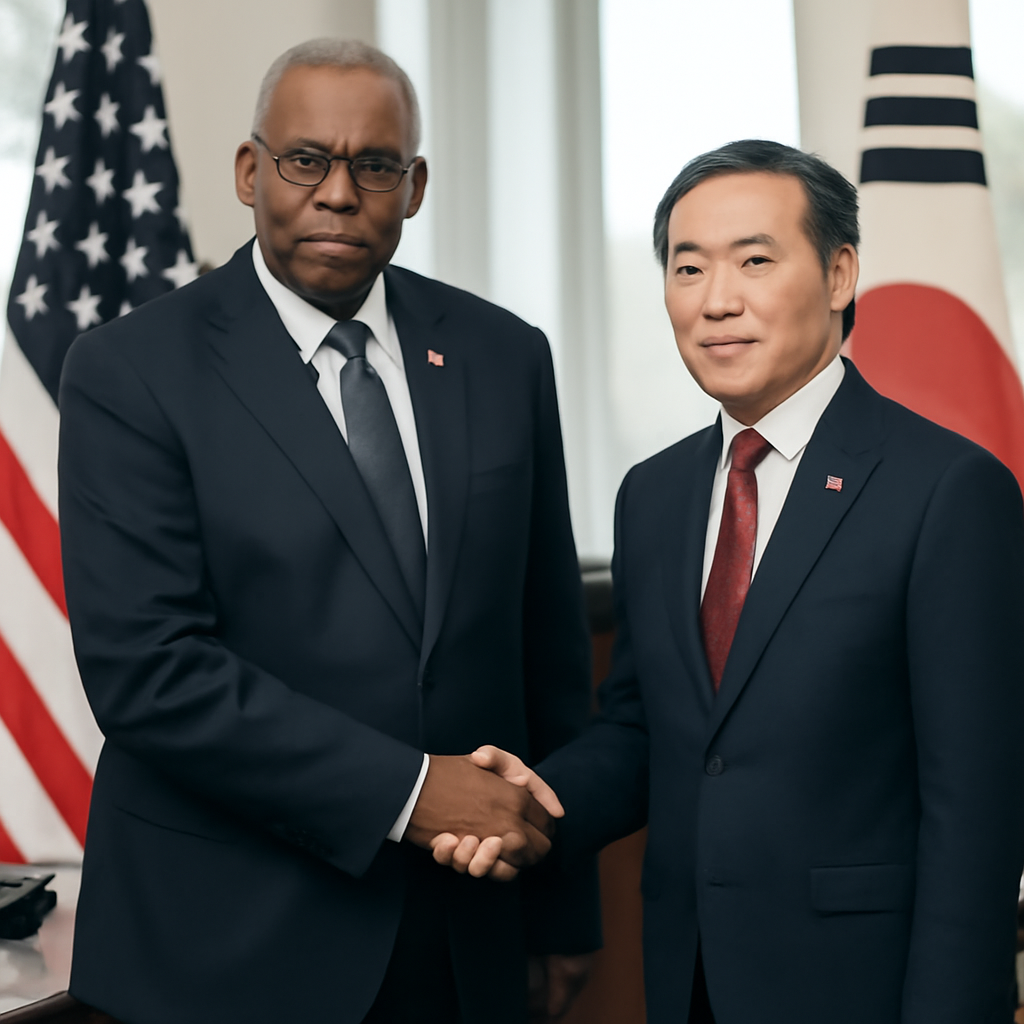
At their meeting on May 11, 2026, Defense Ministers Ahn Kyu-back and Pete Hegseth reaffirmed OPCON transfer and alliance modernization as core agenda items — a signal, the source argues, that the structural conversation can no longer be deferred.
The strategic goal: from asymmetry to shared accountability
The four-part series frames OPCON transfer not as a bureaucratic title change but as the turning point of a 70-year relationship. The objective is a “Koreanization of Korean defense” that replaces the alliance’s structural asymmetry with “shared accountability rather than structural asymmetry.” Keeping the current Combined Forces Command structure, the series warns, is comfortable and familiar but not a strategy: parallel command arrangements, procrastination, or outright cancellation carry real political and operational costs.
The Future CFC, ROK Strategic Command, and combined deterrence
The report lays out a specific institutional architecture for the post-transfer alliance. The Future CFC (F-CFC) should be tightly integrated with South Korea’s Joint Chiefs of Staff and the ROK Strategic Command. The source states that the “ROK Strategic Command is the core of South Korea’s independent deterrence architecture” and will serve as the platform for executing ROK-U.S. Conventional-Nuclear Integration (CNI) alongside U.S. extended deterrence assets. In that design, South Korea leads conventional defense while the United States contributes nuclear deterrence and strategic assets; the F-CFC becomes the integration hub where those contributions connect.

Audit-ready is a season. It shouldn't be.
Evidence in spreadsheets, controls drifting between audits, frameworks multiplying on flat headcount. Nubivance runs continuous compliance on Rapid7 Cyber GRC - SOC 2, HIPAA, ISO 27001, PCI, CMMC.
End the scrambleClosing command seams: continuous authority and CNI
One of the central operational claims is that continuous Korean command authority “from peacetime through wartime closes the response-time gap that the current dual command structure creates.” Under the proposed arrangement a Korean commander with wartime OPCON would be the authoritative decision-maker on conventional operations, enabling the Nuclear Consultative Group (NCG) framework to move “from consultation to genuine integration.” The series argues that this level of combined CNI integration is not reachable within the current structure and that OPCON transfer provides the necessary structural foundation.
Technology, industry, and MASGA: building a reciprocal partnership
The analysis emphasizes that South Korea’s investments made in the lead-up to transfer will have broader value. It lists AI-enabled manned-unmanned teaming, space domain operations, cyber capabilities, and precision strike as technologies that form “the foundation of a genuine technology partnership.” South Korea’s shipbuilding capacity supporting U.S. Navy maintenance, repair, and overhaul (MRO) and the MASGA investment cooperation framework are cited as examples of the alliance extending into economic security. In short, the report posits a shift from a one-way flow of capability to a reciprocal technological and industrial relationship.
Indo‑Pacific reach, basing, and strategic flexibility
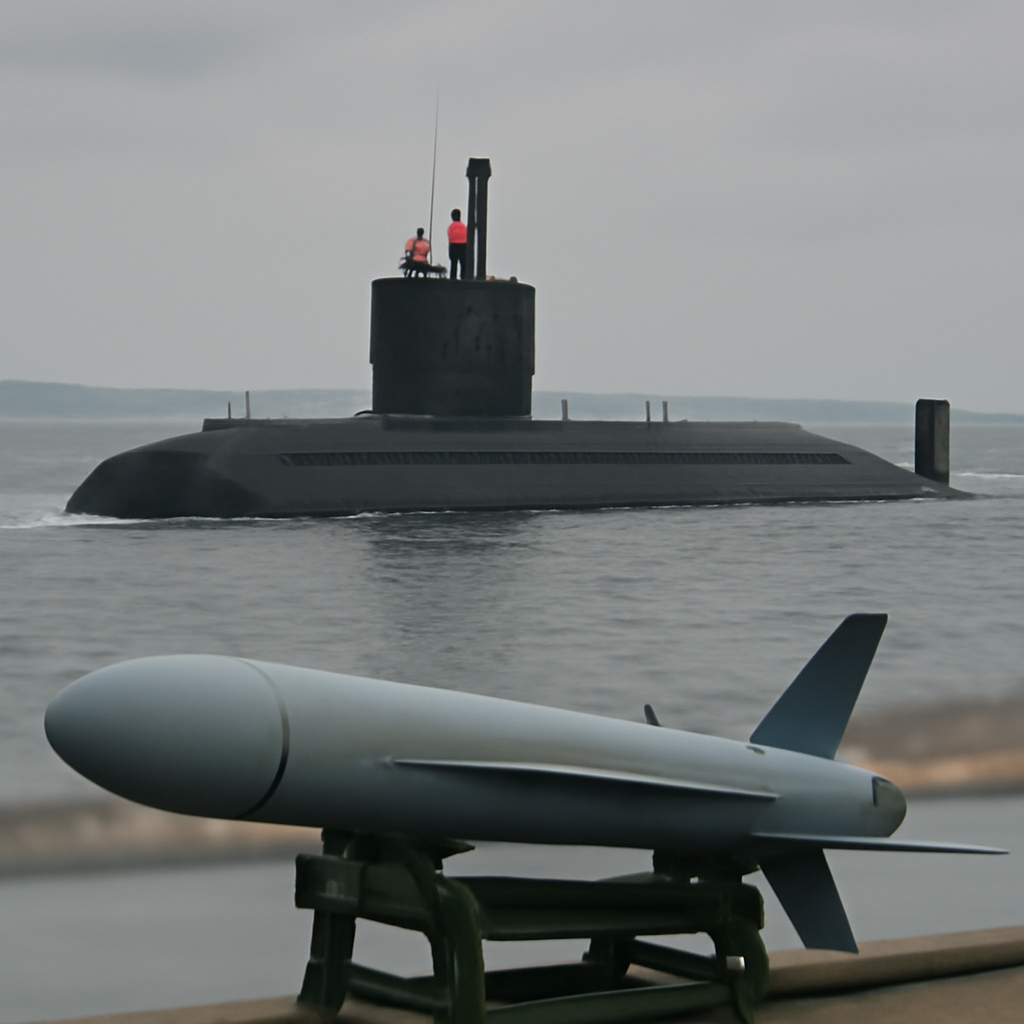
The piece argues that OPCON transfer unlocks U.S. strategic flexibility across the Indo‑Pacific. Korean command of theater operations would free U.S. Forces Korea “from its role as a static peninsula garrison,” enabling more dynamic deployments. The series notes that geographic constraint can be overcome by modern capabilities: precision strike, long‑range surveillance, and communications. It also mentions the still-developing programs — South Korea’s nuclear-powered submarine program and the U.S. nuclear-armed sea-launched cruise missile (SLCM-N) — as potential material links among allies, both “still in development and subject to ongoing policy deliberation.”
What this means for South Korea, the United States, and North Korea
- South Korea: The report says OPCON transfer lets Seoul “recover initiative over its own defense,” position the ROK Strategic Command and Joint Chiefs of Staff as operational hubs, and convert domestic investments in semiconductors and autonomous systems into alliance contributions rather than purely national capabilities.
- The United States: Transfer is framed as a way for Washington to “recover the strategic flexibility the Indo-Pacific demands,” gain a partner capable of carrying the peninsular burden, and rely on South Korea for logistics and industrial support across the region.
- North Korea: The series warns that delay “paradoxically benefits South Korea’s adversaries,” noting that “North Korea’s nuclear program is moving fast.” Post‑transfer, North Korea would face “a unified combined defense structure from which the command seams have been removed and which can no longer be exploited.”
Not a loosening of ties but a reorganization, the report insists — “Not a Divorce: A Renewal of Vows.” OPCON transfer is presented as the means by which the 70‑year asymmetric alliance becomes a “genuinely symmetric strategic partnership for the 21st century.” The remaining hinge is political: the source concludes that “what remains is the political will – and the momentum – to complete what both sides have already begun.”
Original story: The Diplomat — The South Korea-US Alliance: What Comes After OPCON?