"Through [FAMM] agreements with Anduril, CoAspire, and Zone 5, the DoW will accelerate rapid validation of a new family of low-cost, air-launched cruise missiles – capabilities that will strengthen the Arsenal of Freedom," the Pentagon said in a press release today.
The Pentagon and the Family of Affordable Mass Missiles (FAMM)
The U.S. Air Force is pursuing a mass-buy strategy under the Family of Affordable Mass Missiles (FAMM) program and has said it aims to acquire nearly 28,000 FAMM munitions in the next five years. FAMM is structured to field multiple lower-cost cruise-missile types and configurations: lugged variants (FAMM-L) for hardpoint launch, palletized variants (FAMM-P) for cargo-plane employment, and extended-range FAMM-BAR designs — BAR standing for "Beyond Adversary’s Reach."
For fiscal year 2027 the Air Force is requesting $55 million in discretionary funds and $300 million in mandatory (reconciliation) funds to procure 1,000 All Up Rounds covering both Palletized (FAMM-P) and Lugged (FAMM-L) variants. The Department of Defense received a 5-year authorization for FAMM in the Fiscal Year 2026 National Defense Authorization Act and is seeking congressional approval in the FY27 NDAA and Appropriations Bill for a 7-year, multi‑year procurement program.
Anduril, Zone 5, and CoAspire: the munitions named so far
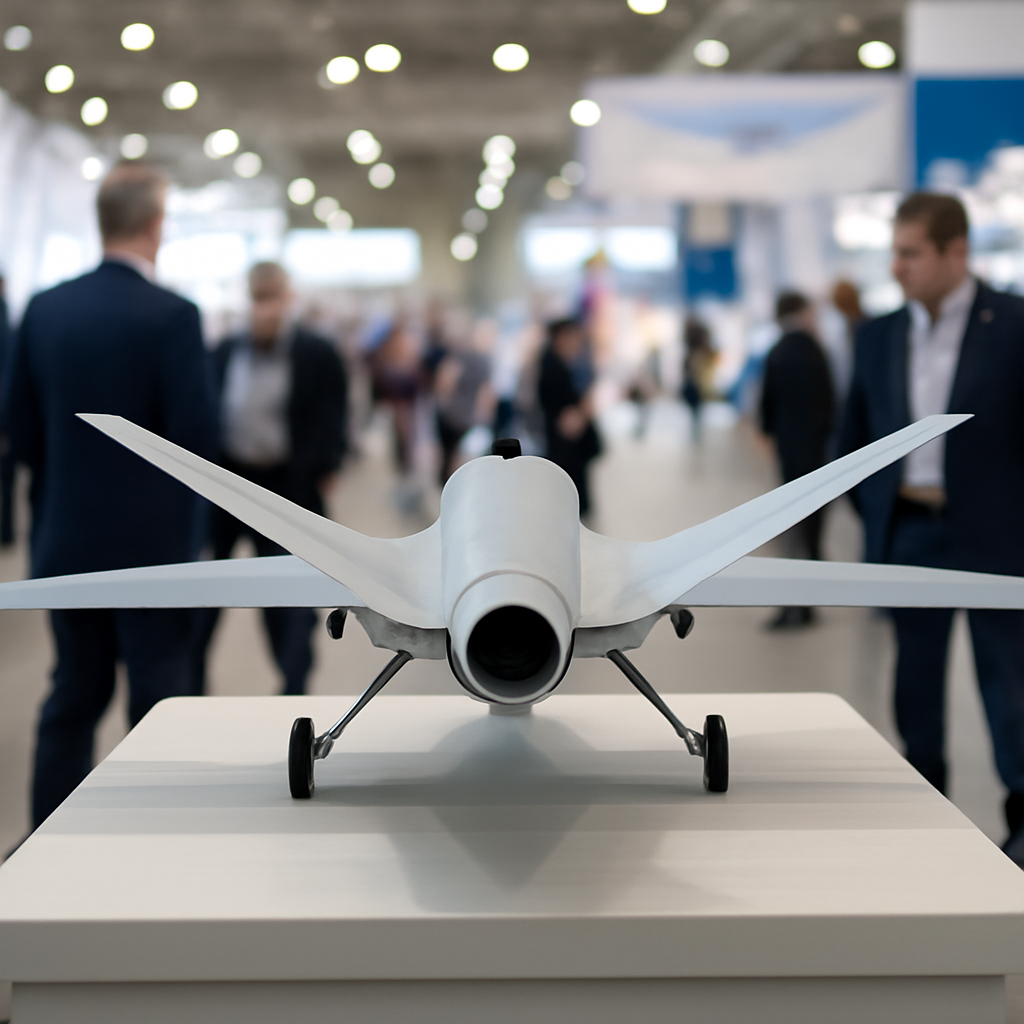
The new framework agreements announced by the Pentagon name three contractors as initial partners: Anduril, CoAspire, and Zone 5. Anduril confirmed its contribution will be versions of its Barracuda-500 design and said it is aiming to start making deliveries under FAMM next year. Anduril noted: "We joined the FAMM-L program in February 2026 and will execute the first ground and flight tests for Lug-Launched Barracuda-500M in the next several months." The company also reported having completed "the first successful flight test of Pallet-Launched Barracuda-500M in September 2024" and conducting dozens of follow-on flight tests.
Zone 5 confirmed it will supply the AGM-188A Rusty Dagger. CEO Thomas Akers said: "By leveraging modern manufacturing and commercial technology, we are breaking the traditional cost curve, enabling the Department of War to field scalable, affordable capacity. The AGM-188 Rusty Dagger will deliver thousands of weapons per year for fighter and cargo aircraft employment but importantly without sacrificing exquisite performance."
CoAspire's framework covers its Rapidly Adaptable Affordable Cruise Missile (RAACM). Doug Denneny, CoAspire’s CEO, Owner, and Founder, said inclusion "underscores CoAspire’s ability to revolutionize our country’s strike capabilities" and highlighted that CoAspire and its "56 first-tier suppliers across almost every state are excited to support the Air Force’s need to affordably procure thousands of FAMM cruise missiles over seven years."

This site is the portfolio.
OSINTSights runs on Cloudflare Workers, D1, R2, and Vectorize, with an AI pipeline on Hetzner ARM. Nubivance designed, built, and operates it. We do the same for clients.
See what we buildProcurement mechanics: multi-year agreements, pricing, and production incentives
The Pentagon framed these deals as seven-year, multi‑year agreements that would be awarded "upon the successful validation and competitive selection of the munitions," subject to congressional appropriations and necessary authorizations. The department said the multi‑year approach will use firm‑fixed‑price contracting with a minimum quantity floor and that "shares are split among all qualified vendors to ensure multiple production lines are positioned to surge."
The release added that "contractors that meet or exceed production schedules will be eligible for additional procurement quantities – pending congressional appropriations – fostering a competitive environment that rewards efficiency and speed." The agreements also do not preclude onboarding additional vendors in the future, the Pentagon said, preserving competition opportunities as technology advances.
Links to LCCM, ERAM, and a shifting supplier base
The FAMM announcements follow related framework deals announced in May for the Low-Cost Containerized Missiles (LCCM) program, under which Anduril, CoAspire, Zone 5, and Leidos were among companies receiving agreements to support plans to buy 10,000 lower-cost ground-launched cruise missiles through 2029. That May announcement also included an agreement with Castelion regarding production of 12,000 Blackbeard lower-cost hypersonic missiles.
The source material notes ERAM (the Extended Range Attack Munition program) fed into the FAMM effort; Rusty Dagger and RAACM were initially developed under ERAM. Zone 5 previously confirmed AGM-188A deliveries to Ukraine have begun, although the Pentagon source says it is unclear whether they are being employed operationally. The reporting also notes the market for lower-cost cruise missiles has expanded rapidly, blurring lines between such weapons, long‑range kamikaze drones, and decoys, and highlighting designs being adapted across air, land, and maritime launch domains.
What this means for the U.S. Air Force, congressional appropriators, and manufacturers
- The U.S. Air Force: FAMM provides "flexible logistics, handling, and deployment options" through lugged and palletized variants and seeks mass procurement to build inventory at scale.
- Congressional appropriators and authorizers: the program’s transition from a 5-year authorization to a proposed 7-year multi‑year procurement depends on action in the FY27 NDAA and Appropriations Bill and on specific appropriations such as the FY27 request for 1,000 All Up Rounds.
- Manufacturers and new entrants (Anduril, CoAspire, Zone 5 and their suppliers): the framework deals reward production speed and efficiency, split shares among qualified vendors, and leave the door open to onboard additional suppliers — signaling a deliberate move to diversify production beyond legacy primes.
The Pentagon’s FAMM framework marks an explicit shift toward buying massed, lower‑cost strike munitions and toward diversifying suppliers and production paths. The immediate steps are validation and competitive selection of munitions, congressional approval of a longer multi‑year procurement, and initial FY27 funding to buy 1,000 All Up Rounds — with Anduril targeting first deliveries next year and other vendors positioned to scale if selected and funded.