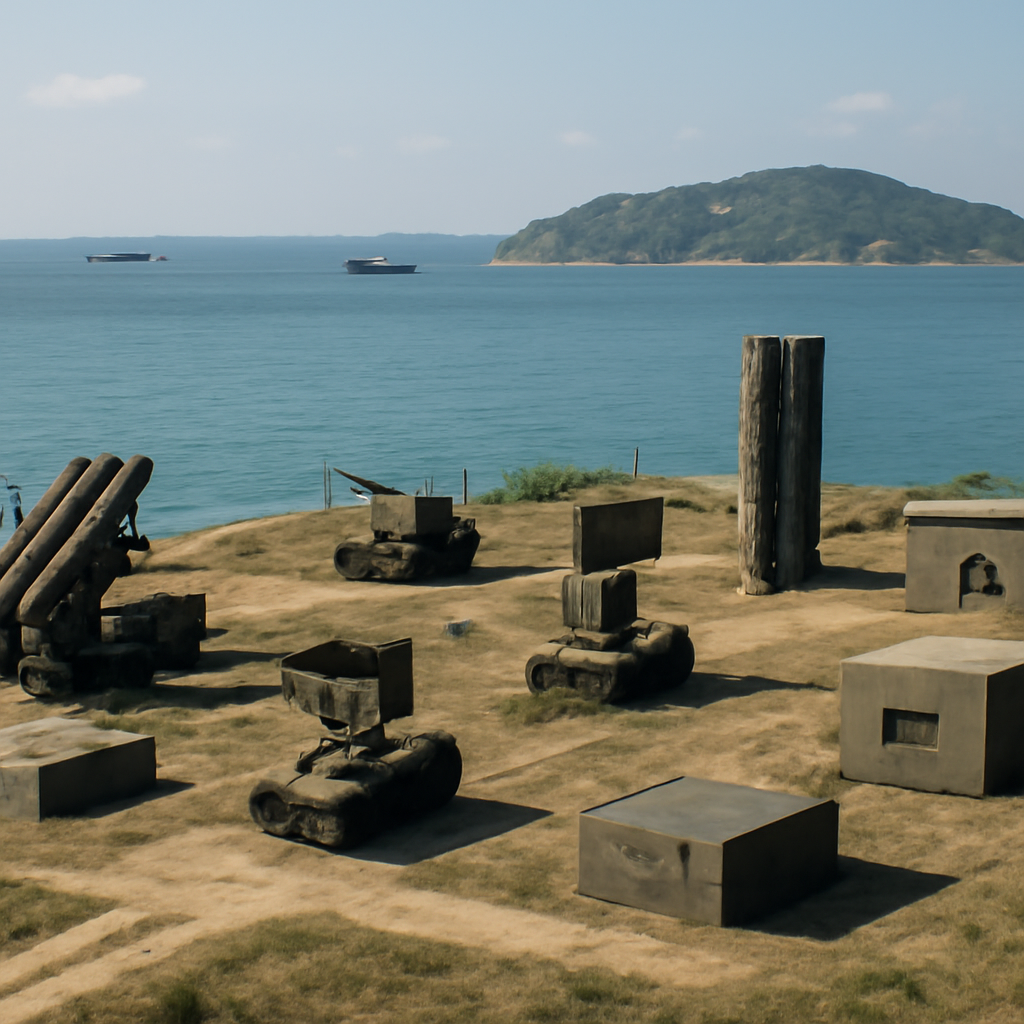
"CENTCOM launched precision munitions against coastal defense systems and cruise missile storage and launch sites on Greater Tunb Island during the 90-minute wave," CENTCOM said on X.
CENTCOM’s strikes on Greater Tunb Island
The U.S. Central Command said it carried out a 90‑minute wave of strikes on Greater Tunb Island, targeting "coastal defense systems and cruise missile storage and launch sites" to “further degrad[e] Iran’s ability to attack commercial shipping in the Strait of Hormuz,” the command wrote on X. CENTCOM later announced a second wave of strikes at 3 p.m. ET, saying the operations targeted Iranian military capabilities used to threaten vessels transiting the international waterway.
The island sits at the western mouth of the Strait — the article cites distances of roughly 30 miles south of the Iranian coast and about 50 miles northwest of the United Arab Emirates, which also claims the island. The Israeli Alma Research and Education Center think tank is quoted describing Greater Tunb as hosting a "vast network of underground bunkers" believed to store anti‑ship missiles and other weapons that threaten freedom of navigation.
Resumption and enforcement of the naval blockade
CENTCOM announced the reimposition of a naval blockade on Iranian ports and coastal areas, saying the blockade had "restarted" and that U.S. forces had been redirecting and disabling attempts to run it. The command said the blockade “went into effect at 11:30 PM local time on Tuesday” and elsewhere posted that U.S. forces "resumed the naval blockade ... today at 4 p.m. ET," while reporting there are “currently more than 20 U.S. Navy warships and hundreds of military aircraft operating across the Middle East.”
Since restarting the blockade, CENTCOM said two commercial vessels were redirected after attempting to run it. Later on Wednesday the command reported that a Curaçao‑flagged, unladen oil tanker, the M/T Belma, was disabled after ignoring multiple warnings while headed toward Iran’s Kharg Island terminal. According to CENTCOM, a U.S. aircraft fired Hellfire missiles into the ship’s smokestack, stopping its transit; during the previous blockade the command said it "kinetically disabled" nine ships trying to run it.

This site is the portfolio.
OSINTSights runs on Cloudflare Workers, D1, R2, and Vectorize, with an AI pipeline on Hetzner ARM. Nubivance designed, built, and operates it. We do the same for clients.
See what we buildIranian claims of strikes and damage across the region
Iranian military outlets and state media claimed new waves of missile and drone attacks on U.S. facilities in the region. The Iranian Army’s public relations office told Mehr that it "launched a seventh wave of drone strikes on U.S. bases in the region ... targeting F‑18 facilities and support infrastructure at al‑Azraq in Jordan" as part of what Iran called "Operation Thunderbolt." The IRGC‑connected Tasnim reported that seven members of the 388th Iranshahr Brigade were killed in a U.S. strike on an Army base in Bampur; TWZ said it could not independently verify those claims and that CENTCOM declined comment.
Regional governments and outlets reported defensive actions. The New York Times, citing Jordan’s Petra agency, reported that Jordan intercepted three Iranian missiles. The Kuwait Army said its air defenses were intercepting hostile targets, and Bahrain’s interior ministry activated warning sirens; the article notes none of those countries reported damage or casualties from strikes on Wednesday.
Imagery, video, and verification challenges
Images and videos purporting to show damage have circulated online. TWZ highlighted satellite imagery released by Iranian state media and georeferenced by Soar Atlas that claims damage to an anti‑drone radar system at Prince Hassan Air Base in Jordan; the article characterized that imagery as low resolution and hard to confirm. The New York Times verified video showing an Iranian drone striking an area near an already burning warehouse in Kuwait; Reuters shared video of a drone hitting a warehouse in the port town of Al Shuaiba, citing the Kuwait Army’s statement that "several vital and civilian facilities were targeted."
TWZ repeatedly noted it could not independently confirm Iranian claims of damage to U.S. facilities and reported that CENTCOM declined comment on some of those assertions.
How commercial shippers, regional militaries, and U.S. policymakers are affected
- Commercial shippers: MarineTraffic recorded a slight uptick in Strait of Hormuz crossings on July 14 — 21 confirmed crossings — but the organization warned that the security situation and the renewed blockade make future traffic prospects “grim.” Supply‑chain and shipping actors must weigh heightened interdiction risk, particularly for vessels bound to Iranian terminals such as Kharg Island.
- Regional militaries: Gulf and neighboring states have reported activating air defenses and intercepting incoming threats; video and satellite claims of damage to bases in Jordan and Kuwait indicate elevated kinetic activity that regional forces are addressing in real time, according to the reporting.
- U.S. policymakers: The article records President Donald Trump’s recent public threats and policy moves — including explicit warnings to strike bridges and power plants in Iran “next week” unless Tehran negotiates, and a decision to reimpose and enforce a naval blockade — actions that the piece frames as a step up in escalation and as creating domestic and international pressure to avoid wider conflict.
Market and political reverberations were immediate in the reporting: Brent crude rose from just over $75 per barrel on July 13 to more than $84 per barrel on the morning of July 15. The article also notes that the renewed blockade represents a significant rollback of a previously signed 14‑point Memorandum of Understanding that had called for the blockade to end, increasing the potential for further kinetic encounters in and around the Strait of Hormuz.
Original story: https://www.twz.com/news-features/first-full-day-of-resumed-u-s-blockade-on-iranian-ports-erupts-in-new-attacks