"South Korea has been protected by us for many, many years," President Donald Trump said at a White House press conference on Monday, using that claim to justify his order to "substantially reduce" U.S. participation in joint military training with South Korea.
President Donald Trump’s directive and public rationale
Trump reiterated comments he first made on Truth Social, saying his decision to scale back U.S. participation in the Ulchi Freedom Shield drills stems from multiple grievances: the cost of exercises, a personal relationship with North Korean leader Kim Jong Un, and Seoul’s refusal to "give us a little hand" in a U.S. military action in Iran. At the press conference he said he called South Korea’s president, asked for support on an Iran operation and was refused: "No thanks," Trump said the South Korean leader replied. Trump framed that refusal against the presence of U.S. forces on the peninsula, stating the United States keeps 39,000 soldiers in South Korea and questioning why the U.S. should provide protection if South Korea will not assist in the Iran matter.
Pentagon response and the status of Ulchi Freedom Shield 2026
The Pentagon told reporters Monday it "is actively working on executing the Commander-in-Chief’s directive" regarding Ulchi Freedom Shield. The exercise, which began on Monday and is scheduled to run through Aug. 27, already started as planned; the Pentagon declined to provide a timeline or details about how much U.S. support would be reduced. U.S. Forces Korea (USFK) noted many troops had already begun preparations for the exercise.

Audit-ready is a season. It shouldn't be.
Evidence in spreadsheets, controls drifting between audits, frameworks multiplying on flat headcount. Nubivance runs continuous compliance on Rapid7 Cyber GRC - SOC 2, HIPAA, ISO 27001, PCI, CMMC.
End the scrambleWhat Ulchi Freedom Shield 2026 covers
U.S. Forces Korea describes Ulchi Freedom Shield as "a defense-oriented exercise featuring live-fire, constructive, and field training exercises that engage alliance forces and governmental agencies." This year’s drills were designed to reflect evolving North Korean threats including drones, GPS disruption and cyberattack, and to build understanding among Combined Forces Command, United States Forces Korea, the United Nations Command, and ROK Joint Chiefs of Staff and government agencies. USFK said last year that the combined exercise program "highlights the ironclad commitment between the two nations to maintain a robust combined defense posture."
U.S. Forces Korea, troop numbers, and current participation
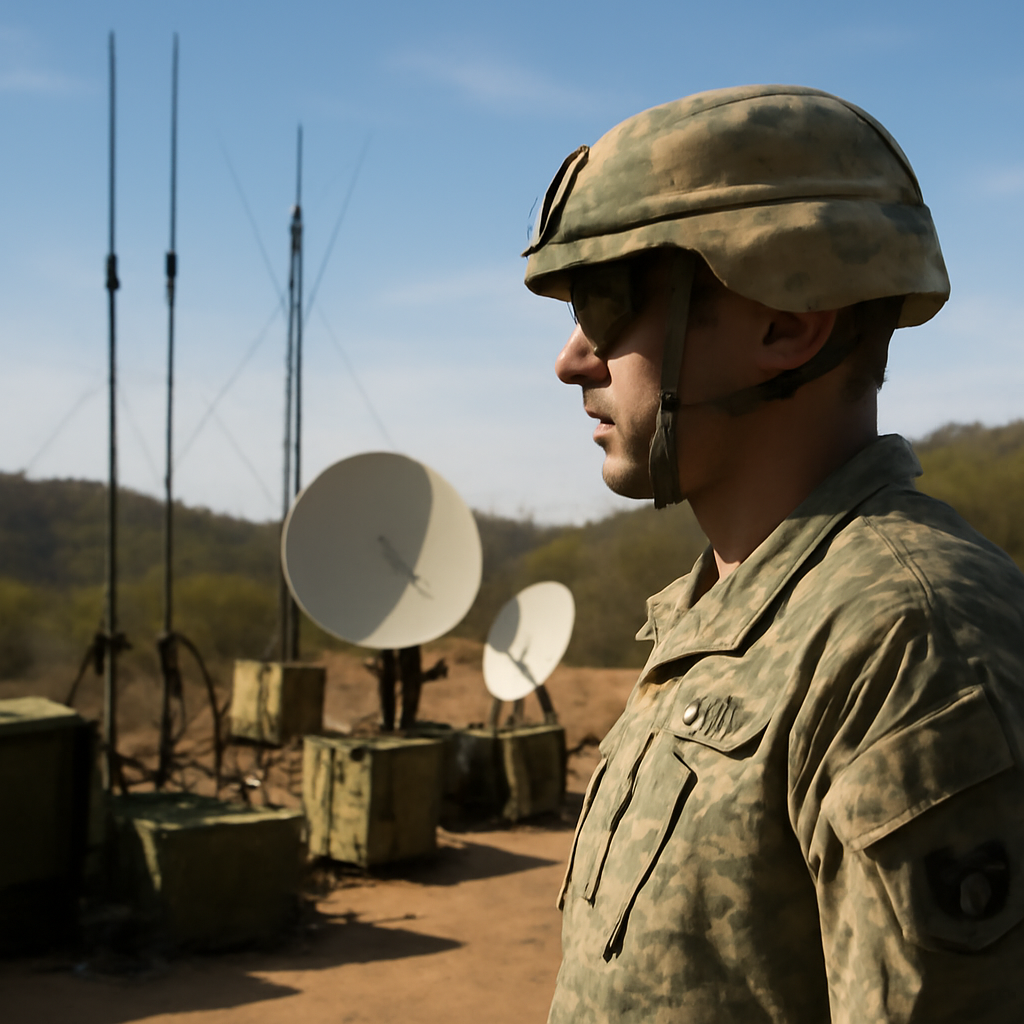
The story provides specific force figures: USFK said there are about 28,500 U.S. troops on the Korean peninsula. While the U.S. typically provides few details about the number of U.S. participants in Ulchi Freedom Shield, this year will include about 18,000 South Korean forces — a level that "mirrors last year’s levels," according to the reporting. Photos accompanying the coverage show U.S. units, including the 304th Expeditionary Signal Battalion-Enhanced and the 19th Expeditionary Sustainment Command, conducting pre-exercise communications and convoy inspections in South Korea.
South Korea’s government, domestic reactions, and expert commentary
- South Korea’s presidential Blue House said it was reviewing the president’s comments and that Seoul would "continue working with the U.S. on details related to the drills and the 'maintenance of firm combined defense posture,' " CNN reported.
- Retired South Korean lieutenant general In-Bum Chun, now a military analyst, told TWZ that Ulchi Freedom Shield is "a very" important event for South Korea and predicted mixed public reactions: those on the left would favor Trump’s move, the right might see it as a "good reason for nuclear weapons," and moderates might stay neutral.
- Public protest was visible: AFP photographs show South Korean protesters holding placards outside the U.S. embassy in Seoul on Aug. 17 opposing the Ulchi Freedom Shield exercise.
Regional deployments, allied responses, and unresolved shifts
The report ties the directive to broader shifts in U.S. military posture. It notes earlier moves this year to relocate U.S. air defense assets from South Korea to the Middle East to help defend against Iranian missile and drone attacks, and that the USS George Washington was ordered to head toward the Middle East to relieve the USS Abraham Lincoln, which is central to an ongoing controversy over the health of its crew after a long deployment. The reporting also says Japan and South Korea have been strengthening ties amid "growing anxieties about U.S. reliability," and that Taiwan faces a backlog in U.S. military aid — a condition coupled with "growing distrust" in Taiwan about whether the U.S. will come to its aid should China invade.
What this means for U.S. troops, Seoul, and Pyongyang
- U.S. troops on the peninsula: Units already preparing for Ulchi Freedom Shield may face changes to participation as the Pentagon implements the president’s directive; the Pentagon declined to provide timelines or details.
- Seoul and the Blue House: The government is reviewing Trump’s comments while publicly committing to work with the United States on drill details and to maintain a "firm combined defense posture."
- Pyongyang: The report notes North Korea recently fired a ballistic missile toward the sea near the peninsula in protest of the upcoming exercise and that such joint drills are "typically met by missile tests" from the North; how Kim Jong Un will respond if U.S. participation is reduced remains "unknown," the reporting says.
Taken together, the facts in the record show a sitting U.S. president using a combination of cost, bilateral bargaining over military support for a separate conflict, and a personal diplomatic posture toward North Korea to order a significant reduction in joint training — even as the annual Ulchi Freedom Shield began and many units were already preparing. The Pentagon says it is working to carry out the order; Seoul says it will review and continue cooperation. How far the reduction will go, which units will be affected, and how North Korea will react are the immediate, concrete unknowns left on the table.
Source: TWZ — U.S. Military Training With South Korea Reduced Over Iran War Snub