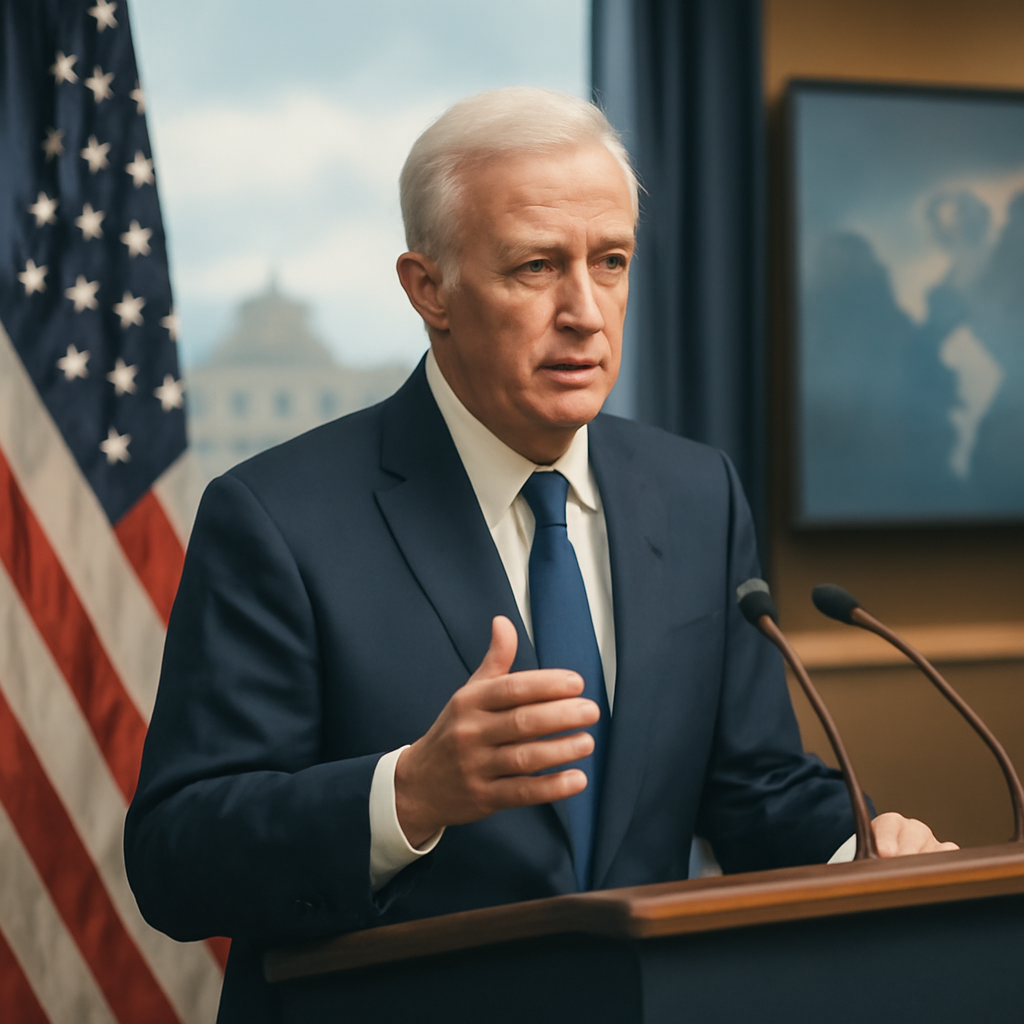
"Southeast Asian countries need a strong United States that’s active and engaged to preserve the regional balance of power," Under Secretary of Defense for Policy Elbridge Colby told reporters in Bangkok during his first Southeast Asian tour last week.
Colby’s pitch: flexible realism and a practical bargain
In a Manila speech and subsequent stops in the Philippines, Indonesia, Thailand and Cambodia, Colby framed US policy for the region as one of "flexible realism" under the administration’s broader slogan of "peace through strength and common sense." He said the United States would pursue partnerships in areas of mutual security interest without demanding ideological alignment. Practically, Colby offered maritime support, intelligence, surveillance and reconnaissance capabilities, military equipment and training, while making clear Washington would seek operational access and collaboration in return.
Philippines: alliance deepening on display
Colby’s first stop, the Philippines, showcased what the source calls "the dramatic deepening of the US alliance" with that country. The visit served as a signal of the Biden administration’s intent to maintain a favourable balance of power in Southeast Asia and to sustain deterrence along the First Island Chain. Colby, described as a key architect of the administration’s national defense strategy, used the trip to make that case to regional audiences and to domestic reporters.

This site is the portfolio.
OSINTSights runs on Cloudflare Workers, D1, R2, and Vectorize, with an AI pipeline on Hetzner ARM. Nubivance designed, built, and operates it. We do the same for clients.
See what we buildIndonesia and Thailand: balancing, sovereignty and mixed momentum
Colby told reporters he hoped to "dramatically, improve the strategic and defence partnerships with Jakarta and Bangkok." But his stop in Indonesia underlined the diplomatic tightrope Washington must walk: Indonesian Defense Minister Sjafrie Sjamsoeddin stressed that Indonesia would not compromise its sovereignty, and the Indonesian navy was conducting an exercise with China during the visit. In Thailand, a treaty ally whose defence relationship with the US "has lacked momentum," Prime Minister Anutin Charnvirakul felt compelled to promise not to downgrade US–Thai military exercises in response to US trade restrictions — a reminder that security ties sit alongside economic pressures.
Cambodia: Angkor Sentinel and a bid to widen options
In Phnom Penh, Colby and Prime Minister Hun Manet pledged to resume US–Cambodian Angkor Sentinel army exercises. The Pentagon sees a chance to give Cambodia more security options beyond China and thereby limit Chinese influence and access. The outreach to Cambodia reflected a broader US effort to present partnership as a practical alternative to deeper reliance on a single external power.
How Australia, the Pentagon and regional capitals are positioned
- Australia: The source argues Canberra "should welcome" the US preference for practical cooperation over ideological tests and the administration’s prioritisation in Southeast Asia. Colby praised Australia in Bangkok for "seeing things through the lens of collective defense and a strategy of deterrence by denial designed to sustain a balance of power in this key region." At the same time, Colby discouraged countries from "wasting effort" on middle-power strategies that excluded the US, leaving Canberra to decide how to align any increased burden-sharing with Washington’s priorities.
- The Pentagon: Colby pledged "disciplined ‘strategic prioritisation’" of US resources in Southeast Asia and signalled an ambitious agenda for strengthening relationships, but the source notes the Pentagon’s approach must compete for resources with other commitments — notably the Iran war and other priorities the administration pursues elsewhere.
- Regional capitals (Indonesia, Philippines, Thailand, Cambodia): These governments face a practical choice between accepting enhanced US military cooperation and guarding diplomatic space and sovereignty. The source documents specific signs of that tension — Indonesia’s public insistence on sovereignty and concurrent exercises with China, Thailand’s mixed signals tied to trade, and Cambodia’s willingness to reopen exercises as a hedge.
Constraints and credibility: aid, tariffs and competing demands
The source warns Southeast Asian scepticism of the US pitch is grounded in recent US policy moves: tariffs and aid cuts have alienated regional partners, and the Iran war "dealt an economic shock to the region." Reporters in the region pressed Colby on what resources Washington was putting behind its commitments and what it expects partners to provide in return. The Pentagon has a clarified preference for how to engage in Southeast Asia, but sustaining that posture will depend in part on decisions outside the Department of Defense.
Colby’s tour made a pragmatic, transactional case for deeper defence ties: the United States will offer tangible military capabilities and training; it asks access and cooperation in return; and it will prioritise where it puts those capabilities. Whether that pragmatic pitch converts to durable partnerships — and whether allies and partners accept a larger share of the regional security burden — is now a question less of rhetoric than of resource choices and diplomatic follow-through.