"We need [a] full portfolio of tools at our disposal," William Toti told senators at his nomination hearing — a succinct line that frames both a policy preference and a political middle ground in a fractious debate over where and how the United States builds its next generation of surface combatants.
William Toti’s proposal: foreign-built skills, American yards
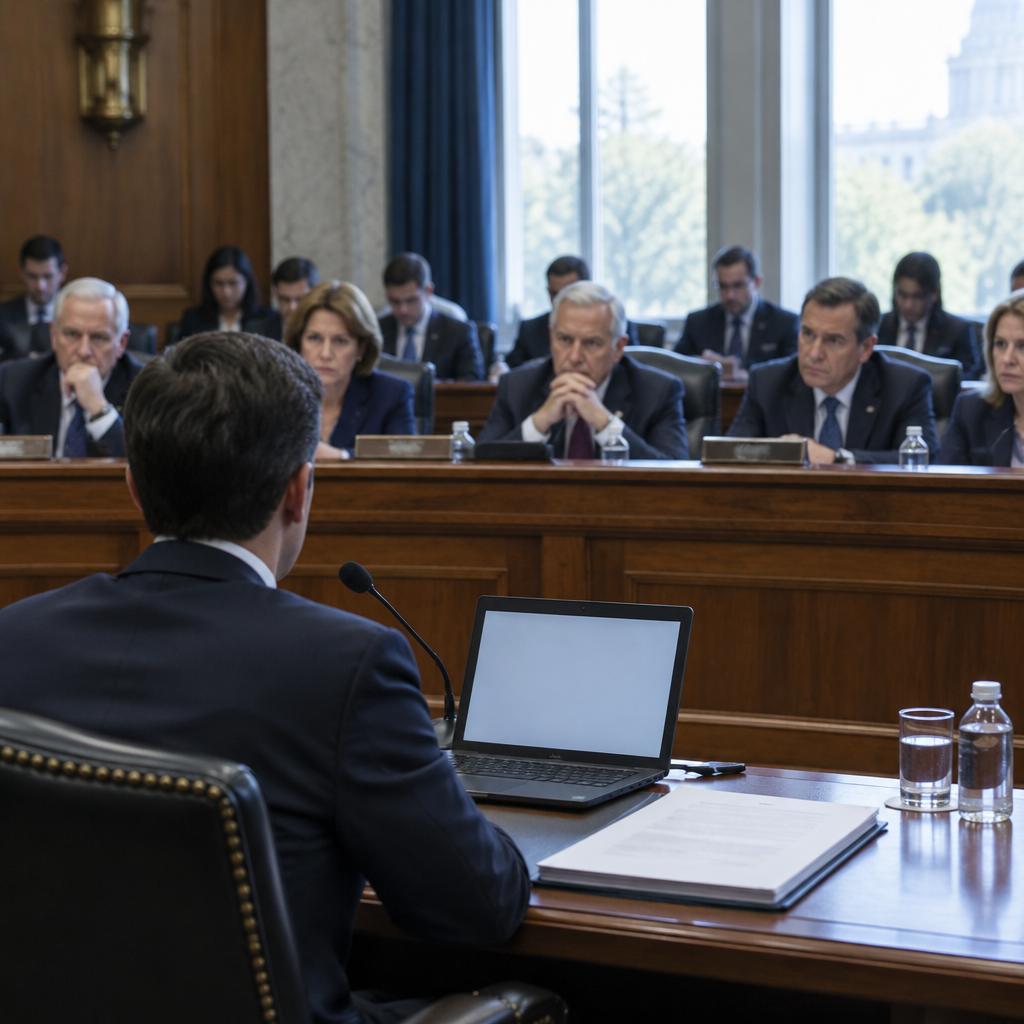
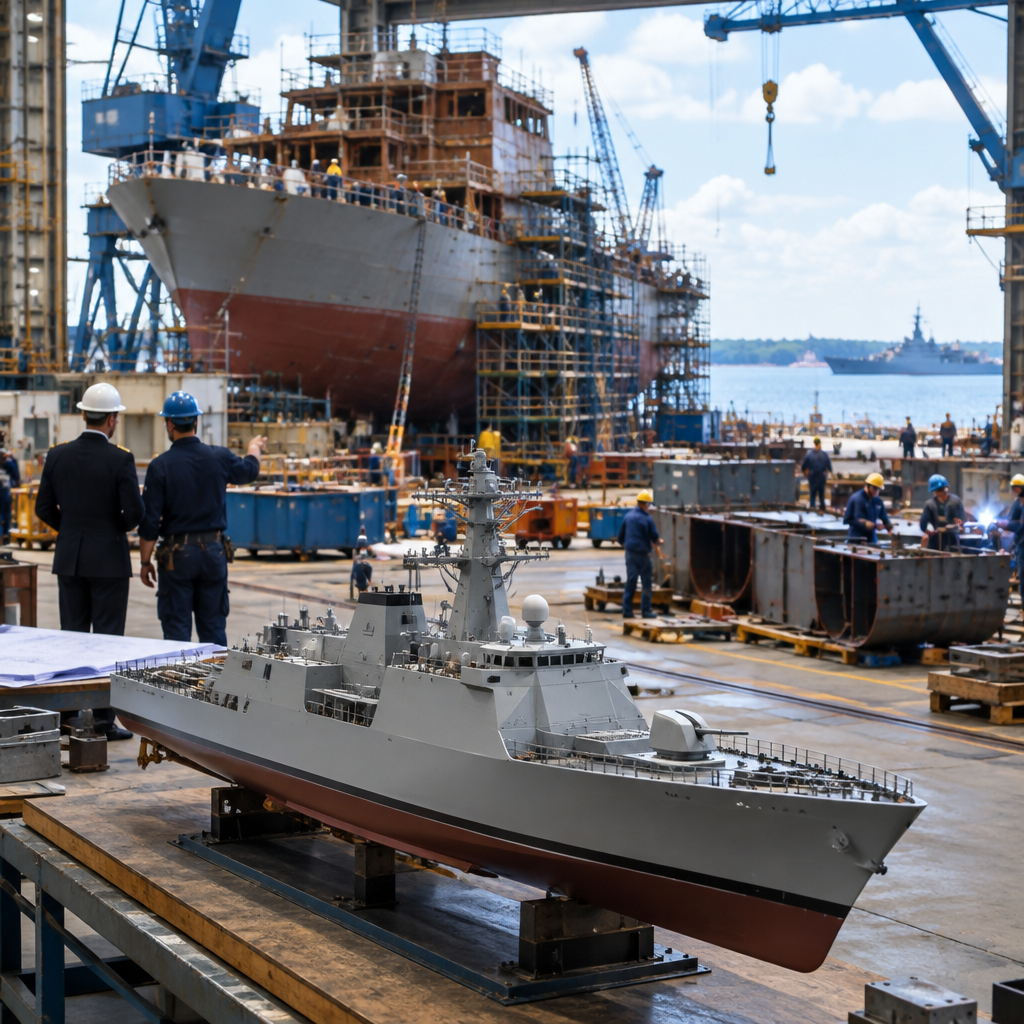
At his Senate Armed Services Committee nomination hearing, William Toti — nominated to serve as undersecretary of the Navy and already performing the duties of the Navy’s number two civilian — urged an approach that brings foreign shipbuilding know-how onto U.S. soil. Toti said he supports using foreign shipyards for auxiliary vessels but wants frigates and other surface combatants produced in the United States. He described the quickest path to more frigates as "to establish a new shipyard, world-class shipyard that’s focused just on those ships."
Toti argued the benefit is not about foreign ships’ quality but production techniques: "Bringing the best shipyards in the world from the production standpoint, not from the quality of ship standpoint, are the Koreans and Japanese, and so by bringing those skills and by those processes into the United States, I think it only strengthens our workforce, and our industrial capacity, and that’s our only objective here."
The Trump administration’s Finland model and memorandum
The hearing came against the backdrop of administration efforts to expand foreign involvement in U.S. shipbuilding. In August, President Donald Trump signed a memo seeking to broaden the so-called "Finland model" used for the Coast Guard’s Arctic Security Cutters: under that arrangement, first-in-class vessels are built abroad and follow-on ships are completed in the United States. The August memo allows foreign shipbuilders — if they accept several strict conditions to move future work to the United States — to build up to two ships in three different ship classes at their home yards before production shifts to American yards.
Separately, the administration has requested that Congress authorize the Navy to commission foreign shipyards to build two surface combatants and two non-combat auxiliary vessels in the fiscal 2027 National Defense Authorization Act (NDAA). The Navy’s budget request also asks for $1.85 billion in reconciliation funding to study the use of foreign yards to build U.S. warships and to possibly pay for an initial vessel built in Japan or South Korea.

This site is the portfolio.
OSINTSights runs on Cloudflare Workers, D1, R2, and Vectorize, with an AI pipeline on Hetzner ARM. Nubivance designed, built, and operates it. We do the same for clients.
See what we buildCongressional pushback and the FY27 NDAA
Congress has pushed back. The House version of the FY27 NDAA, passed in July, includes a provision prohibiting building both warships and combat logistics fleet vessels in a foreign shipyard. The Senate Armed Services Committee’s version, passed in June, similarly limits construction of warships abroad. That Senate measure does, however, approve procurement of up to two auxiliary ships from foreign shipyards provided those builders invest in the U.S. maritime industrial base to produce additional vessels.
Sen. Angus King (I-Maine) noted at Toti’s hearing that Toti’s idea of a foreign-built shipyard in the U.S. differs from building ships overseas and that the broader discussion will continue, signaling that the proposal may offer a pathway that some members of Congress will examine further.
Hanwha, the Navy leadership, and industrial capacity
The debate is already manifesting in industrial moves. Acting Secretary of the Navy Hung Cao cited South Korean shipbuilder Hanwha’s 2024 acquisition of a shipyard in Philadelphia as an example of the kind of foreign investment U.S. officials want to see. Chief of Naval Operations Adm. Daryl Caudle told lawmakers in May that the issue requires a "full hard look" from him and his advisors, noting operational constraints: "This is a complex topic. I need ships, I need them now, I need capacity," Caudle said, adding that "we have workforce limitations here" and that the industrial base "can’t support the load without being creative on modularity and these new construction techniques."
What this means for Hanwha, the Navy, and Congress
- Hanwha: As an existing example of foreign investment in U.S. yards — via its 2024 Philadelphia acquisition — Hanwha represents the kind of investor Toti and the administration have pointed to; future participation could hinge on meeting conditions tied to U.S. follow-on production.
- The Navy: Navy leaders and budget requests indicate a two-track need — immediate capacity to get ships "now," and studies and funding to shape how foreign-built techniques or initial foreign-constructed hulls might be integrated into a longer-term U.S.-based industrial expansion.
- Congress: The differing House and Senate NDAA provisions show Congress is willing to allow limited auxiliary procurement from foreign yards only where paired with U.S. industrial investment, while resisting broad adoption of overseas production for warships and combat logistics vessels.
Toti’s nomination hearing crystallized a practical, if politically sensitive, compromise: leverage foreign production technologies by bringing them into the United States rather than exporting U.S. ship construction overseas. His idea overlaps with administration initiatives that already permit limited foreign construction under strict conditions, and it collides with congressional efforts to constrain that pathway. With the FY27 NDAA unresolved and the Navy seeking substantial study funds, the core questions remain concrete: will foreign yards invest in U.S. capacity, and will Congress accept that pathway as an acceptable means to expand shipbuilding quickly?