Mk 95 radar illuminators return to the carrier deck
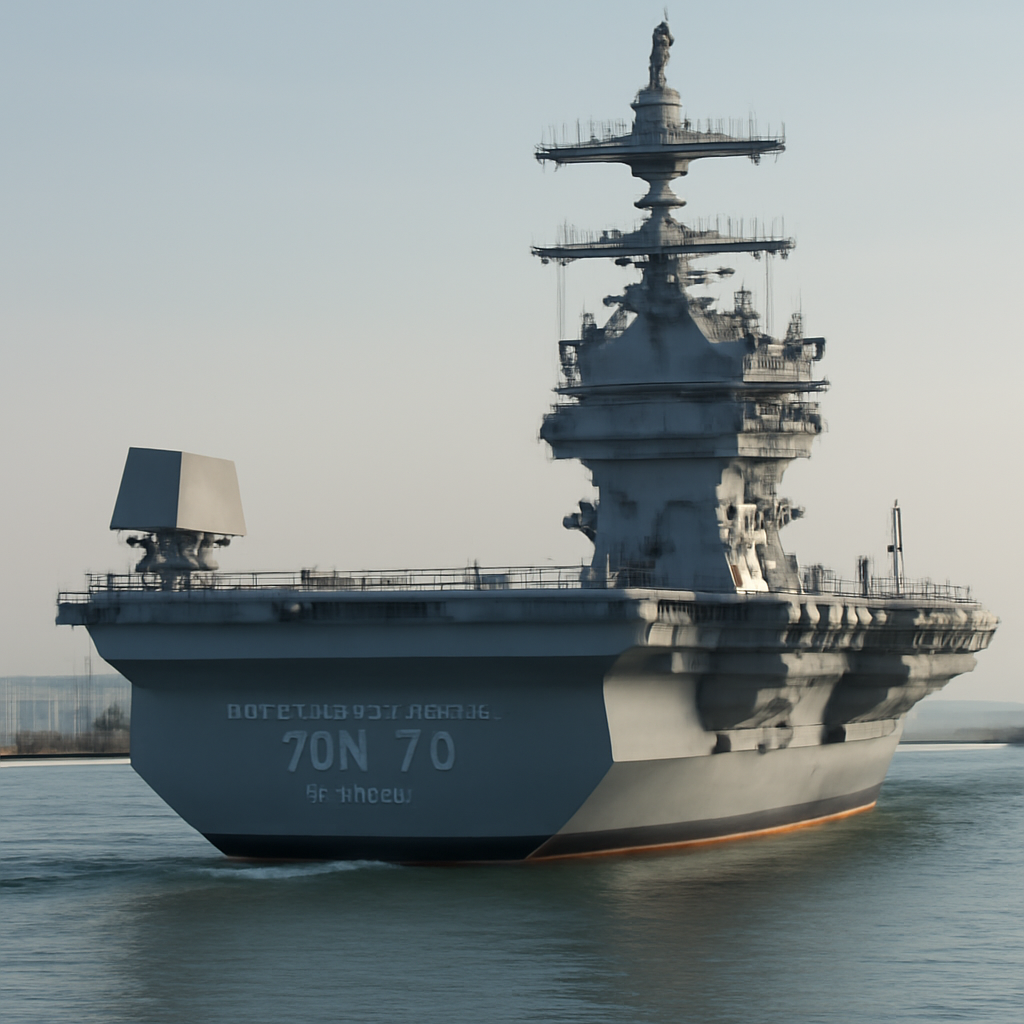
Photographs of John F. Kennedy leaving Newport News, Virginia, to begin acceptance sea trials on August 12, 2026, clearly show Mk 95 radar illuminators mounted on a sponson at the port-side stern. The Mk 95, a fire-control illuminator that dates to the 1970s, was originally designed to support surface-launched RIM-7 Sparrow missiles and has long been found on Nimitz class carriers and other Cold War-era flat-tops. Modern versions include upgraded camera systems such as the Stalker Long-Range Electro-Optical Infrared Laser Sensor System (SLREOSS) cameras and software improvements that let combat systems manage multiple illuminators for simultaneous engagements.
How the Mk 95 fits with ESSM Block 1 and Block 2
The return of the Mk 95 is tied directly to the missiles the carrier must employ. The RIM-162 Evolved Sea Sparrow Missile (ESSM) Block 1 uses semi-active radar guidance and requires external illumination in the terminal phase — the same general mode of operation as the older RIM-7. Block 2 ESSMs, which began entering service in the early 2020s, add an active seeker mode that can operate without illumination and introduce a data link for in-flight targeting updates. Despite the Block 2 advances, Block 1 variants remain in active Navy inventory, so carriers will still need the ability to provide illumination for those missiles.
The Ford class defensive suite as presently configured includes two 21-round RIM-116 Rolling Airframe Missile (RAM) launchers, three Mk 15 Phalanx CIWS, four 25mm Mk 38 mounts, two eight-cell Mk 29 launchers adapted for ESSM Block 1, and various small arms. Integration of Block 2 ESSMs into the Mk 29 has been problematic in the past because of the increased weight of the Block 2 missiles. The Pentagon’s Office of the Director of Test and Evaluation (DOT&E) stated in its 2025 Fiscal Year annual report that "CVN 79 and follow-on Ford class ships will be upgraded to a mix of new RAM variants Block 2A and 2B, plus a mix of ESSM Block 1 and Block 2." The Navy’s FY2026 budget requested work to modify Mk 29 launchers for Block 2 capability, but the current state of those efforts is unclear. The service is also pursuing a new launcher to replace the aging Mk 29 and a follow-on to the Block 2 ESSM.

Audit-ready is a season. It shouldn't be.
Evidence in spreadsheets, controls drifting between audits, frameworks multiplying on flat headcount. Nubivance runs continuous compliance on Rapid7 Cyber GRC - SOC 2, HIPAA, ISO 27001, PCI, CMMC.
End the scrambleFrom Dual Band Radar (DBR) to AN/SPY-6(V)3 and additional sensors
The Mk 95’s reappearance comes as a practical consequence of a larger redesign of Ford class radar suites. The Dual Band Radar (DBR) — composed of the X-band AN/SPY-3 AESA and the S-band AN/SPY-4 phased array — was originally intended to consolidate multiple shipboard functions, including air traffic control, and to allow a smaller, more angular island on the Ford class. But the DBR proved "extremely complicated and unreliable," a problem Manvel linked to software-hardware complexity and cost.
The Navy has moved to replace the DBR on forthcoming Ford class carriers with the AN/SPY-6(V)3 fixed-face variant of Raytheon’s Enterprise Air Surveillance Radar (EASR). John F. Kennedy and follow-on ships will also carry an AN/SPQ-9B horizon-search radar and the Mk 9 Tracker Illuminator System — which includes Mk 95 illuminators — to restore functionality the DBR was supposed to deliver. The USS Gerald R. Ford (CVN 78) remains the only ship expected to operate with the full DBR; the Navy plans to replace the DBR on that carrier eventually as well.
John F. Kennedy’s trials, program timing, and combat relevance
John F. Kennedy made its maiden voyage in January 2026 and began acceptance sea trials on August 12, 2026; the Navy hopes to take formal delivery before the end of the year. The ship will carry other less-visible improvements slated for future Ford class vessels, including combat management upgrades and a Block II Cooperative Engagement Capability (CEC) networked sensor architecture. The Ford class program overall faces continued delays and cost growth: the Navy originally hoped to receive John F. Kennedy in 2022, and work on the next two ships, the future USS Enterprise and USS Doris Miller, is behind schedule.
The Gerald R. Ford has already supported real combat operations, "most recently as part of the conflict with Iran," demonstrating that these platforms are operating while modernization and retrofit decisions are still in motion.
What this means for the Navy, Raytheon/RTX, and DOT&E
- The Navy — Must balance legacy missile inventories (ESSM Block 1) and evolving defenses (Block 2, new launchers) while retrofitting carriers already under construction. Restoring Mk 95 illuminators is a near-term practical step to preserve Block 1 capability and provide redundancy as radar architectures change.
- Raytheon/RTX — The shift toward the AN/SPY-6(V)3 fixed-face EASR places vendor radar variants and their integration onto center stage; several AN/SPY-6 variants are increasingly being installed across the fleet.
- DOT&E and acquisition overseers — Face continued oversight and testing demands as the service updates launchers, integrates Block 2 missiles, and transitions away from the DBR concept that contributed to program cost and schedule pressure.
The visible Mk 95s on CVN 79 are a reminder that naval design decisions are iterative: software and sensor ambitions collide with missile inventories and launcher mechanics, and the result can be a practical reversion to older hardware while new systems mature. Acceptance sea trials for John F. Kennedy will show whether the blended approach — AN/SPY-6(V)3 plus horizon search and Mk 95 illumination — delivers the layered defense the Navy intended when it first conceived the Ford class.