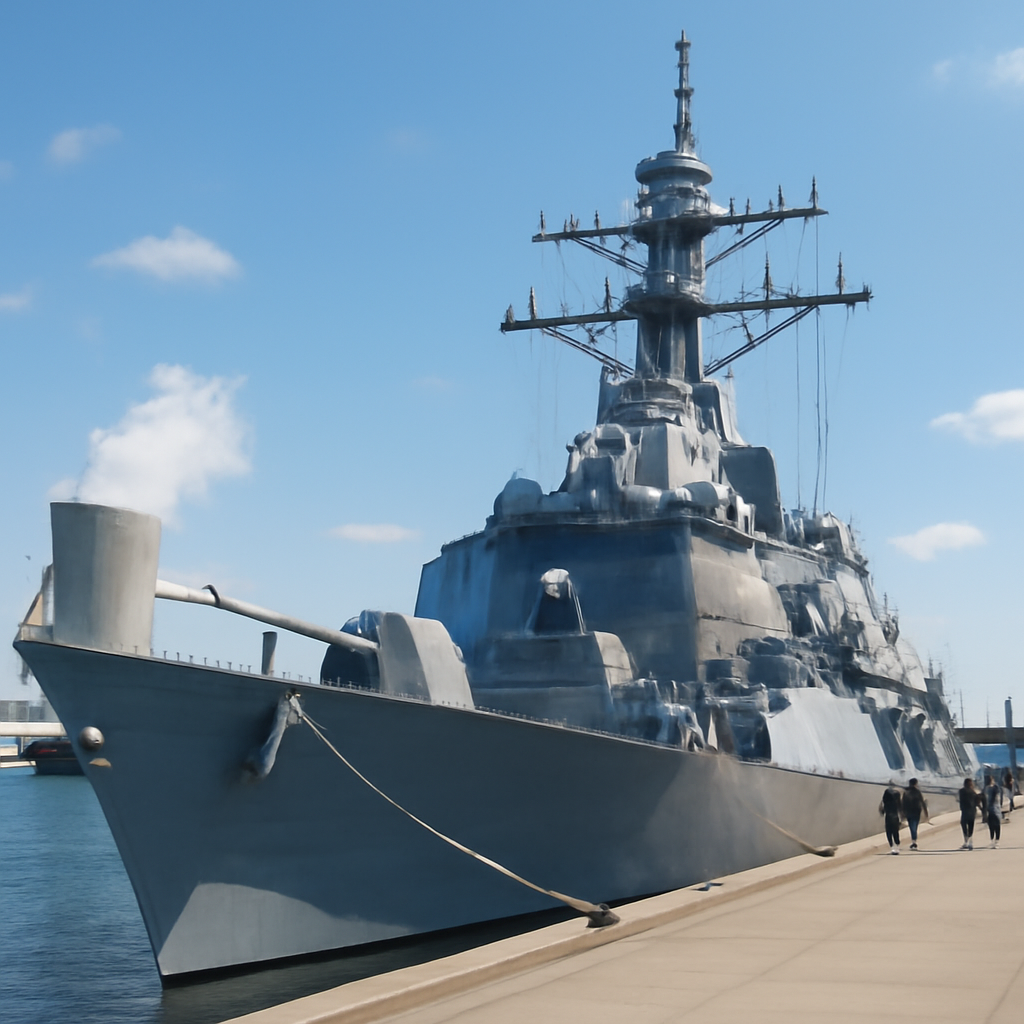
The U.S. Navy's top officer has identified one of the service's "largest mistakes" as its near-total abandonment of surface combatants with nuclear propulsion after the end of the Cold War. Chief of Naval Operations Adm. Daryl Caudle made this remark while voicing support for the recently announced decision that the future Trump class battleships will be nuclear-powered.
Nuclear Propulsion: A Reversal of Past Decisions
Adm. Caudle, along with Acting Secretary of the Navy Hung Cao and Commandant of the Marine Corps Gen. Eric Smith, testified before members of the House Armed Services Committee on May 14, 2026, regarding the Department of the Navy's 2027 Fiscal Year budget request. When asked about the Trump class battleship's design plans, Adm. Caudle stated, "Sir, we walked away from surface nuclear power decades ago, and that was one of the largest mistakes the Navy ever did, and we're bringing it back."
The Navy previously had a mixture of nuclear-powered surface combatants, including cruisers, destroyers, and frigates, which were all retired in the 1990s due to high operating costs and complexity. Today, Russia is the only country with a nuclear-powered surface combatant, the Kirov class battlecruiser Admiral Nakhimov, while France operates the nuclear-powered aircraft carrier Charles de Gaulle.
Benefits and Challenges of Nuclear Propulsion
Adm. Caudle highlighted the central benefit of nuclear propulsion: functionally unlimited range, as naval reactors can operate for decades without needing to be refueled. This can also offer an important boost in onboard power generation, which is crucial for modern ships with advanced weapons and systems. However, nuclear propulsion comes at a higher cost and requires a specialized workforce and supply chains.
The Trump class battleship program will leverage prior work done on the now-defunct DDG(X) next-generation destroyer and will feature the A1B reactor plant, SPY-6 radar, and Baseline 10 Aegis combat system. The ships will displace approximately 35,000 tons, be between 840 and 880 feet long, and have a top speed greater than 30 knots.

Audit-ready is a season. It shouldn't be.
Evidence in spreadsheets, controls drifting between audits, frameworks multiplying on flat headcount. Nubivance runs continuous compliance on Rapid7 Cyber GRC - SOC 2, HIPAA, ISO 27001, PCI, CMMC.
End the scrambleImplications for Shipbuilding and Operations
The Navy's decision to build nuclear-powered surface ships raises questions about the service's shipbuilding capacity and the potential strain on its workforce and supply chains. Newport News Shipbuilding in Virginia is currently the only yard in the United States building surface ships with nuclear propulsion. The U.S. naval shipbuilding industry has contracted significantly since the end of the Cold War, and efforts to reinvigorate America's shipyards are a key point of discussion.
What this means for the Navy, Shipbuilders, and Allies
For the Navy, the decision to build nuclear-powered surface ships like the Trump class battleship means a significant shift in its approach to ship design and operations. Shipbuilders, such as Newport News Shipbuilding, will need to adapt to the new demands of building nuclear-powered surface ships, which requires a specialized workforce and supply chains. For allies, such as Australia, which is set to receive Virginia class submarines, the Navy's decision may have implications for future cooperation and technology sharing.
Conclusion
The Navy's decision to build nuclear-powered Trump class battleships marks a significant reversal of its past approach to surface combatants. As the service moves forward with this new program, it will need to balance the benefits of nuclear propulsion with the challenges of shipbuilding and operations. With a timeline that extends well into the next presidential administration, the fortunes of a new nuclear-powered surface navy could change dramatically.