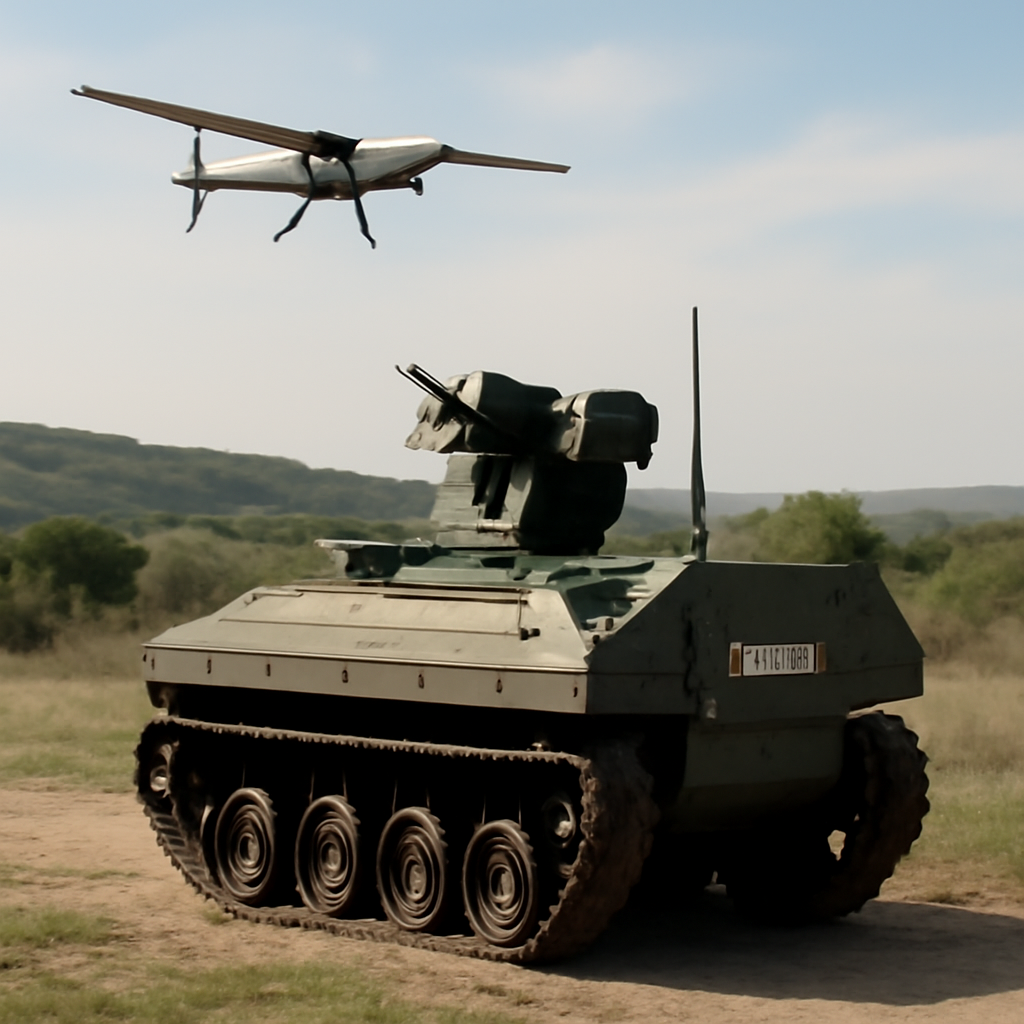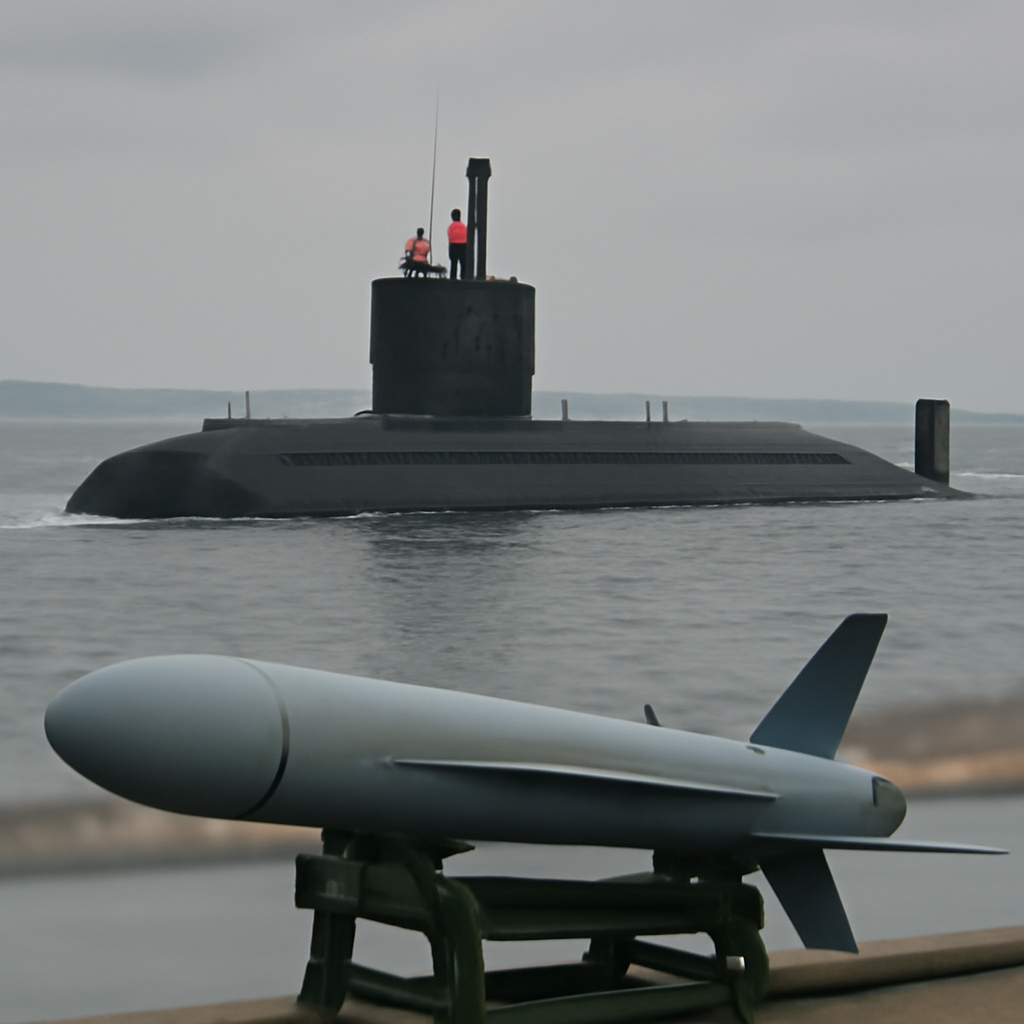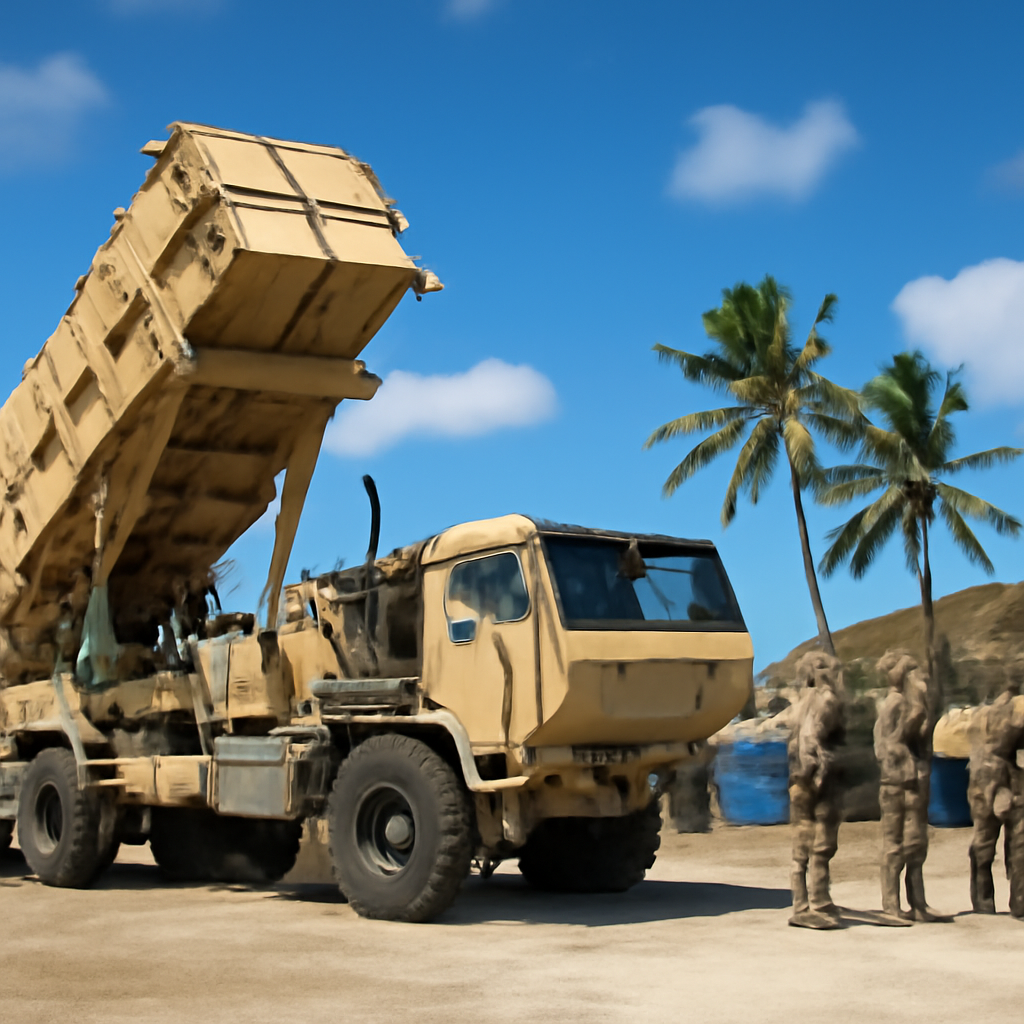
"So, over the past couple of years, we’ve been working to increase the level of protection on Guam," Army Col. Matt Dalton, Deputy Commander of the 94th Army Air and Missile Defense Command, said last week at the Space & Missile Defense Symposium. He was describing a concrete step: the U.S. Army plans to stand up the 3rd Battalion, 43rd Air Defense Artillery Regiment (3-43rd ADA) on Guam in October, paired with deliveries of the battalion’s weapon systems over the coming months.
3-43rd ADA: a composite battalion for Guam
The unit will be designated 3-43rd ADA and will fall, at least in part, under the 94th Army Air and Missile Defense Command (94th AAMDC) headquartered at Joint Base Pearl Harbor‑Hickam in Hawaii. An Army spokesperson told TWZ that the battalion “will have both the Patriot Missile System and IFPC, or mobile ground‑based launchers,” and that those systems “will integrate to provide 360‑degree, layered air and missile defense for Guam.”
At present there are about 120 soldiers on island specifically for the new battalion, in addition to soldiers already supporting the existing THAAD battery. The battalion commander has already arrived, and the Army expects the battalion to formally stand up in October.
Patriot force posture and capacity
The Army’s Patriot inventory is a central element of the 3-43rd ADA plan, but the service’s broader Patriot force remains heavily tasked. TWZ reports the Army currently fields 15 operational Patriot battalions and two additional nondeployable training units. A typical Patriot battalion contains a headquarters element and between three and five firing batteries; a single firing battery can have up to eight trailer‑mounted launchers plus a fire control radar and supporting equipment.
Service leaders have discussed plans to expand the Patriot force to a 16th, 17th, and 18th battalion, and to explore composite battalions mixing Patriot and IFPC/Enduring Shield systems. The Army also plans to establish nine dedicated IFPC/Enduring Shield battalions.

Audit-ready is a season. It shouldn't be.
Evidence in spreadsheets, controls drifting between audits, frameworks multiplying on flat headcount. Nubivance runs continuous compliance on Rapid7 Cyber GRC - SOC 2, HIPAA, ISO 27001, PCI, CMMC.
End the scrambleEnduring Shield (IFPC) — configuration and role
IFPC, the Indirect Fire Protection Capability, transitioned to Increment 2 in 2021, which led to the acquisition of the Enduring Shield system. Enduring Shield is primarily intended to help defend against cruise missiles and drones and currently uses the AIM‑9X Sidewinder as its interceptor. In its current palletized form, each launcher can be loaded with up to 18 AIM‑9X missiles.
The Army has described a typical IFPC/Enduring Shield platoon as consisting of four launchers linked to at least one AN/MPQ‑64 Sentinel‑series radar via the Integrated Battle Command System (IBCS) network. The service is also working to field at least one new interceptor for IFPC/Enduring Shield to improve defeat capabilities against supersonic cruise missiles and to broaden the system’s performance.
Guam Defense System: sensors, VLS prototype, and layered architecture
3-43rd ADA forms one part of the larger Guam Defense System (GDS). A prototype ground‑based Mk 41 vertical launch system (VLS) has already been emplaced on the island; past plans have included a Guam‑specific Aegis Ashore concept using Mk 41‑based launchers to fire SM‑3 and SM‑6 interceptors. The Missile Defense Agency has also established a radar site with a prototype AN/TPY‑6, derived from Lockheed Martin’s AN/SPY‑7 design, and that radar was in place on Guam as of July.
The Army has previously deployed a Lower Tier Air and Missile Defense Sensor (LTAMDS) to Guam. Retired Gen. James Mingus, speaking last year while he was the service’s Vice Chief of Staff, contrasted older Q‑series radars’ roughly 270‑degree coverage with LTAMDS’s 360‑degree coverage and described LTAMDS as expanding range and altitude to roughly 300 by 300 kilometers. Task Force Talon has operated a THAAD battery on Guam since 2013, and those systems remain part of the layered defense construct.
How the Army, Raytheon and Lockheed Martin, and residents of Guam are positioned
- The Army: will stand up 3-43rd ADA in October, integrate Patriot and IFPC/Enduring Shield into a 360‑degree defense, and continue plans to grow Patriot and IFPC battalions. The service has signaled composite battalion concepts but the timeline for additional Patriot battalions is unclear.
- Raytheon and Lockheed Martin: face production strains. TWZ reports Raytheon is under “immense strain” to meet global Patriot orders; deliveries to other countries and transfers to Ukraine have affected stockpiles. Lockheed Martin is developing a lower‑cost PAC‑3 variant called the Adapted Capability Effector (ACE) and questions remain about PAC‑2 and PAC‑3 supply timelines. The Army placed its first new‑production PAC‑2 order in more than three decades this year.
- Residents and local authorities on Guam: have been engaged in construction, planning, barracks and housing coordination, defense design, and interagency work — including with the governor’s office and the FAA — as the island’s defenses expand. TWZ notes the GDS work is intended to better protect facilities such as Andersen Air Force Base, Naval Base Guam, and Marine Corps Base Camp Blaz.
The Army’s October stand‑up of 3‑43rd ADA and the impending delivery of its weapon systems mark a visible advance in Guam’s layered defenses. At the same time, TWZ highlights persistent constraints: uncertainty about whether the Patriot assets bound for Guam are new production or reassigned equipment, ongoing interceptor supply pressures, and the time needed to field additional Patriot and IFPC battalions. The next concrete milestones are the continued weapon deliveries over the coming months and the formal activation of 3‑43rd ADA in October.
Source: TWZ — New Patriot Battalion To Bolster Guam’s Defenses Within Months