"force-on-force confrontation" toward "systems competition." — Tian Kaiyuan and Wang Jianfei, PLA Academy of Military Science War Research Institute, April 12.
The PLA’s systems-focused framing
China’s People’s Liberation Army (PLA) has not fought a major war in nearly five decades, and Chinese military researchers have treated the Iran conflict as a rare chance to test long-standing modernization concepts against live combat. PLA-affiliated analysts argue the combat there illustrates a shift away from platform-by-platform matchups toward integrated, networked competition. In an April 12 analysis, Tian Kaiyuan and Wang Jianfei described the conflict explicitly as a move from "force-on-force confrontation" toward "systems competition," emphasizing distributed command, attacks on enabling nodes and what they call "systems guerrilla warfare."
AI, pre-positioned intelligence, and the Maven Smart System
Artificial intelligence sits at the center of many Chinese assessments, but PLA researchers stress that AI is effective only when fed reliable, timely data. Kuang Lasheng of the AMS argued that years of human intelligence, technical collection, pattern-of-life mapping and prewar rehearsal supplied US AI systems with the data needed to accelerate targeting, placing "pre-positioned intelligence preparation" at the foundation of action. Scholars at the National University of Defense Technology studied the US use of the Maven Smart System in Iran and described AI's role not as a single decision node but woven throughout intelligence fusion, target prioritization, route planning, autonomous attacks and manned-unmanned teaming.

Audit-ready is a season. It shouldn't be.
Evidence in spreadsheets, controls drifting between audits, frameworks multiplying on flat headcount. Nubivance runs continuous compliance on Rapid7 Cyber GRC - SOC 2, HIPAA, ISO 27001, PCI, CMMC.
End the scrambleAir- and missile-defense economics: cheap unmanned systems versus costly interceptors
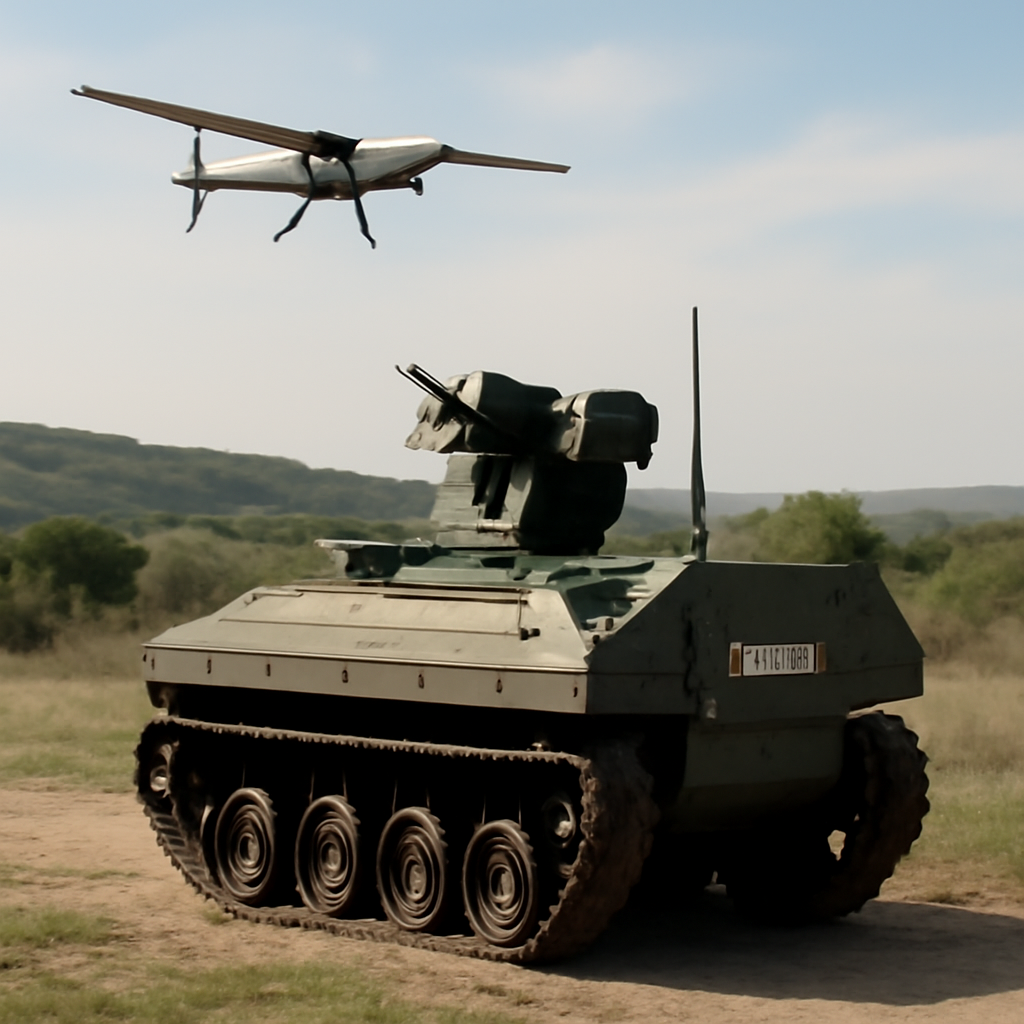
Chinese analysis has sharpened attention to the economics of defense. Tian and Wang highlighted Iran’s use of inexpensive unmanned systems to consume far more costly interceptors, a theme echoed in PLA studies dating back to 2025 and 2026. Researchers modeled defenses such as Israel’s Iron Dome under dense attacks and identified limited coverage, weak battle-damage resilience, high production costs and interceptor shortages as recurring problems. PLA Air Force-affiliated authors described a pattern they call large-scale unmanned offensive-defensive attrition, noting distributed cross-domain operations, mixes of advanced systems and low-cost weapons, and growing autonomous collaboration. The response preferred by many Chinese authors is pairing sophisticated systems with cheaper sensors and interceptors and distributing critical nodes across defensive networks to preserve capacity under sustained saturation attacks.
Infrastructure and supply-chain targets: data centers, ports, and power
Commentary in Chinese defense circles expands the operational target set beyond missiles and aircraft to include logistics and infrastructure. Zhao Lei and Liu Ning of China’s National Defense University argued that modern conflict increasingly links kill chains with supply chains, naming airfields, ports, warehouses, pipelines, power infrastructure and data centers as operationally significant. A May 2026 report from a think tank affiliated with China’s Ministry of State Security applied a similar framework to "infrastructure warfare," singling out energy, transportation, financial and digital infrastructure — and paying particular attention to commercial cloud and data centers as potential physical targets because of AI’s growing role in intelligence and precision strike.
What this means for US planners, the Chinese defense industry, and cloud/data-center operators
- US planners: Chinese researchers treat each Iranian episode as data — successful or failed strikes can reveal defensive seams, sensor limits, and interceptor consumption rates — meaning the Iran conflict supplies operational evidence against problems the PLA already studies.
- Chinese defense industry: The domestic defense sector has already advertised approaches that mirror PLA thinking — counter‑UAV suites combining missiles, guns, electronic warfare, lasers and high-power microwaves and emphasis on lower-cost interceptors paired with distributed nodes.
- Cloud and data-center operators: Think tanks linked to China’s Ministry of State Security flagged commercial cloud and data centers as operationally significant targets, reasoning that their role in AI-enabled intelligence and targeting makes them part of the physical battlefield.
Chinese national-security scholars outside the PLA reinforced these themes across April and May 2026. Xu Fangming of the AMS argued the conflict accelerated a shift from "human-led linear killing" toward AI-enabled, networked kill webs; Tang Zhichao highlighted standoff warfare centered on missiles and UAVs and large-scale military AI use; analysts at CICIR flagged the cost imbalance between cheap drones and expensive interceptors and noted vulnerabilities in forward bases and ammunition stocks. Yet the publications do not claim formal doctrinal conversion. The record shows researchers testing existing concepts against Iran’s battlefield experience and using those tests to prioritize weaknesses for further development.
The most consequential lesson, many of these analysts conclude, may not be a single weapon or tactic but the interaction among intelligence preparation, AI-enabled decision speed, distributed unmanned systems, cost-imposing salvos and the networks that connect them. That synthesis — not one breakthrough system — is the central takeaway Chinese researchers report drawing from the Iran war.