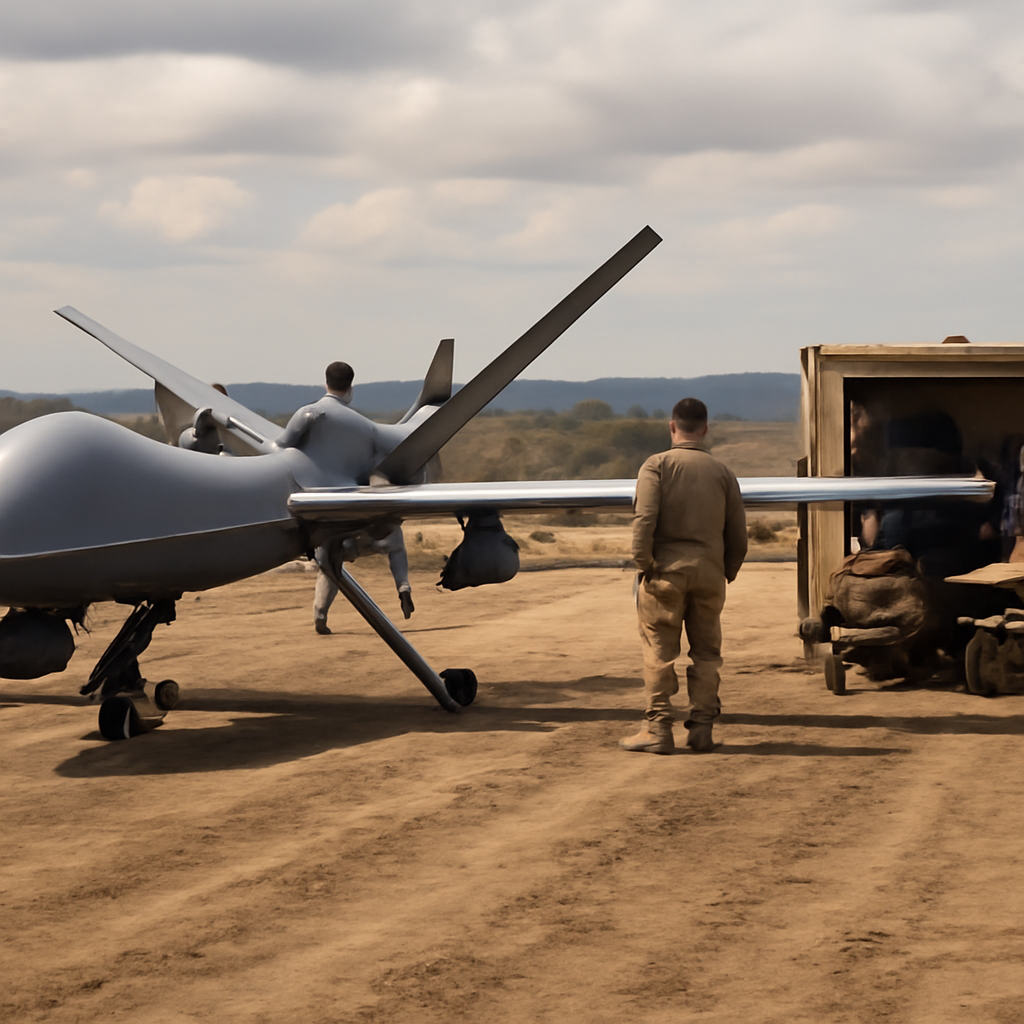
“They had steam, which worked so beautifully, and it has for 50 years, right? So we’re gonna go back. Seriously, fellas, I want to make that change. I’m gonna do an executive order,” President Donald Trump said during a visit to USS George Washington in October 2025, a line that now anchors a White House memo compelling the Pentagon to plan a major redesign of the Ford‑class carrier program.
The 60‑day directive from President Donald Trump
The White House memorandum titled “Rebuilding the United States Navy and America’s Shipbuilding Industrial Base” directs the Secretary of War, in consultation with the Secretary of the Navy, to deliver within 60 days “a plan on the required measures to replace the Electromagnetic Aircraft Launch System and Advanced Weapons Elevators with steam and hydraulic systems for the construction of CVN‑81,” the future USS Doris Miller. The memo, first reported by The Wall Street Journal and cited in TWZ’s coverage, also orders broader actions to boost maritime industrial capacity, including a fifth government‑owned naval shipyard and increased cooperation with foreign shipbuilders.
Engineering and design constraints of the Ford class
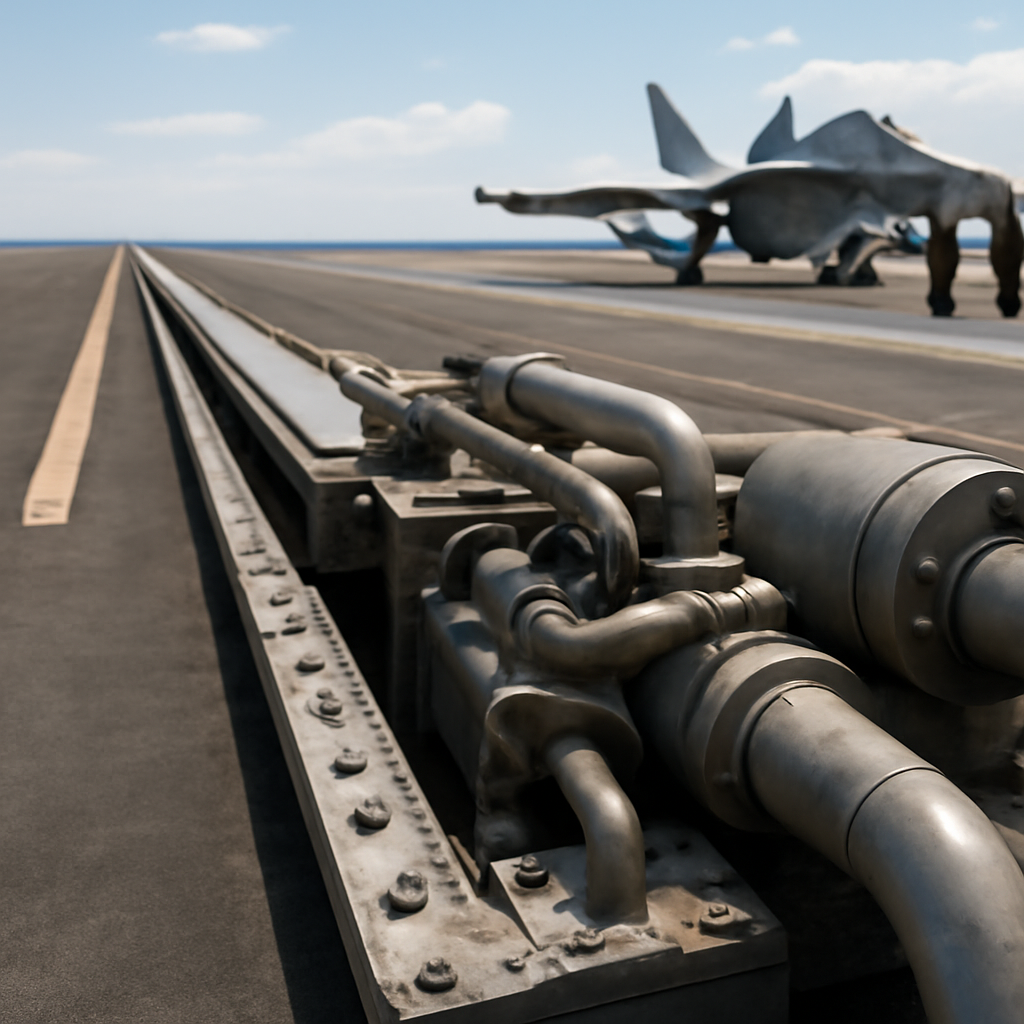
The Ford class was designed around software‑controlled EMALS (Electromagnetic Aircraft Launch System), AAG (Advanced Arresting Gear) and electromagnetic AWEs (Advanced Weapons Elevators). Reverting to steam catapults and hydraulic elevators would not be a simple parts swap: the ships’ physical structure, flight‑deck layout and power generation footprint are built around the electrical systems. A Project on Government Oversight report cited in TWZ notes the Ford‑class reactor plant was configured to generate less steam than the Nimitz class, a detail that raises fundamental questions about where and how steam piping, large piston systems and other steam‑era hardware could be integrated into CVN‑81 and future hulls.

Audit-ready is a season. It shouldn't be.
Evidence in spreadsheets, controls drifting between audits, frameworks multiplying on flat headcount. Nubivance runs continuous compliance on Rapid7 Cyber GRC - SOC 2, HIPAA, ISO 27001, PCI, CMMC.
End the scrambleOperational, schedule and cost implications for CVN‑81 and the fleet
The Navy’s Ford program is already running years behind schedule and carrying cost growth. According to TWZ’s reporting, the Navy’s 2027 budget showed CVN‑81’s projected delivery slipped from 2032 to 2034; Enterprise (CVN‑80) slipped from an original 2028 expectation to 2031; and John F. Kennedy (CVN‑79) has been delayed repeatedly after an originally planned 2022 delivery. Cost baselines have moved as well: the Secretary of the Navy raised the cost limitation baseline for CVN‑79 from $12.936 billion to $13.529 billion in December 2025, while CVN‑80 and CVN‑81 baselines remain at $13.529 billion and $14.016 billion respectively, per the April Modernized Selected Acquisition Report cited in TWZ.
Beyond schedule and price, DOT&E’s FY25 annual report — quoted in TWZ — said EMALS and AAG reliability and maintainability “continue to adversely affect sortie generation and flight operations,” and noted reliance on off‑ship technical support is a continuing challenge. At the same time, Navy reporting cited a February Sortie Generation Rate demonstration that produced over 40,000 data points and, in preliminary results, stated that the flight‑deck design with EMALS and AAG had contributed to increased sortie generation compared to a Nimitz class. As of March 2026, MSAR data shows 36,863 EMALS launches aboard CVN‑78.
Industry reactions: General Atomics and Huntington Ingalls Industries
General Atomics, the prime contractor for EMALS and AAG, warned the White House decision “will have broader implications for carrier readiness, national security, and U.S. technological superiority,” according to The Wall Street Journal excerpted in TWZ. The company highlighted workforce stability, production capacity and sustainment of critical technologies as national‑priority considerations.
Huntington Ingalls Industries, which builds Ford‑class carriers at Newport News Shipbuilding, told TWZ it would “work closely with the Navy to implement any potential changes to ships under construction.” At the same time, TWZ notes serious questions about the yard’s ability to meet current timelines: construction space shortages driven by delays on CVN‑80 were cited by a Navy official as the primary schedule driver for CVN‑81.
What this means for the Navy, General Atomics, and Huntington Ingalls Industries
- Navy: must produce a 60‑day plan that reconciles fundamental design tradeoffs — steam generation, shipboard volume and flight‑deck reconfiguration — while managing constrained shipyard capacity and an already strained carrier force posture.
- General Atomics: faces a potential loss of future work on Ford‑class catapults and arresting gear, and will press sustainment and industrial‑base arguments to protect EMALS/AAG programs and contracts that currently support CVN‑78 sustainment.
- Huntington Ingalls: will need to assess ship‑yard workflow, construction space and rework implications if a redesign is ordered, even as its yard remains the only U.S. facility currently producing nuclear‑powered surface ships and is already stretched by multiple programs.
The directive gives the Navy roughly two months to produce a path forward for CVN‑81. That timeline collides with existing delays, cost growth and technical debates already documented in DOT&E and MSAR reporting. Trump’s memo leaves open whether the redesign would apply only to Doris Miller or to all future Ford‑class carriers; it also arrives alongside White House plans for new “Trump class” battleships that the Navy confirmed will use Ford‑class‑type reactors. Congress retains the ability to act on funding, and any incoming administration could alter course before CVN‑81 reaches later construction milestones — but for now the Navy, contractors and shipyards face a compressed window to weigh a change that, as TWZ concludes, could deepen delivery delays and strain an already pressured carrier force.
https://www.twz.com/sea/bringing-back-steam-catapults-on-carriers-is-a-huge-risk