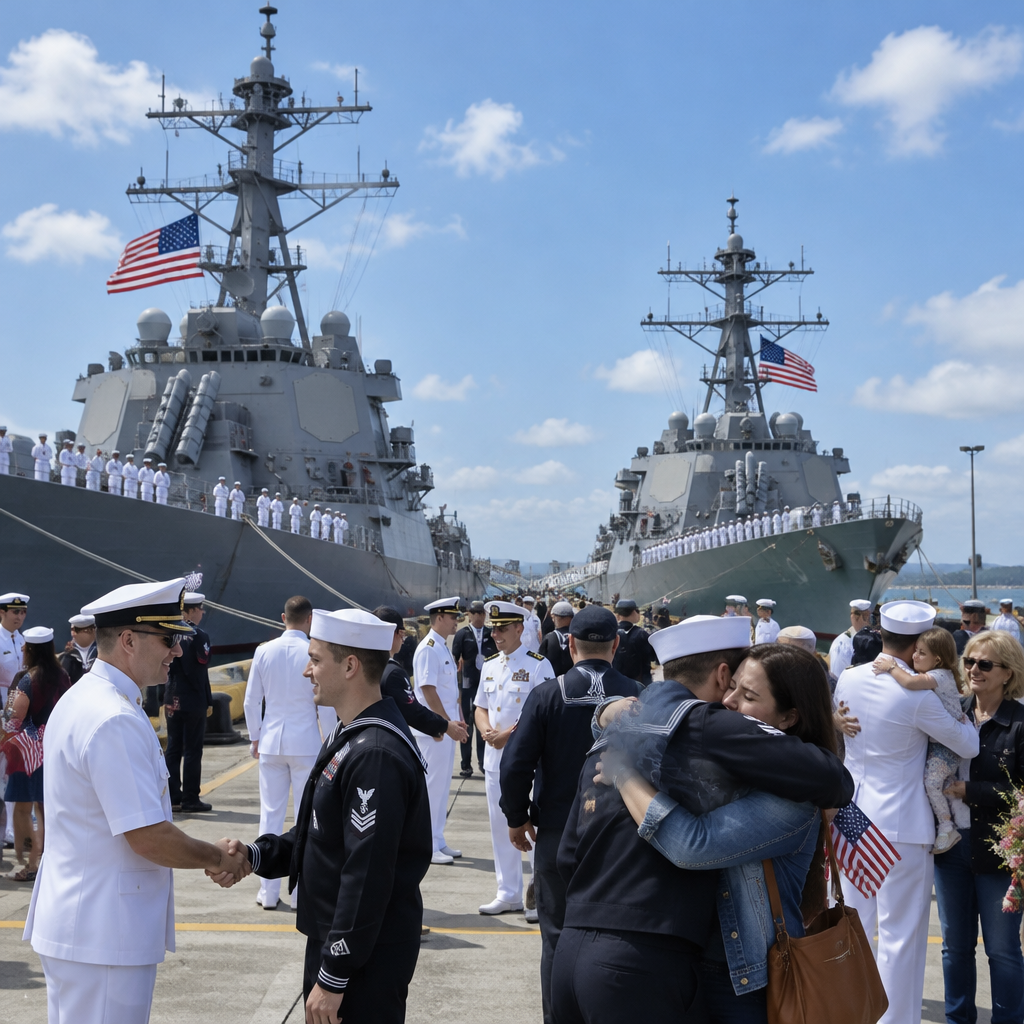
Two guided‑missile destroyers assigned to the Abraham Lincoln Carrier Strike Group, USS Spruance and USS Michael Murphy, have returned home after 357‑ and 346‑day deployments, respectively — stretches reported to be longer than any destroyer cruise since World War II.
The ships, their movements and combat roles
Spruance and Michael Murphy sailed with the Abraham Lincoln Carrier Strike Group and remained in the U.S. Central Command (CENTCOM) area of responsibility after the carrier steamed back to San Diego. Spruance pulled out of Naval Base San Diego on November 21, 2025, alongside USS Abraham Lincoln; Murphy linked up with the strike group ten days later as it sailed past Joint Base Pearl Harbor‑Hickam, Hawaii. According to MarineTraffic, Spruance departed Pearl Harbor on November 6 and arrived in San Diego on the day the report published; Planet Labs satellite imagery reviewed by TWZ showed Murphy in Guam on November 3, her last stop before transiting northeast back to Pearl Harbor and pulling into port the day before the report.
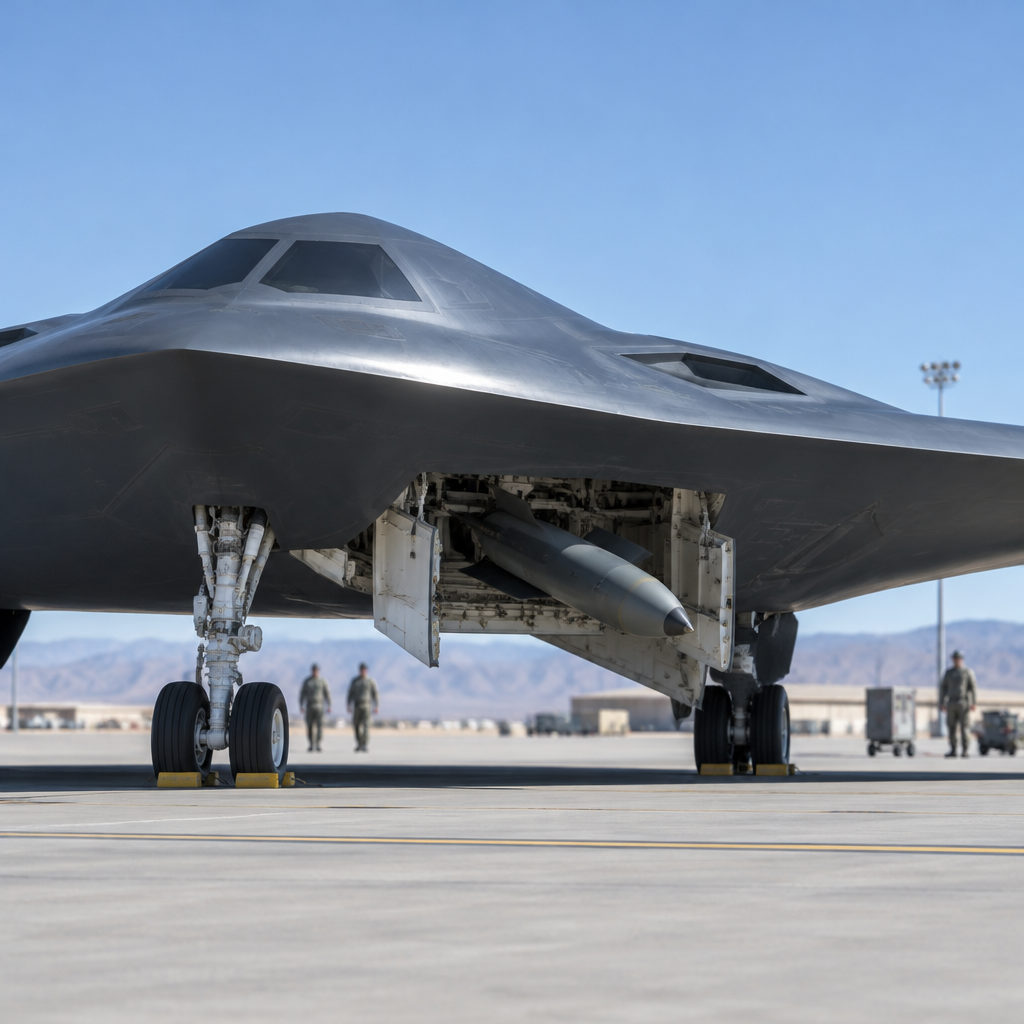
Both destroyers took active combat roles during the opening phase of Operation Epic Fury and throughout the blockade measures against Iran. The report says Spruance fired a previously unseen black Tomahawk Land Attack Missile (TLAM) on February 28, the first night of the war, and later used her Mk 45 5‑inch gun to disable the engine room of an Iranian‑flagged container ship to prevent it from running the blockade. Murphy docked in Dubai from February 25 to 27 and launched salvos of TLAMs at land targets on Iran’s southern flank. Michael Murphy and USS Frank E. Petersen Jr. were the first U.S. warships to transit back through the Strait of Hormuz after major combat operations ended in April; open‑source reporting indicated the two destroyers came under heavy enemy fire during that maneuver.
Records, verification and ships on pace to exceed them
TWZ reported Spruance’s 357‑day cruise as the longest destroyer deployment since World War II, citing a San Diego Union‑Tribune report that referenced the Navy. The earlier record noted in the coverage was USS McFaul’s 332‑day return to Norfolk on October 23. The Naval History and Heritage Command told Stars and Stripes that it “does not officially track or verify superlative claims such as ‘the longest deployment’ for a destroyer,” and TWZ said it could not independently verify the WWII comparison.
The recent extended deployments also surpassed aircraft‑carrier marks: USS Gerald R. Ford’s 326‑day record set in May was overtaken by these destroyer cruises. The report warns that Spruance’s mark may not hold long. USS John Finn, a Yokosuka‑based destroyer assigned to the Forward Deployed Naval Forces, sailed on January 9, 2026, was redirected to the CENTCOM AOR, and — according to Defense One — her crew was told in October to expect a return in March 2027. If that timeline holds, John Finn would surpass Spruance and log over 400 days deployed. Two other Yokosuka forward‑stationed destroyers, USS Rafael Peralta and USS Mustin, were reported to have been told to expect returns in April 2027; if so, those cruises will approach or exceed one year.

Audit-ready is a season. It shouldn't be.
Evidence in spreadsheets, controls drifting between audits, frameworks multiplying on flat headcount. Nubivance runs continuous compliance on Rapid7 Cyber GRC - SOC 2, HIPAA, ISO 27001, PCI, CMMC.
End the scrambleMaintenance, readiness and the cost of long deployments
Chief of Naval Operations Adm. Daryl Caudle has warned this pace will strain maintenance and readiness. Caudle told Sailors to expect the “new normal” for deployments to last 10 months, at a minimum, and said, “I need a bigger Navy.” He also cautioned that the fleet faces a “problematic maintenance backlog” when ships return, calling it “hundreds of availabilities and millions of dollars” and “a years‑long recovery. There is no workaround on that.”
The report notes Spruance’s scheduled maintenance was pushed from July to January 2027 based on budget documents reviewed by TWZ. It also cited force numbers: a total battle force of just over 280 warships, with approximately 78 destroyers in various states of readiness.
How Sailors, families and commanders are responding
The human cost of extended, open‑ended deployments appeared throughout reporting. A family member of a Sailor aboard Spruance told Navy Times in late October: “We are hearing they’re supposed to come home sometime next month, but we’ve been hearing about ‘next month’ for several months.” An anonymous Sailor on Spruance told the outlet, “Our boat isn’t as big as an aircraft carrier, but our 300‑plus families matter to us just as much as anyone else’s.” Katherine Kuzminski, a vice president at the Center for a New American Security, told Defense One the situation creates “dissonance between what was said at the beginning and what is happening in actuality.”
Command perspectives also surfaced in the reporting. Capt. Casey Mahon, commanding officer of USS Frank E. Petersen Jr., described the Strait of Hormuz transit as “Quite a voyage… obviously there was stress we had to face when we did that… on the sea, under the sea, and in the air.” U.S. 3rd Fleet announced that USS Michael Murphy and its crew were awarded the Presidential Unit Citation and the Combat Action Ribbon “in recognition of extraordinary heroism and combat achievement while executing dozens of Tomahawk land‑attack cruise missile strikes and defending against hostile drone and missile attacks.”
The return of Spruance and Michael Murphy closes one chapter in an unusually long and costly operational period for the Navy’s surface fleet. Whether their records stand will depend on the decisions commanders and planners make about forward posture, ship rotations, and how quickly the maintenance pipeline can recover; for now those decisions are being made under the blunt constraints of combat operations and a finite fleet.