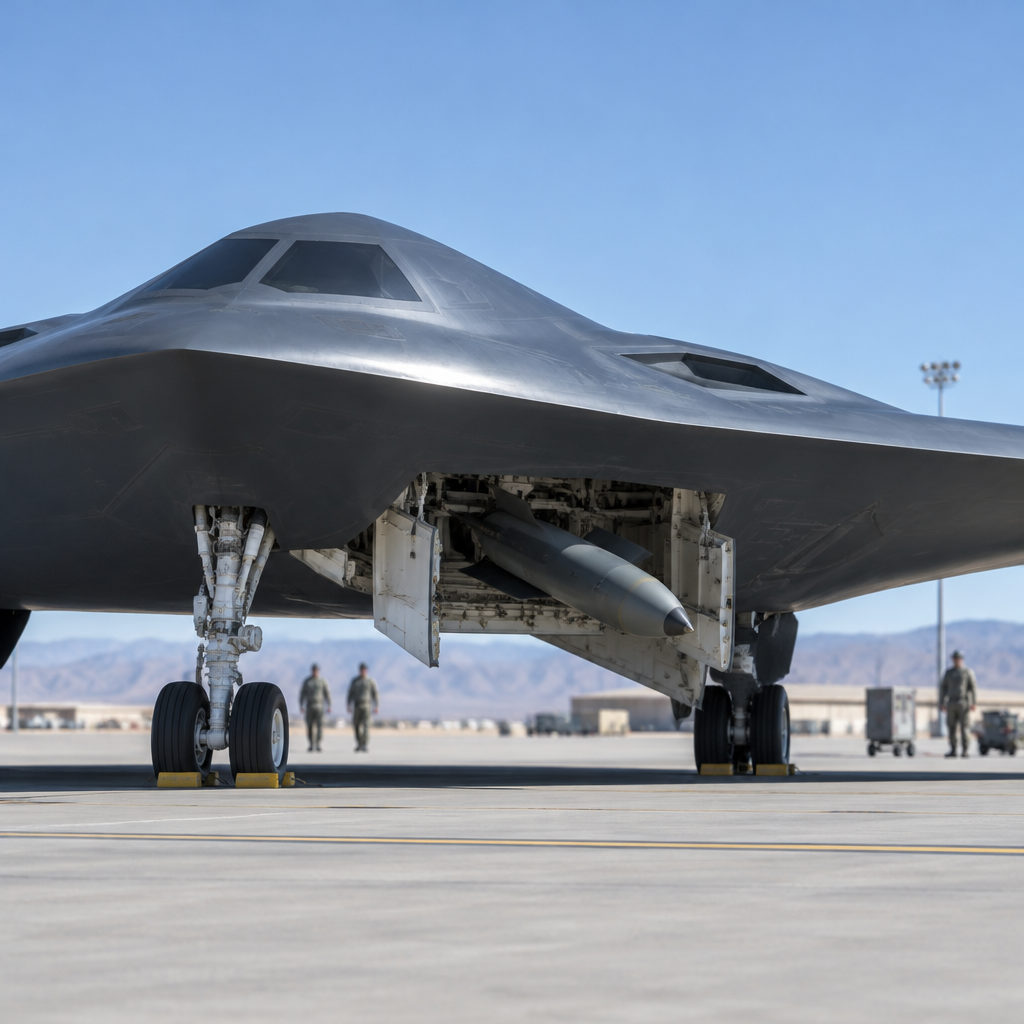
"During the test, a B-21 test aircraft flying from Edwards Air Force Base, California, released a conventional weapon, validating its digital models and the maturity of its open systems architecture," the Air Force said.
The test at Edwards: a first weapons release, but few public details
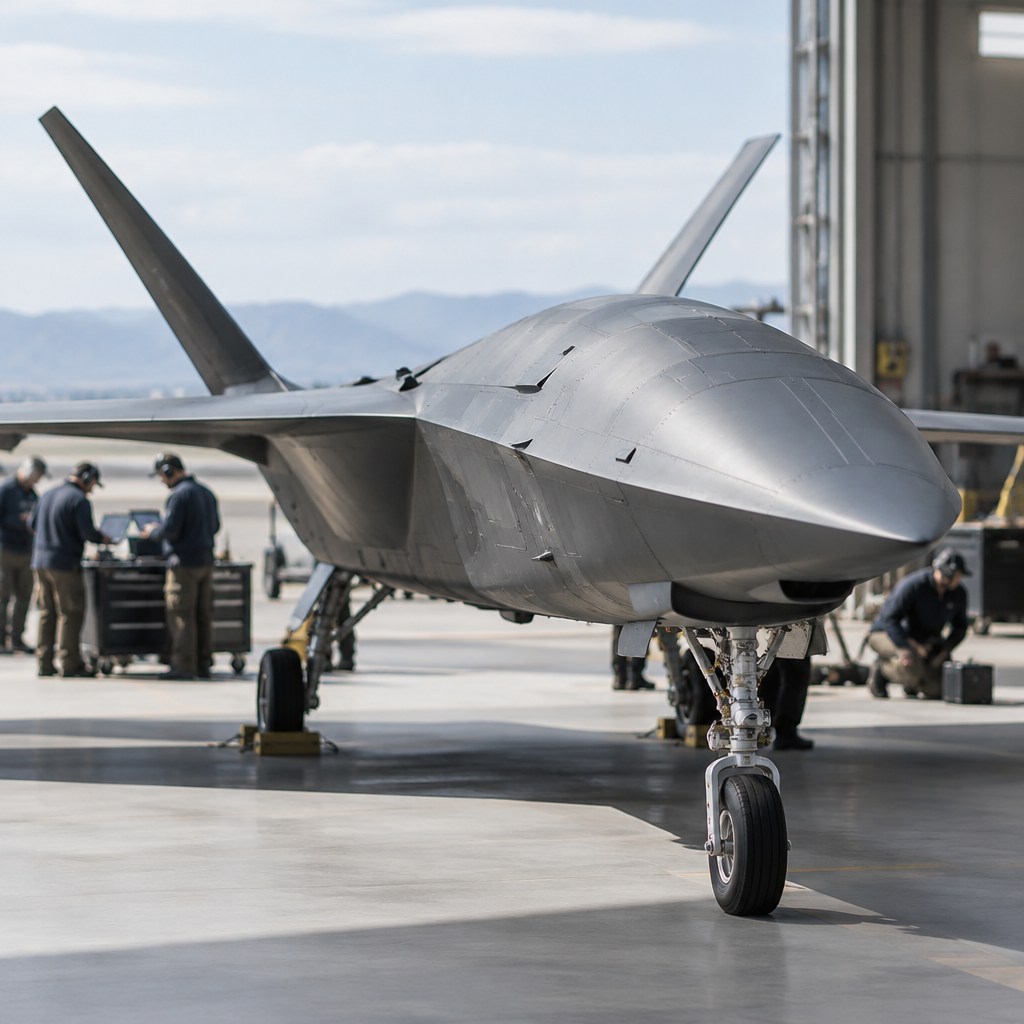
The U.S. Air Force and Northrop Grumman announced that a B-21 Raider has released a conventional weapon for the first time as testing expands. The Air Force said the event took place from Edwards Air Force Base, California, but did not name the munition or provide imagery of the release. The service described the event as validating digital models and the open systems architecture that underpin the aircraft’s strike capability.
At the time of the announcement, the Air Force is operating two flying pre‑production Raiders out of a planned test force of six aircraft. The service has said it plans to acquire at least 100 B-21s, and the source notes a new target fleet size figure is expected to be released next year.
Digital engineering and a "digital twin" accelerated the test
The Air Force credited thousands of hours of virtual modeling inside the B-21’s "digital twin" environment for accelerating weapons integration. "This allowed the B-21 Combined Test Force to accelerate weapons integration and predict and refine the weapon’s trajectory with unparalleled precision before the aircraft ever left the ground," the Air Force said.
Northrop Grumman framed those digital methods as part of the program’s progress: "The B-21 is proving in test what it promised on paper: it’s the most advanced bomber in the fleet, and it behaves more like a modern fighter than a legacy bomber when it comes to maintenance turnaround times and cost per flying hour," the company said. Northrop added that it has completed lifetimes of fatigue testing "months ahead of schedule" and that the combined test team is operating at a "robust tempo" in alignment with what the release called the Department of War’s call to operate on solid wartime footing.

This site is the portfolio.
OSINTSights runs on Cloudflare Workers, D1, R2, and Vectorize, with an AI pipeline on Hetzner ARM. Nubivance designed, built, and operates it. We do the same for clients.
See what we buildDesign, payload, and weapons mix
The Air Force stressed that the Raider is intended to carry a wide variety of conventional and nuclear munitions. The still‑in‑development AGM‑181A Long Range Stand‑Off (LRSO) nuclear‑armed cruise missile is identified in the announcement as a particularly key part of the Raider’s prospective arsenal.
Visually and in published descriptions, the B‑21 appears to employ a single large central weapons bay, unlike the B‑2 Spirit’s two side‑by‑side bays; the possibility of smaller secondary bays has been raised in the past, but the source says visual evidence does not conclusively show them. The Raider is also smaller than the B‑2, and the Air Force acknowledged it has a lower gross payload capacity by tonnage, though how much lower remains unclear. Satellite imagery has recently confirmed the Raider is not as diminutive compared to the B‑2 as some earlier estimates suggested.
Timeline, operational plans, and procurement momentum
The Air Force hopes the B‑21 will begin operational service in 2027. The program’s timeline drew a historical comparison in the announcement: the B‑2 first flew in 1989, conducted its first weapons release in 1992 and reached initial operational capability in 1997 — a cadence the source calls "similar" to the B‑21’s current testing milestones, but notes that the B‑21’s development has been different because of digital engineering and early production representation.
Program leadership framed the weapons release as evidence of momentum. "This weapons test proves the B‑21 program is excelling," Air Force Chief of Staff Gen. Ken Wilsbach said. "We are building an impressive fleet that will give our joint force credible, penetrating strike options for decades to come." Secretary of the Air Force Troy Meink added: "The B‑21 is designed to deliver improved combat capability to the warfighter, combining reliability and maintainability to quickly integrate new weapons," and called the test proof of the service’s ability to "adapt rapidly and hold any target at risk if deterrence fails."
The Air Force and Northrop announced plans earlier this year to accelerate production, and the service said a new target fleet size figure is expected to be released next year. The source also notes that moving from a first weapons release to initial operational capability within a year—given only two aircraft are flying now—is an aggressive ask.
What this means for the Air Force, Northrop Grumman, and Congress
- Air Force: The service is using accelerated digital testing and a small pre‑production fleet to validate strike capability and refine operational use. The Air Force is preparing to field the first operational Raiders—scheduled to arrive at Ellsworth Air Force Base next year—while it finalizes a new fleet‑size target.
- Northrop Grumman: The company positions the weapons release and ahead‑of‑schedule fatigue testing as confirmation of design maturity and production readiness, and it has publicly highlighted materiel reliability, weapons loading, and rapid data collection as indicators that the B‑21 can become a "daily flyer."
- Congress: Members have consistently described the B‑21 program as a model acquisition effort on schedule and on budget; the upcoming release of a new fleet‑size target and continued production acceleration will be natural focal points for oversight and appropriations discussions.
The first weapons release puts the B‑21 on a clearer path from digital models to live‑fire operations, but it also sharpens the calendar: with the service aiming for operational service in 2027, the coming year will test whether the program’s digital engineering, accelerated production and limited test fleet can reconcile ambition with the practical steps needed to declare an operational capability. The next milestones to watch are additional weapons integrations, further flight testing, the arrival of the first operational Raiders at Ellsworth next year, and the Air Force’s published fleet target.
https://www.twz.com/air/b-21-raider-has-released-its-first-weapon