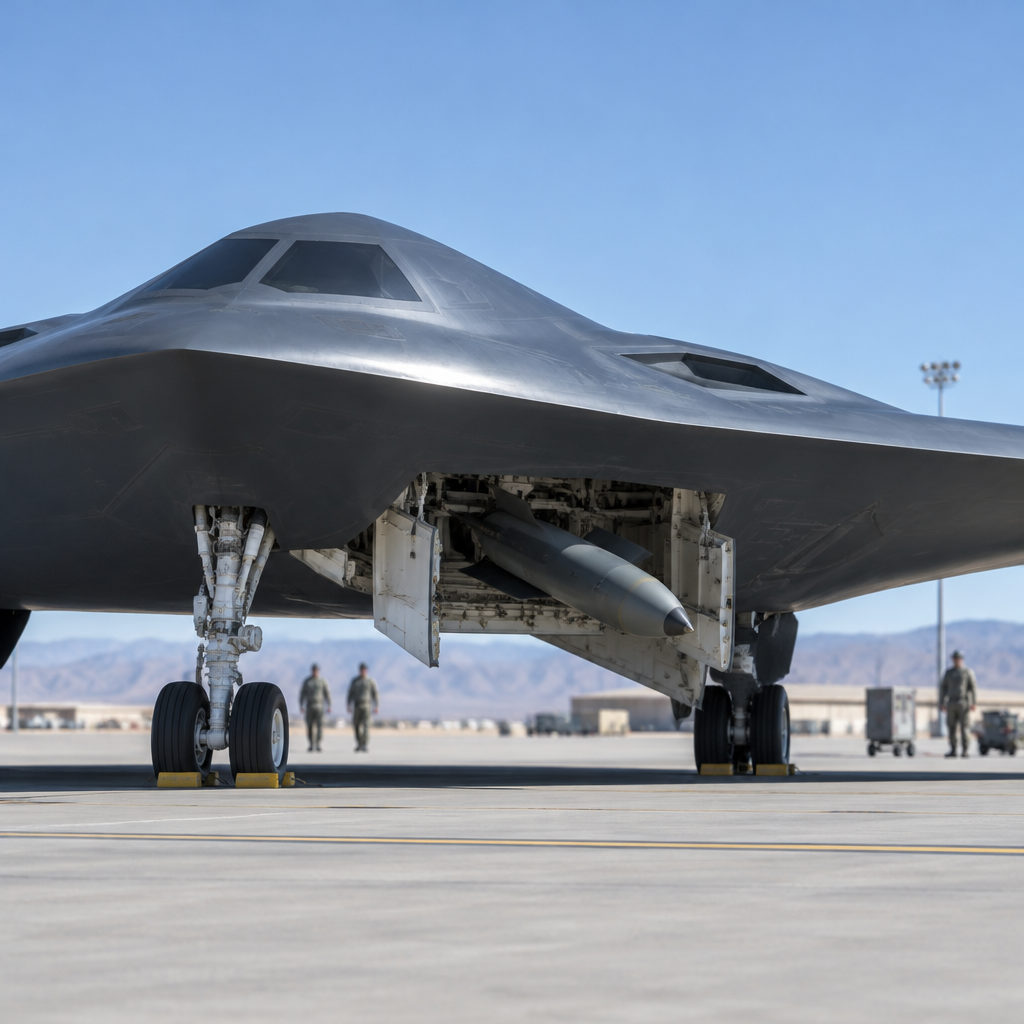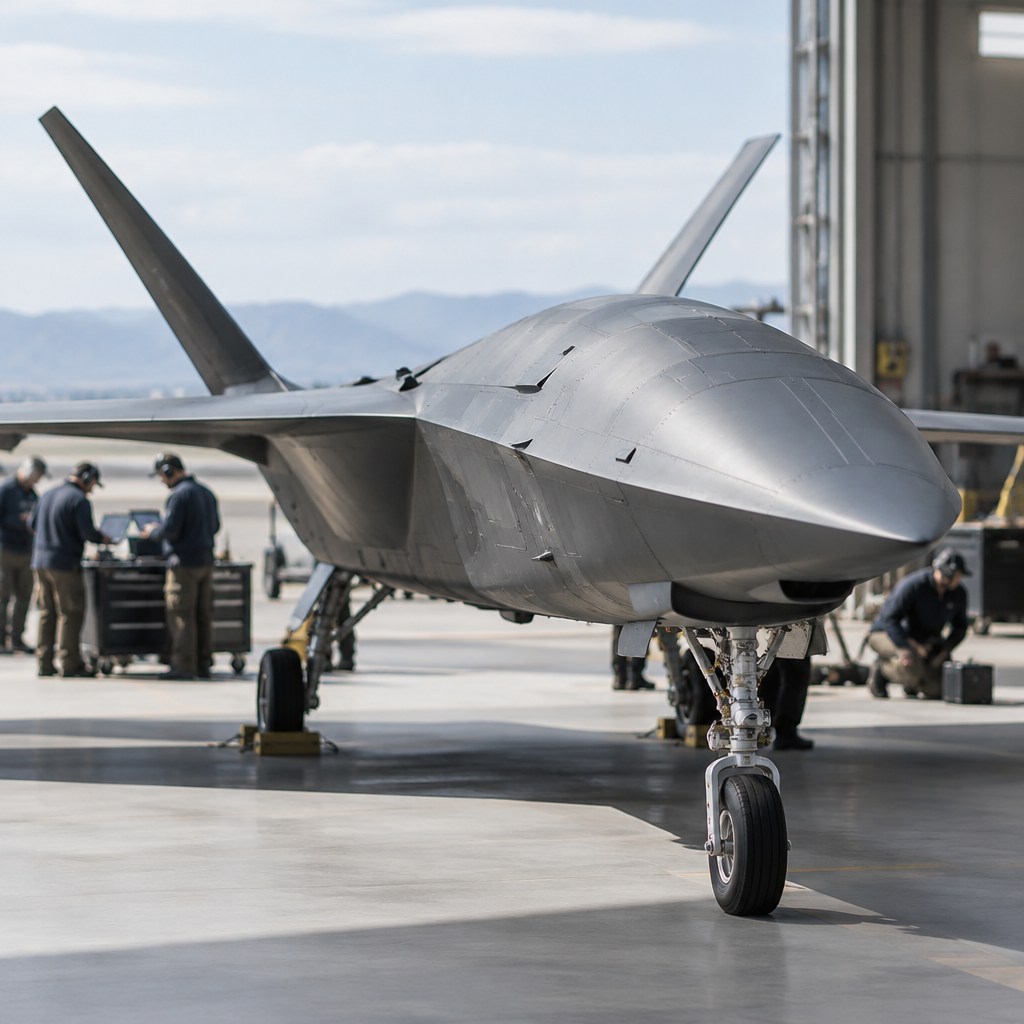
“We’re building a new class of aircraft that gives the warfighter improved speed, range, and flexibility while integrating into the existing Force,” Hermeus CEO Zach Shore said in the company’s release.
Northrop Grumman's mission-systems role
Northrop Grumman will provide “integrated mission systems design, development, integration, and sustainment” for Hermeus’ Quarterhorse aircraft, Hermeus said in a press release. In its own statement, Northrop confirmed it will integrate its mission systems onto the Quarterhorse and — as Northrop Program Manager Kyle Mimken told Breaking Defense — bring “electronic warfare, communications, sensing and navigation along with the payload-integration and systems-engineering experience needed to make those capabilities work together on an aircraft.”
Mimken declined to specify which exact systems Northrop will place on the aircraft but said the company’s contributions will help make the aircraft “more survivable and effective.” The partnership’s “immediate focus,” he added, is mission systems integration and coordinating with Hermeus to prepare for flight testing.
Quarterhorse drone and Hermeus propulsion programs
Hermeus, founded in 2018, is developing the Quarterhorse with funding from the Pentagon’s Defense Innovation Unit. The company is pushing the platform toward speeds as fast as Mach 3 and achieved supersonic flight earlier this year. The Quarterhorse is powered by Pratt & Whitney’s F100 fighter-jet engine.
Hermeus is also pursuing longer-term propulsion work. The company said it is building a turbine-based combined cycle (TBCC) engine concept called Chimera — a hybrid that combines a jet turbine with a ramjet — intended for an envisioned hypersonic aircraft named Darkhorse.

This site is the portfolio.
OSINTSights runs on Cloudflare Workers, D1, R2, and Vectorize, with an AI pipeline on Hetzner ARM. Nubivance designed, built, and operates it. We do the same for clients.
See what we buildIntegration, testing, and near-term timeline
Mimken said Northrop expects to “begin trials of elements of our mission-system kit in our testing environments in the summer.” That timetable and the stated focus on mission-systems integration make flight-testing coordination the immediate operational milestone for the partnership.
Hermeus framed the collaboration as a way to “push what those aircraft can do in real world scenarios and help us field operational capability faster,” quoting CEO Zach Shore in its release. The pairing of a high-speed airframe and established mission systems points the program toward iterative testing where propulsion, autonomy, and survivability capabilities must be synchronized before operational use.
Supplier ecosystem: Anduril, Pratt & Whitney, and vertical integration
Northrop’s addition joins other recent industry agreements tied to Quarterhorse. In September, Hermeus disclosed it will use autonomy software from defense tech firm Anduril for upcoming flight tests. Hermeus also said it reached an agreement with Pratt & Whitney to manufacture the F100 under license — which Hermeus described as the first such deal for an American firm — and noted that combination as positioning the company to be “virtually the only vertically integrated planemaker in the business.”
Separately, Northrop is already a key supplier across the defense industrial base, including radars, electronic warfare kits and navigation equipment for U.S. military platforms, a capability set directly relevant to the Quarterhorse mission-systems work the companies described.
What this means for the warfighter, military testers, and procurement officials
The warfighter: Hermeus and Northrop present the promise of a platform with “improved speed, range, and flexibility,” per Zach Shore, and mission systems intended to allow the aircraft to “operate more intelligently and take on more complex missions.” For end users, those are concrete operational attributes the companies say they are designing toward.
Military testers: The partnership centers on integration and flight-testing coordination. With supersonic flight already achieved and mission-system trials slated for “the summer,” testers will be watching how electronic warfare, sensing, navigation, and communications are harmonized on a high-speed airframe.
Procurement officials: The Quarterhorse program is a DIU-funded effort that now includes prime defense suppliers and a licensed-production agreement for the F100. Procurement teams will see a mixture of commercial startup innovation and established supplier capabilities — and a stated push toward vertical integration by Hermeus through licensed engine production.
The immediate, stated yardstick for this partnership is simple and tangible: integrate mission systems, begin trials of mission-kit elements in testing environments in the summer, and move toward coordinated flight testing. Whether those steps turn into a fielded operational capability will hinge on the integration work Northrop and Hermeus have described and on the outcomes of the upcoming trials.