After more than 42 years of service, the nuclear-powered submarine USS Georgia returned to Naval Submarine Base Kings Bay on July 27, 2026, and is scheduled to be officially inactivated on July 31 as the Navy begins the first formal step toward retiring one of its most capable guided-missile submarines.
USS Georgia returns home and begins formal inactivation
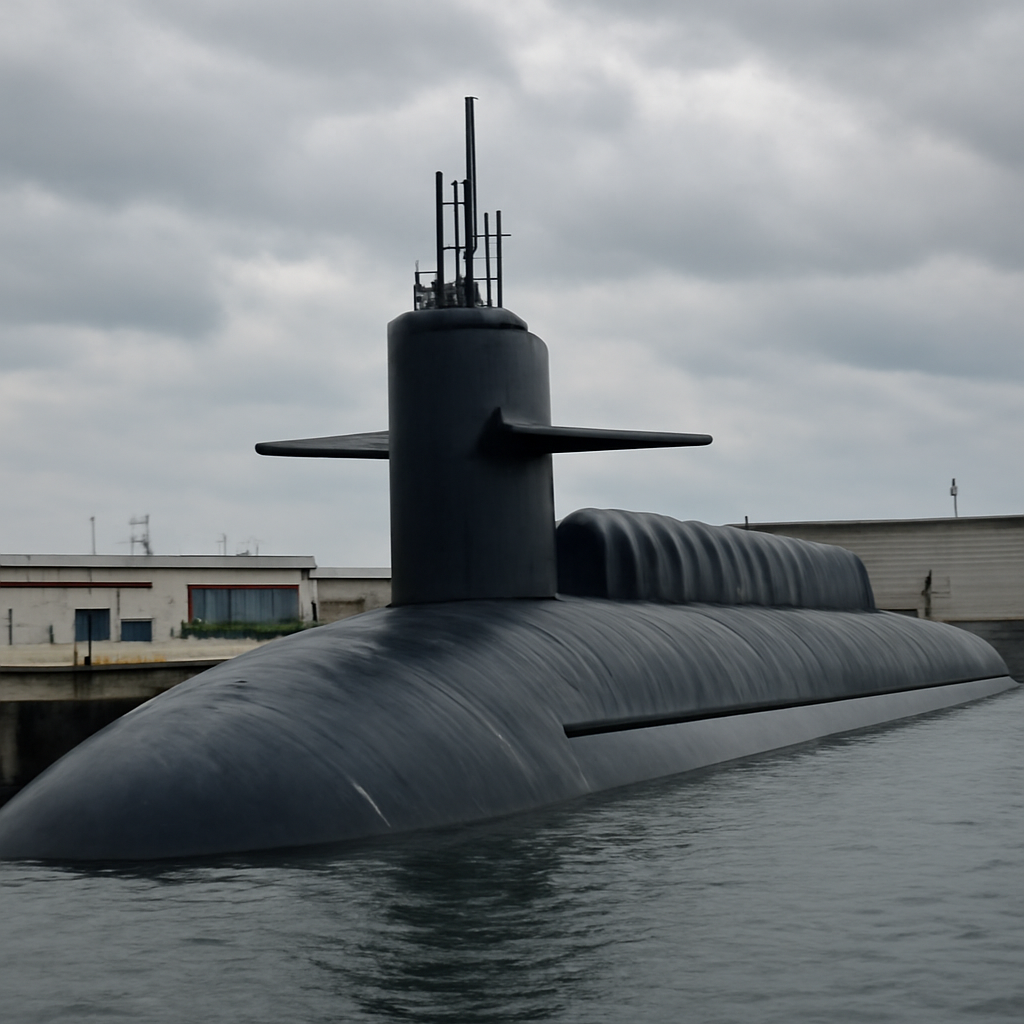
The guided-missile submarine USS Georgia (SSGN 729) sailed back into Kings Bay, Georgia, on July 27, 2026. That homeport arrival precedes an official inactivation set for July 31, the first step on a retirement path that will end with the boat being recycled. The inactivation of Georgia begins the staggered withdrawal of the four Ohio-class SSGNs from service.
From ballistic deterrent to multi-mission SSGN
Commissioned in 1984 as an Ohio-class nuclear ballistic missile submarine (SSBN), Georgia was the last of the four Ohio boats converted to a conventionally armed guided-missile submarine (SSGN). She returned to the fleet in her converted configuration in 2008 and served as the main testbed for proving the SSGN concept. The converted Ohio-class SSGNs are publicly noted for their Tomahawk capacity—able to carry up to 154 land-attack cruise missiles on paper, though they typically carry around 100—but their role extends well beyond strike. These boats can be fitted with up to two dry deck shelters for deploying special operators, including via mini-submarines, and for handling uncrewed platforms. They are also equipped to act as discreet underwater intelligence fusion nodes and command centers, a mix of capabilities that has made them among the Navy’s most heavily tasked submarines.

Audit-ready is a season. It shouldn't be.
Evidence in spreadsheets, controls drifting between audits, frameworks multiplying on flat headcount. Nubivance runs continuous compliance on Rapid7 Cyber GRC - SOC 2, HIPAA, ISO 27001, PCI, CMMC.
End the scrambleOperational profile: visible transits and reported strike roles
Georgia has been publicly visible on several occasions, especially in the Middle East. The boat made rare surfaced transits through the Strait of Hormuz in late 2020 and early 2021 during periods of tension with Iran; U.S. Naval Forces Central Command/U.S. 5th Fleet highlighted one transit with a December 22, 2020, photo and the hashtag “#AmericasAwayTeam.” In May 2021, Iranian boats harassed the submarine and its escorts during a transit, and a U.S. Coast Guard patrol boat fired warning shots. Georgia is also described as very likely being the submarine that fired more than two dozen Tomahawks at the Iranian nuclear facility at Isfahan as part of Operation Midnight Hammer in 2025. Whether Georgia participated in strikes tied to Operation Epic Fury in 2026 is unclear in the public record.
Fleet transition: Virginia Block V, VPM, and Columbia priorities
The Navy plans to inactivate all four Ohio-class SSGNs over the next three years. The remaining boats are scheduled to follow Georgia into retirement on this timeline: USS Ohio in Fiscal Year 2027, USS Florida in Fiscal Year 2028, and USS Michigan in Fiscal Year 2029. There is no direct replacement for the Ohio SSGNs currently in the shipbuilding pipeline. The service has a number of Virginia-class attack submarines now and is planning enlarged Block V variants that incorporate the Virginia Payload Module (VPM). Each VPM-equipped Block V will add four large vertical launch tubes, and combined with existing tubes the Block V design will be able to carry up to 40 Tomahawk missiles; the VPM tubes are also slated to be able to accommodate the forthcoming Intermediate-Range Conventional Prompt Strike (IRCPS) hypersonic missile. The first Block V submarine with the VPM is not expected to enter service until 2028. Meanwhile, the Columbia-class program—to replace Ohio-class SSBNs—has experienced delays and cost growth, and the program’s priority remains delivering new SSBNs on a tight schedule to avoid a gap in the sea-based nuclear deterrent. Proposals for a “Large Payload Submarine,” possibly based on the Columbia design and intended as a more direct SSGN replacement, have circulated in the past but have not been adopted amid Columbia program constraints.
What this means for the Navy, special operators, and regional partners
- The Navy: The scheduled inactivations remove platforms that have been heavily tasked and highly flexible—striking, special operations support, and afloat command and control—leaving a transitional period before VPM-equipped Virginias and any other designs arrive.
- Special operators and undersea warfare planners: Dry deck shelters and mini-submarine deployment options aboard the Ohio SSGNs have supported unique insertion and platform experimentation; those specific capabilities will need alternate basing or platforms as the SSGNs retire.
- Regional partners and adversaries (Middle East focus): The public presence of an SSGN or an SSBN in a region has been used as a signaling tool. Georgia’s surfaced transits and reported strike role in Operation Midnight Hammer demonstrate how these boats have factored into crisis postures and kinetic operations in the Central Region.
The USS Georgia’s inactivation on July 31, 2026, marks a visible step in a wider fleet transition: four uniquely capable SSGNs will be gone from active service by 2029 unless the Navy changes course, while the first VPM-equipped Virginias and the Columbia-class SSBNs work through crowded schedules and technical timelines. The practical questions left on the table are concrete and timing-driven—how the Navy will bridge the capability mix that Georgia and her sister boats provided, and whether proposed concepts for large-payload submarines will emerge as funded replacements amid Columbia program pressures.