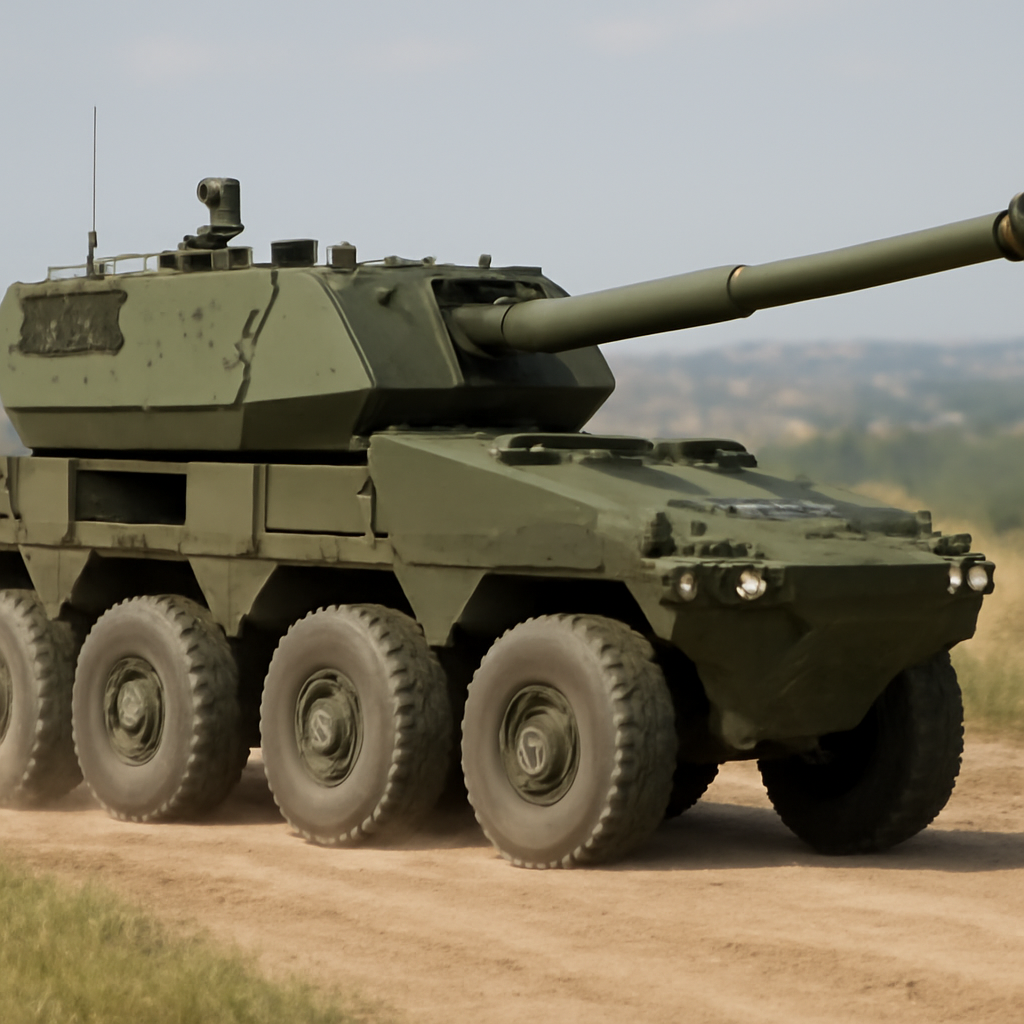
"There’s nothing that’s on the shelf right now that we are ready to put onto an airplane," U.S. Air Force Brig. Gen. Douglas Wickert told TWZ and other outlets last week.
New test footage: clearer rear and top views of multiple J-36 prototypes
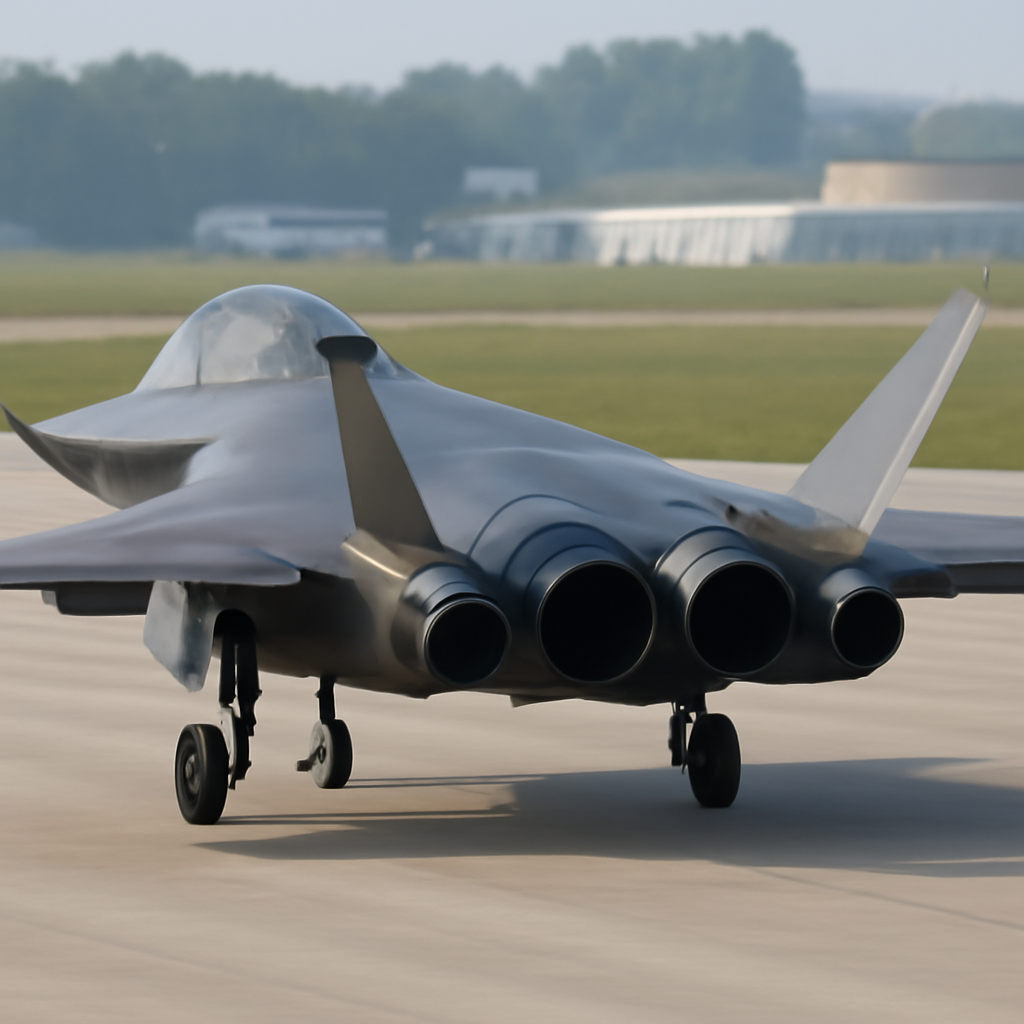
Recent social-media videos circulating since September 22, 2026, have provided unusually clear rear and top-angle views of Chengdu Aircraft Corporation’s J-36 heavy tailless tactical jet. The clips show a three‑engined, two‑seat (side‑by‑side) configuration arriving on landing approach and underscore the aircraft’s wide overall planform. Observers count at least four—and possibly five—J-36 prototypes flying since the type first appeared publicly in December 2024.
Propulsion and inlet changes: trough exhausts replaced by 2D vectoring and DSIs all around
The footage and prior imagery document a significant evolution in the J-36’s propulsion and intake layout. The design has shifted from a trough‑style exhaust to a two‑dimensional thrust‑vectoring arrangement described in the coverage as akin to the U.S. F-22 Raptor. Divertless supersonic intakes (DSIs) now appear “all around, not just on top,” a change first reported last year and again visible in the new clips.

This site is the portfolio.
OSINTSights runs on Cloudflare Workers, D1, R2, and Vectorize, with an AI pipeline on Hetzner ARM. Nubivance designed, built, and operates it. We do the same for clients.
See what we buildRadome, conformal apertures, and a potential communications/ISR role
Several prototypes show lighter‑colored sections: a paler radome at the nose and one or more lighter panels atop a dorsal intake. TWZ’s 2024 analysis noted the J-36’s broad radome area could accommodate a very large primary array, and the lighter dorsal area could be an aperture for a conformal antenna tied to beyond‑line‑of‑sight communications and data sharing. The recent top‑down footage also displays multiple lighter rectangular outlines around intakes and lighter leading/trailing edge paint—features consistent with apertures for antennas. TWZ has posited that the heavyweight J-36 could operate as an intelligence‑gathering and communications‑relay platform and as an airborne controller for advanced air‑combat drones as well as perform more conventional combat‑jet roles.
AVIC placard and the question of laser directed‑energy weapons
At the 14th China International Defence Electronics Exhibition earlier this month AVIC displayed a Chinese‑language placard described via machine translation as showing a “laser weapon tracking system” with a power rating written as “*00” kilowatts and a weight of “less than” 837.7 pounds (380 kilograms). The way the power rating is written was read by observers to imply hundreds of kilowatts—levels that, in principle, can cause physical damage to missiles or drones. AVIC’s booth included a graphic showing a turreted system and a computer‑generated rendering of a J-36 projecting a beam; separate circulating clips depict a J-36 using retractable lasers to engage missiles and aircraft. It is not clear from the material how official those animations are or whether they reflect an actual, planned airborne system.
Technical realism and U.S. research context: AFRL voices caution and cautious optimism
The source material places those AVIC displays against an established technical debate about the practicality of fielding airborne high‑energy lasers. TWZ recounts U.S. experience: the Air Force’s Self‑protect High Energy Laser Demonstrator (SHiELD) program concluded without achieving a flight test, and a planned AC‑130 laser test was cancelled in 2024. AFRL leaders at a 2026 roundtable reiterated the difficulty. Brig. Gen. Douglas Wickert said, “There’s nothing that’s on the shelf right now that we are ready to put onto an airplane.” Dr. Michael Gregg, head of AFRL’s Air Warfare Directorate, added that while laser development persists, the maturity of power and thermal management systems and newer engine designs have advanced to make system‑level concepts “much more feasible because everything has matured over the last decade.”
What this means for the People’s Liberation Army, the Air Force Research Laboratory, and defense acquisition officials
- The People’s Liberation Army (PLA): Continued refinement and growing numbers of J-36 prototypes—plus features favoring long range, payload and networked roles—suggest the platform could be tailored for deep‑penetration strike, communications relay, and command of unmanned systems, not just traditional dogfighting.
- Air Force Research Laboratory (AFRL): AFRL’s stated technical caution underscores the challenge of translating directed‑energy lab advances into flight‑worthy airborne systems; the agency will likely monitor China’s public displays and testing for engineering lessons and capability indicators.
- Defense acquisition officials: The AVIC placard and accompanying renders will likely prompt procurement planners to reassess timelines for counter‑measures, passive detection of high‑power laser development, and investments in power‑generation, thermal management, and counter‑drone defenses.
Observers tied to the J-36 debate have also raised non‑technical points: some analysts note Chengdu may be using a single serial number (36011) on at least some prototypes—possibly as a counter‑intelligence or misinformation measure—and Chinese commentary cited in the reporting argues the type could “penetrate heavily defended airspace” and act as a theater‑level node and command center. The Pentagon’s December 2025 annual report, cited in the same material, judged Chinese sixth‑generation aircraft “in the nascent stages of development and expected to be operational by 2035.”
The record from recent tests is concrete about configuration changes, avionics apertures and public displays; it is silent on whether an operational airborne laser is near. The coming months of prototype flights, instrumentation photos and official demonstrations will determine whether the J‑36’s visible evolution is incremental aerodynamics and sensor maturation—or a step toward integrating high‑energy directed‑energy systems into a large, long‑range, networked combat aircraft.