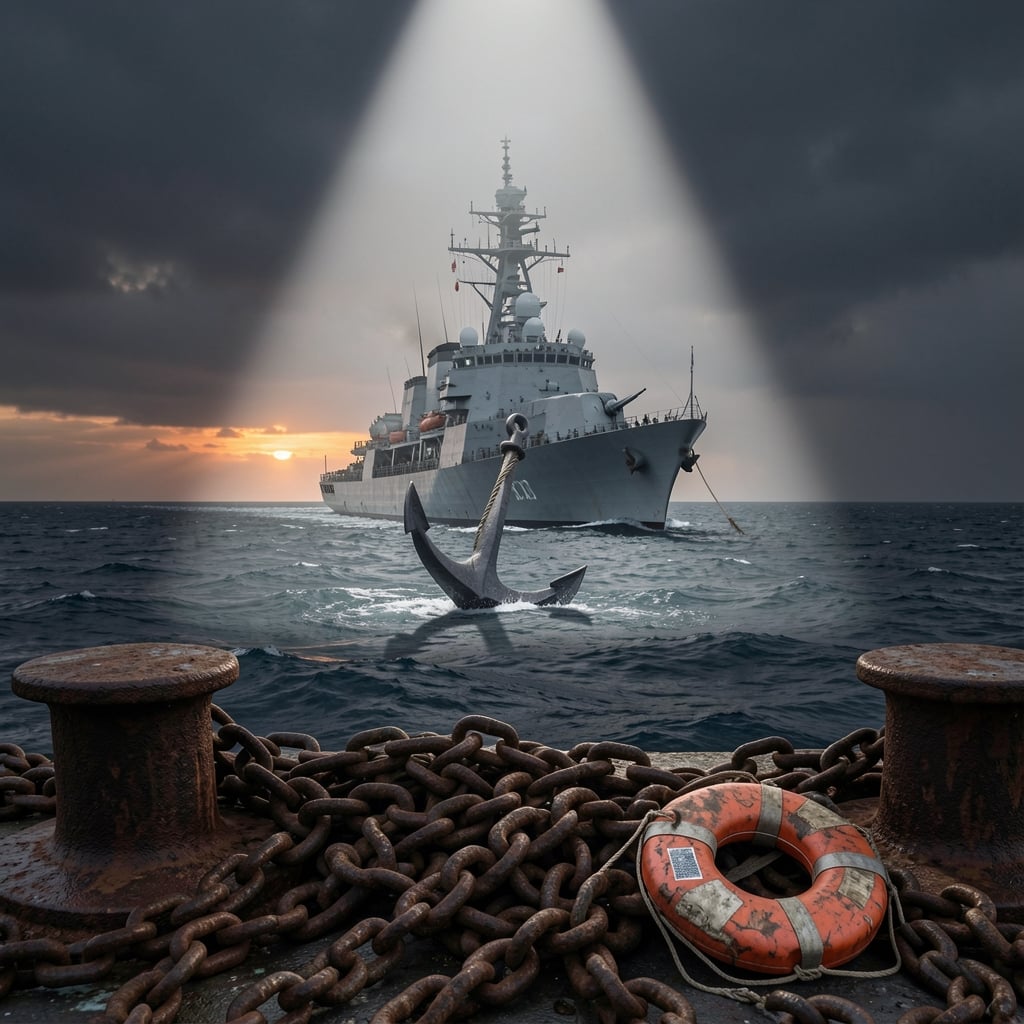
Who decides when a sea lane becomes a frontline? On April 12, 2026, that question moved from theory to order: Donald Trump ordered the U.S. Navy to blockade the Strait of Hormuz, even as a third carrier strike group steamed toward the CENTCOM area of responsibility, according to a report published by The War Zone.
What the report says
The War Zone’s Carrier Tracker entry dated April 12, 2026 states two primary developments. First, Donald Trump ordered the U.S. Navy to impose a blockade of the Strait of Hormuz. Second, a third carrier strike group was underway, steaming toward the U.S. Central Command (CENTCOM) area of responsibility. The post appeared on The War Zone’s site on April 12, 2026.
Immediate implications and uncertainties
Those two facts together signal an escalation in naval posture in one of the world’s most closely watched maritime chokepoints. A blockade is a discrete military action with direct effects on maritime traffic and strategic calculations; the movement of an additional carrier strike group further concentrates naval assets in and around the CENTCOM area of responsibility. Beyond noting these movements, The War Zone’s update does not provide additional operational details, legal framing, or timelines.

Audit-ready is a season. It shouldn't be.
Evidence in spreadsheets, controls drifting between audits, frameworks multiplying on flat headcount. Nubivance runs continuous compliance on Rapid7 Cyber GRC - SOC 2, HIPAA, ISO 27001, PCI, CMMC.
End the scrambleHow different audiences might read this
- Policymakers: For national-security planners, the combination of an ordered blockade and the arrival of a third carrier strike group raises immediate questions about objectives, rules of engagement, and diplomatic signaling. These are strategic choices that require coordination across defense, diplomacy, and commerce channels.
- Technologists and maritime operators: For those responsible for secure navigation, communications, and logistics, a blockade introduces practical challenges — from rerouting to secure communications and situational awareness — and increases the demand for reliable information about maritime safety and legal status.
- Commercial users and supply-chain managers: Shipping companies, insurers, and firms reliant on energy and trade through the Strait of Hormuz will be attentive to changes in transit, insurance rates, and alternate routing. The War Zone’s brief report does not address those downstream commercial consequences.
- Adversaries and regional actors: Observers in the region and beyond will interpret the blockade and additional carrier presence as a signal, though the report offers no detail on how regional states or non-state actors have reacted.
Why this matters
The War Zone’s update documents two concrete actions: an ordered blockade of a strategic waterway and the redeployment of a carrier strike group into the CENTCOM area of responsibility. Together, they are developments that could alter maritime risk calculations and diplomatic dynamics. The limited information in the report leaves key questions unanswered: the blockade’s legal basis and scope, the mission set of the incoming carrier strike group, and the timeline for escalation or de-escalation. Those unknowns are the very uncertainties that shape regional responses and global markets.
When a single report states that a blockade has been ordered and additional strike-group power is moving into a theater, it becomes essential for observers and decision-makers to demand clarity — and to prepare for a range of outcomes. Will naval posture revert quickly, or will it harden into a longer-term standoff? The answer will determine risk for sailors, shippers, and states alike.
Read the original report on The War Zone: https://www.twz.com/sea/carrier-tracker-as-of-april-12-2026



