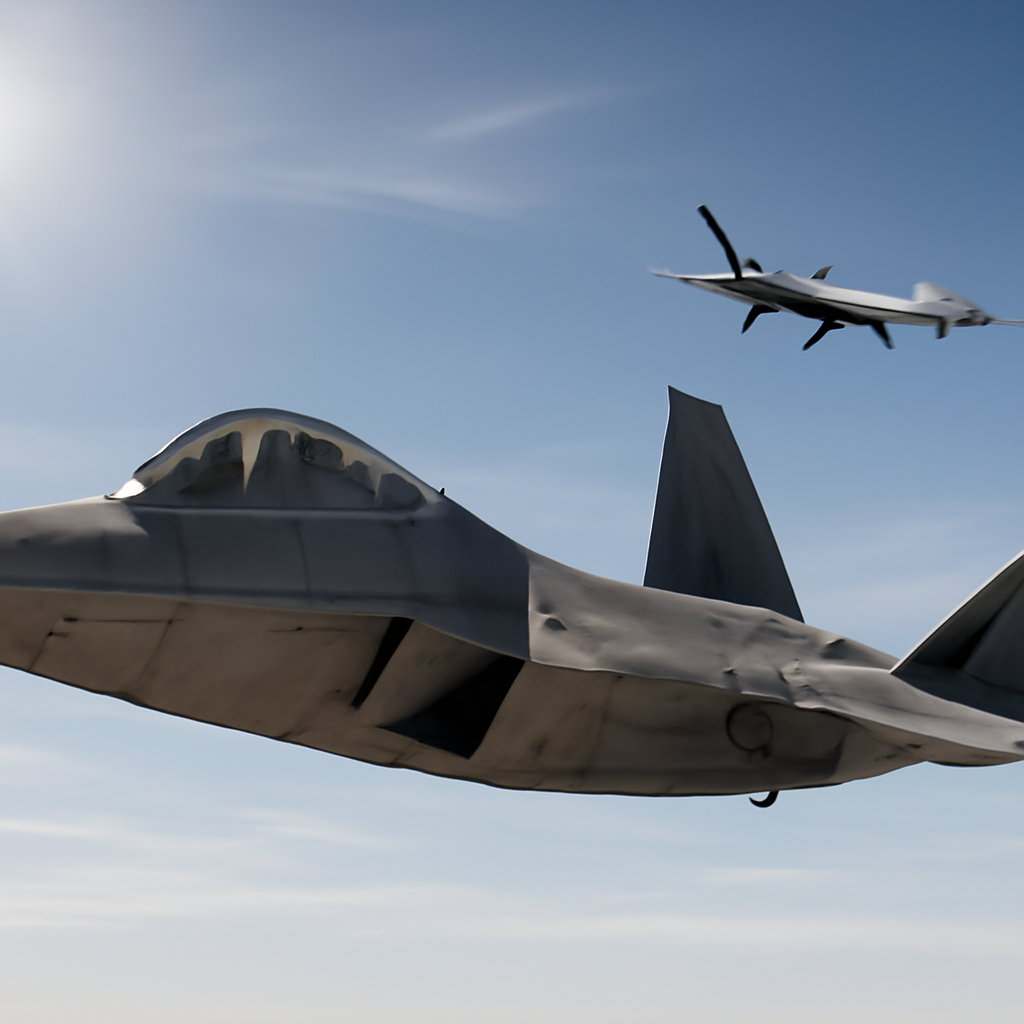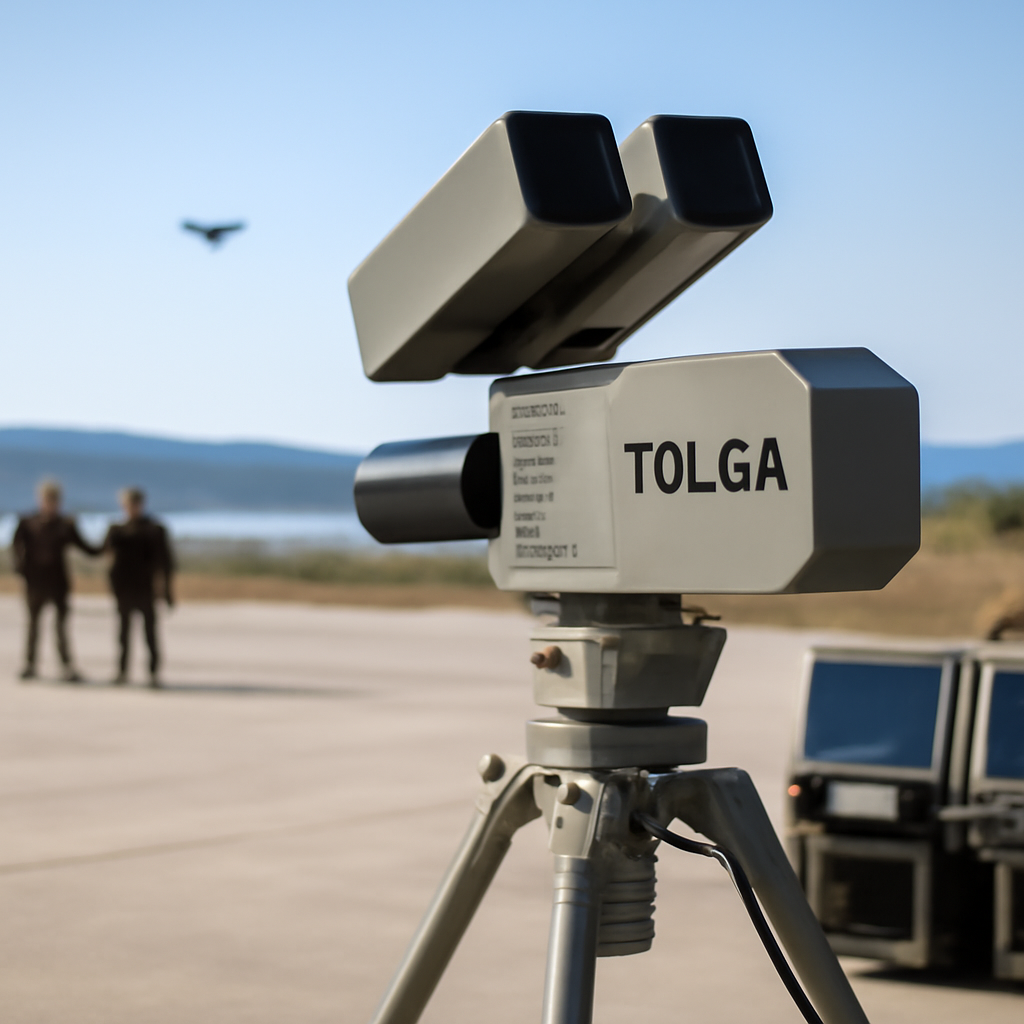
100 percent: Makina ve Kimya Endüstrisi (MKE) reported that its TOLGA short-range air-defence system detected, identified and defeated every target across seven operational scenarios during a live-fire demonstration on 17 July 2026.
The 17 July 2026 live-fire demonstration
MKE staged the trial before roughly 150 representatives drawn from the Turkish Armed Forces, defence institutions and the domestic defence industry. Observers included officers from the General Staff, the Land Forces, Naval Forces, Gendarmerie and Coast Guard commands, alongside the Defence Industry Directorate and industry firms. Across seven runs, TOLGA engaged fixed-wing kamikaze unmanned aerial vehicles, mini and micro drones, and cruise-missile surrogates, with MKE reporting a successful result in every engagement.
TOLGA’s layered architecture: sensors, jamming, and guns
MKE markets TOLGA as a layered “defence shield system” (DSS) that fuses detection, soft-kill jamming and hard-kill gunfire in one architecture. Detection centers on MKE’s Gökbörü active electronically scanned array (AESA) radar, which the company says can find targets out to 20 km and track more than 200 at once, supported by electro-optical and acoustic sensors. The kill chain opens with electronic-warfare jamming intended to cut satellite-navigation or radio links at ranges up to 10 km; if a target continues to close, the system switches to hard kill with turreted guns matched to range.

Audit-ready is a season. It shouldn't be.
Evidence in spreadsheets, controls drifting between audits, frameworks multiplying on flat headcount. Nubivance runs continuous compliance on Rapid7 Cyber GRC - SOC 2, HIPAA, ISO 27001, PCI, CMMC.
End the scrambleWeapons, munitions, and performance claims
MKE equips TOLGA with multiple kinetic layers: a 35 mm cannon effective to 3,000 m, a 20 mm turret effective to 1,000 m, and 12.7 mm stations effective to 300 m. Turrets fire MKE’s fragmenting anti-drone ammunition, with rounds designed to burst near a target and throw a fragment pattern. For closest-in threats, MKE also fields 7.62×51 mm and 7.62×39 mm fragmenting anti-drone rounds intended for infantry rifles. The company quotes a reaction time of under four seconds and emphasizes 360-degree coverage; TOLGA can operate in manual, semi-autonomous or fully autonomous modes and be mounted on fixed sites, wheeled vehicles, armoured platforms or naval mounts. MKE has stated that a laser weapon and its ENFAL-17 missile are to be added to the system later.
MKE’s export moves: Qatar, Egypt, and Hungary
TOLGA first appeared publicly at IDEF 2025 in Istanbul and has moved quickly into foreign markets. Qatar became the first customer, signing a memorandum at DIMDEX 2026 and forming a joint venture with Barzan Holding for local production. Egypt reportedly secured a $130 million contract through its Ministry of Defence in February 2026. Türkiye and Hungary have also cooperated: MKE and Hungary’s HT Division signed a memorandum for the system and demonstrated a 20 mm TOLGA turret mounted on HT Division’s Katica unmanned ground vehicle at Eurosatory 2026.
How the Turkish Armed Forces, Qatar, Egypt, and Hungary are positioned
- Turkish Armed Forces and defence institutions: Representatives from multiple commands observed the live-fire trial, having also seen an earlier evaluation on 16 November 2025 at the Karapınar Firing Test and Evaluation Centre where TOLGA reportedly cleared eight scenarios with a 100 percent result. Their continued presence at demonstrations and evaluations places them as primary evaluators for point and base defence applications.
- Qatar: Having signed a memorandum at DIMDEX 2026 and formed a joint venture with Barzan Holding, Qatar has moved toward local production of TOLGA components or systems.
- Egypt: With a reported $130 million Ministry of Defence contract in February 2026, Egypt is a major export customer and a buyer that has committed significant procurement funding.
- Hungary and HT Division: The memorandum with MKE and the demonstration of a 20 mm turret on HT Division’s Katica UGV at Eurosatory 2026 show an interest in integrating TOLGA into national unmanned-ground-vehicle concepts.
The live-fire demonstrations and export memoranda offer a clear commercial and technical pitch: a layered gun-and-jammer shield that MKE presents as an affordable counter to massed drone threats. The company’s repeated 100 percent trial results, the quoted sub-four-second reaction time, and the range figures for radar, jamming and guns are the performance claims that observers and buyers will test against real-world operating conditions. Whether the trial results will translate into sustained operational performance under contested, complex conditions and how quickly the promised laser and ENFAL-17 additions arrive are the concrete questions the record leaves for purchasers and evaluators to resolve.