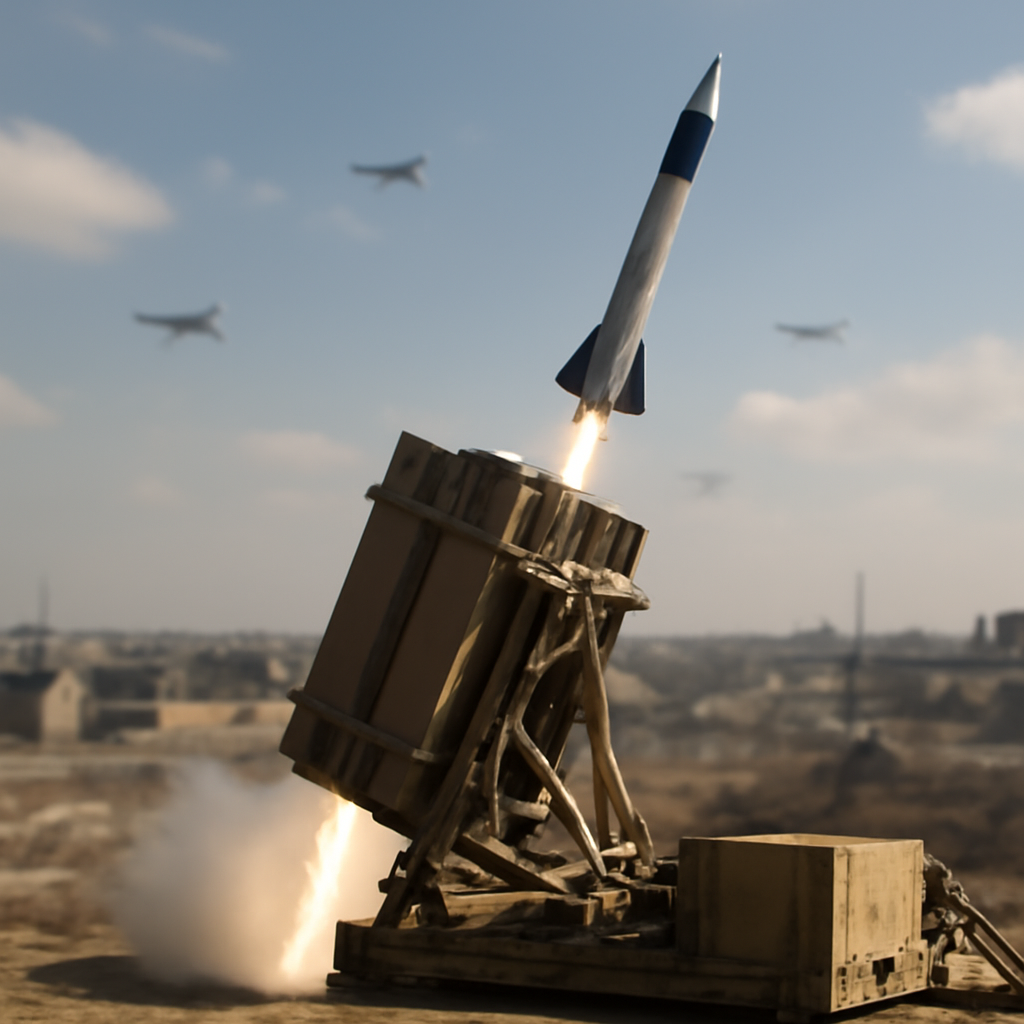
"It has been in the works, I probably think, close to 10 years," Chandra Marshall, Vice President and General Manager of the Multi-Domain Combat Solutions business unit within Lockheed Martin’s Rotary and Mission Systems division, said on the floor of the Sea Air Space exposition.
What the Navy awarded and why it matters
The U.S. Navy has issued a formal contract to Lockheed Martin to integrate the Patriot PAC-3 Missile Segment Enhancement (MSE) surface-to-air missile with the Aegis Combat System, the service announced as part of the Pentagon’s Fiscal Year 2027 budget rollout. The Navy is also seeking just over $1.73 billion in that budget to buy 405 PAC-3 MSE missiles — a tranche it calls the first-ever purchase of PAC-3 MSEs for the Navy.
The Navy’s principal Aegis-equipped platforms are Arleigh Burke class destroyers, with a dwindling number of Ticonderoga class cruisers also using Aegis today. Integrating PAC-3 MSE with Aegis and the Mk 41 Vertical Launch System (VLS) would give those ships an additional intercept option for a range of aerial threats.
Technical integration: Aegis, Mk 41 VLS, and the PAC-3 MSE
Lockheed Martin described the integration as two linked efforts: a small update to the PAC-3 missile to allow communication with S-band radars in addition to its current X-band link, and the software/hardware work to register PAC-3 as a missile type in the Aegis Combat System. Lockheed said its open, componentized Aegis architecture makes the integration a relatively short task.
No changes to the Mk 41 VLS itself are planned or required for the effort. Work is ongoing to adapt PAC-3 MSE interceptors into launch canisters that will slot into existing Mk 41 cells. At just over 17 feet long and roughly 11 inches in diameter, PAC-3 MSE is compatible with tactical-length and strike-length Mk 41 cells. Lockheed Martin has said each canister will contain a single PAC-3 MSE missile.
Lockheed additionally demonstrated a modular Virtualized Aegis Weapon System firing a PAC-3 MSE from a containerized Mk 41-based launcher on land, showing a path for integration beyond shipboard trials.

The cyber insurance questionnaire just landed. Now what?
SOC 2, HIPAA, insurance renewals - someone has to own security strategy. Nubivance provides fractional CISO leadership without the full-time salary.
Get a security leadSchedule and capability ambitions
Marshall told TWZ the Navy is aiming for initial operational capability (IOC) with the PAC-3 MSE/Aegis combination in approximately 18 months — roughly by the end of 2027 if the effort begins immediately. The Navy’s FY2027 budget documents describe the integration as providing an additional means of intercepting "a wide range of threats, including tactical ballistic missiles, air-breathing threats, cruise missiles, and unmanned aerial systems."
Costs, production ramps, and competing demands
The Navy’s FY2027 request lists a unit cost of $4.05 million per PAC-3 MSE missile, with an additional $200,000 for the canister. By contrast, the Army’s FY2027 proposed budget lists a unit cost for standard PAC-3 MSEs of $5.3 million. The Navy said both quantities and unit cost are estimates based on U.S. Army contract pricing and will adjust based on Department of the Navy Contract Line Item Numbers on the Army contract and the final cost of Navy components such as the radio and canister.
Lockheed Martin announced in January an agreement to raise annual PAC-3 MSE production capacity from 600 to 2,000 missiles, and recently received a contract to further accelerate production. The Navy’s budget documents say the service expects to achieve cost avoidance by leveraging the high-volume Army production contract to gain economies of scale.
But demand is rising. The source notes that PAC-3 MSE performance in the Middle East and in Ukraine has driven increased Army and foreign demand. Reuters reported U.S. officials told allies deliveries of unspecified munitions could be delayed because of American needs related to the war with Iran; the Army’s budget documents, according to the reporting cited in the source, indicate foreign military sale schedules remain unchanged in the delivery books.
How the U.S. Navy, the U.S. Army, and allied customers will respond
- Navy: The service is pushing to field PAC-3 MSE on Arleigh Burke destroyers as an operational alternative and supply-line diversification for anti-air interceptors, seeking IOC in roughly 18 months and requesting funding to buy 405 missiles and launch canisters in FY2027.
- U.S. Army: The Army remains the high-volume PAC-3 MSE customer; the Navy intends to leverage Army contract pricing and higher production rates to lower unit costs for naval buys, while Army documents continue to show foreign customers largely scheduled to receive the majority of production.
- Allied customers and foreign militaries: Adding the Navy to the Patriot user base and demonstrating PAC-3 MSE from Mk 41 cells could increase demand among navies with Mk 41-compatible ships, even as production ramps and competing requirements raise questions about delivery sequencing.
The Navy and Lockheed Martin have formalized a path to field a freshly proven Army interceptor aboard Aegis-equipped warships without modifying the Mk 41 VLS. The facts now on record — a multi-million-dollar Lockheed contract, a $1.73 billion FY2027 buy request for 405 missiles, a planned IOC by the end of 2027, and an industry production ramp to 2,000 missiles per year — leave two concrete questions open from the documents: how soon will canistered naval missiles be delivered for shipboard trials, and whether the expanded production lines will satisfy growing Army, Navy, and foreign demand without changing delivery schedules already committed to customers.