"This historic investment underscores the Department’s continued commitment to undersea superiority and the recapitalization of our nuclear triad," Vice Adm. Robert Gaucher, the Pentagon’s submarine czar, said in a statement today.
The contracts: nine Block VI Virginias and five Build II Columbias
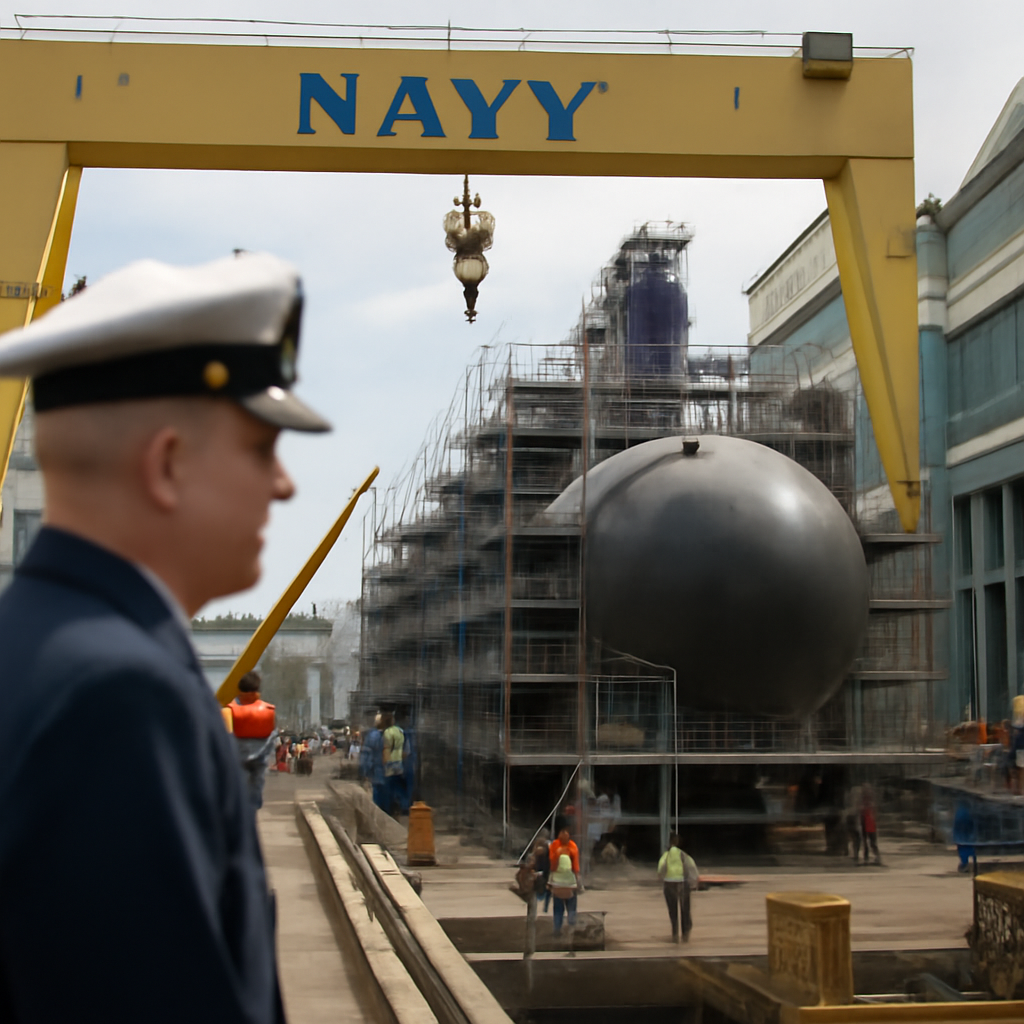
The Navy announced today two major contract awards that together total $76.6 billion, according to the US Navy. One contract is valued at $42.1 billion for nine Block VI Virginia-class submarines — plus material for another — and a separate award of $29.5 billion covers five Build II Columbia-class ballistic submarines. These awards are coupled with previously awarded funds of $5 billion for shipyard enhancements to arrive at the $76.6 billion figure.
Who will build them and how the shipyards framed the deal
The two shipyards that jointly construct the boats — General Dynamics Electric Boat and HII’s Newport News Shipbuilding — will execute the work. Newport News Shipbuilding President Kari Wilkinson said in a statement, “We are committed to building the nuclear-powered submarines that protect our nation. These contracts provide the American shipbuilding industrial base the opportunity to demonstrate that commitment in a meaningful way and we are honored to serve our customer and our country.”
Mark Rayha, president of General Dynamics Electric Boat, said the contract modifications provide Electric Boat and suppliers “with the demand certainty we need to continue investing in capacity and hiring the workforce necessary to ensure we deliver these important national security assets on schedule.”

This site is the portfolio.
OSINTSights runs on Cloudflare Workers, D1, R2, and Vectorize, with an AI pipeline on Hetzner ARM. Nubivance designed, built, and operates it. We do the same for clients.
See what we buildCongressional pressure, procurement timing, and AUKUS
Lawmakers from both sides of the aisle had pushed the Navy to award a contract related to the Virginia program after Congress authorized procurement in the National Defense Authorization Act for fiscal year 2024. Connecticut Rep. Joe Courtney, the top Democrat on the seapower and projection forces committee, sent a letter in March to Pentagon acquisition czar Michael Duffey saying that a delay was creating “uncertainty for the suppliers and shipbuilders who depend on long-lead planning to produce and acquire the components and modules for submarine construction.”
Today Courtney said the awards “secure work at submarine shipyards and thousands of supply chain companies well into the late 2030s,” and linked the contracts to broader policy implementation by noting they “also support the trilateral AUKUS security agreement to sell three in-service Virginia-class submarines to Australia in the 2030s.” He added that the awards will “be the driving force to stimulate growth across the submarine industrial base” and urged that “Congress and the Navy must now double-down on industrial base investments that are moving delivery schedules to the left.”
GAO findings: current production shortfalls and slipping delivery dates
The awards arrive against a backdrop of program challenges documented in a Government Accountability Office report released this month. The GAO report said shipbuilders were constructing Virginia-class submarines at a pace of one per year as of June 2025, short of the Navy’s stated target of two per year. The report also found that projected delivery dates for the first 10 Block V submarines are delayed, “slipping by an average of almost 3 years since original contract award.”
The GAO concluded bluntly: “Recovery plans are not progressing as intended.” It noted the program developed a report to track progress toward a two-per-year build rate, but that the report’s construction progress metrics indicate the program is already underperforming its recovery plans.
What this means for shipbuilders, suppliers, and Congress
- Shipbuilders: The multi-billion-dollar awards provide longer-term demand certainty for Electric Boat and Newport News, enabling planned investment in capacity and hiring — a point the shipyard presidents emphasized in their statements.
- Supply-chain firms and small manufacturers: Rep. Joe Courtney framed the awards as the guarantee needed for thousands of small business manufacturers to make investments in hiring, facilities, and equipment.
- Congress and acquisition overseers: While the contracts answer calls to move procurement forward, the GAO’s finding that recovery plans are underperforming leaves a practical question for oversight: will the funding and shipyard investments translate into faster build rates and reversed schedule slips?
The Navy and shipyards now have clear financial backing to press for increased throughput, but the GAO’s assessment warns that dollars alone will not self-execute the return to a two‑per‑year production rhythm. Whether the awarded contracts and the $5 billion in prior shipyard enhancements will be sufficient to accelerate construction and reverse the nearly three-year average slip on early Block V delivery dates remains the central operational question these awards aim to address.