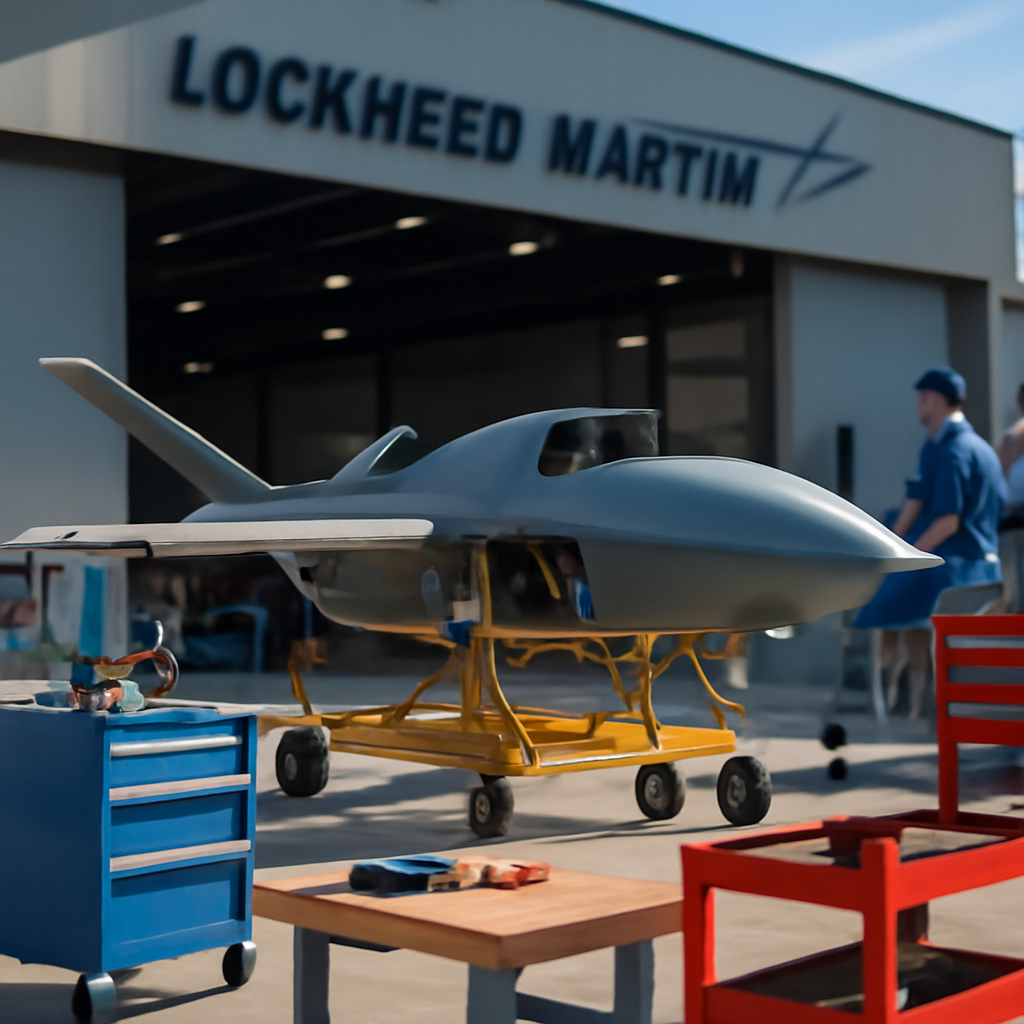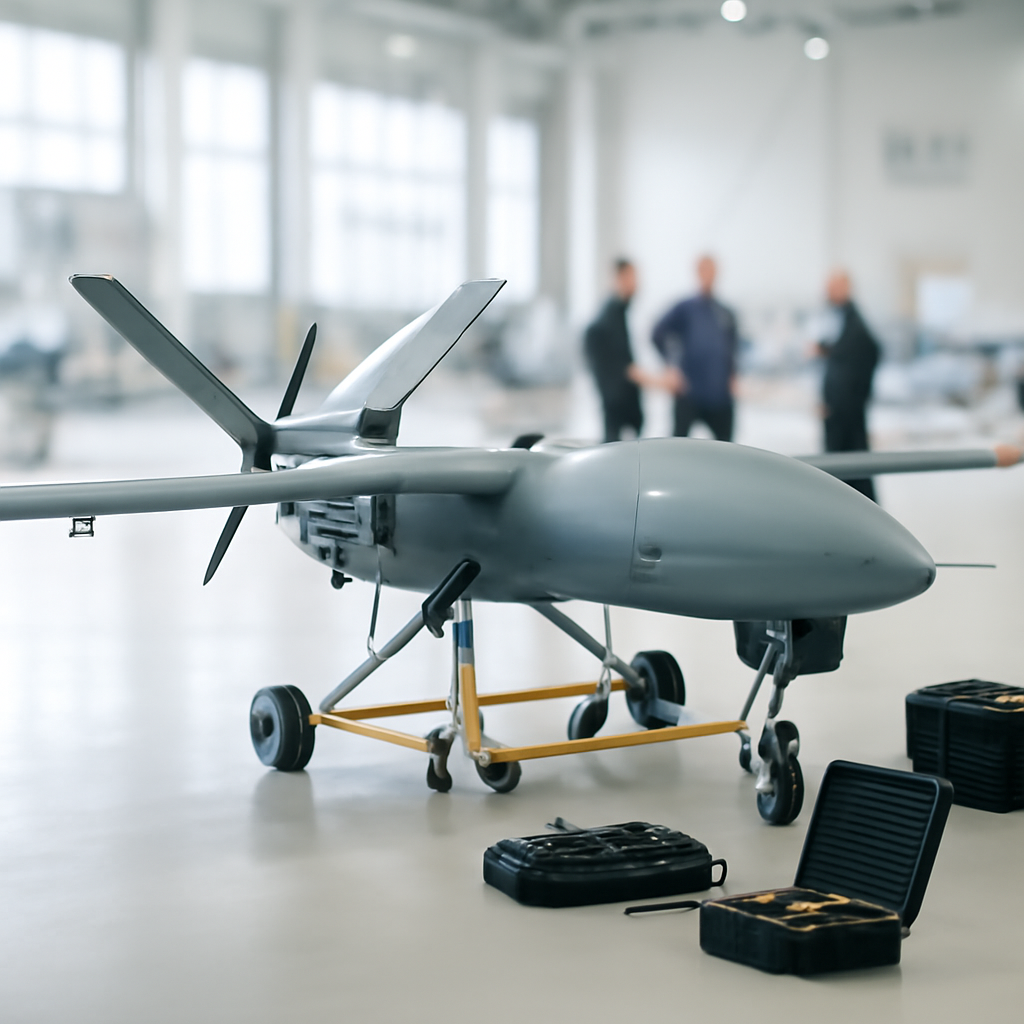
"We are moving forward with a plan to build an additional four vehicles, bringing a total of five to include the original prototype," said Ron Fehlen, Skunk Works’ vice president and general manager.
Ron Fehlen on fleet expansion and schedule
Speaking ahead of the Air, Space and Cyber Conference near Washington, D.C., Ron Fehlen announced that Lockheed Martin’s Skunk Works is expanding the Vectis experimental drone program from a single prototype to a five‑aircraft test fleet. Fehlen said "development work on those additional aircraft is already underway" and that the program remains on track to fly Vectis by "the end of 2027." He tied confidence in that schedule to the program’s reliance on digital design and a low-touch assembly approach.
Vectis dimensions and airframe: submerged inlet and tailless body
Skunk Works released new images and basic specifications for Vectis: the aircraft will be roughly 34 feet long with a 38‑foot wingspan. Fehlen described two prominent design features — a submerged engine inlet and a tailless body — which he said were intended "to reduce drag and mission flexibility." The firm framed Vectis as a concept for a group 5 multirole combat drone capable of a wide range of missions, though officials declined to provide details on weapons loadout or propulsion.

Audit-ready is a season. It shouldn't be.
Evidence in spreadsheets, controls drifting between audits, frameworks multiplying on flat headcount. Nubivance runs continuous compliance on Rapid7 Cyber GRC - SOC 2, HIPAA, ISO 27001, PCI, CMMC.
End the scrambleManufacturing approach: minimal tooling determinant assembly and affordability
Fehlen emphasised manufacturing methods as central to both affordability and speed. He described the program’s construction approach as using "minimal tooling determinant assembly," likening it to "ready‑to‑assemble furniture with pre‑drilled holes." According to Fehlen, that technique has produced "an increased level of affordability and speed" and, in some cases, "an 80 percent reduction in labor hours to build up the aircraft itself." He added that Skunk Works is "always looking at" affordability and is "targeting to be the CCA competitive price," indicating cost considerations are being balanced with capability decisions.
Integration with fighter jets, CCA focus, and potential operators
Fehlen suggested Vectis is intended to integrate with crewed tactical aircraft, saying the design "could work with any of Lockheed Martin’s fighter jets, which are also flown by other nation’s militaries." He explicitly framed the program around collaborative combat aircraft (CCA) concepts, saying Vectis is "focused more on the CCA side of the house" and that "price points" relevant to that regime are being considered. Despite the emphasis on integration and export potential, Fehlen declined to name a specific U.S. customer or program alignment for Vectis.
What the Air Force, Navy, and Marine Corps will watch
- Air Force: The service will likely monitor whether Vectis meets the timeline to fly by the end of 2027 and how the platform’s integration approach meshes with existing crewed tactical systems, since Fehlen framed Vectis around CCA compatibility.
- Navy: Naval planners will be attentive to the tailless body and submerged inlet design and to any future disclosures about propulsion and weapons — details the company has not provided but which will determine suitability for maritime operations.
- Marine Corps: The Marine Corps will watch cost targets and affordability, given Fehlen’s explicit comments tying Vectis development to "the CCA competitive price" and to production methods that reduce labor hours.
Lockheed’s Skunk Works has shifted Vectis from concept toward a small test fleet and set a clear schedule for a first flight, but key program particulars remain withheld: Fehlen did not disclose the weapons loadout, propulsion system, estimated cost, or a named customer. The next concrete milestones are the build‑out of the additional four vehicles and the planned first flight by the end of 2027 — events that will test whether the claimed reductions in assembly labor and the CCA price targets hold up when hardware meets operational requirements.