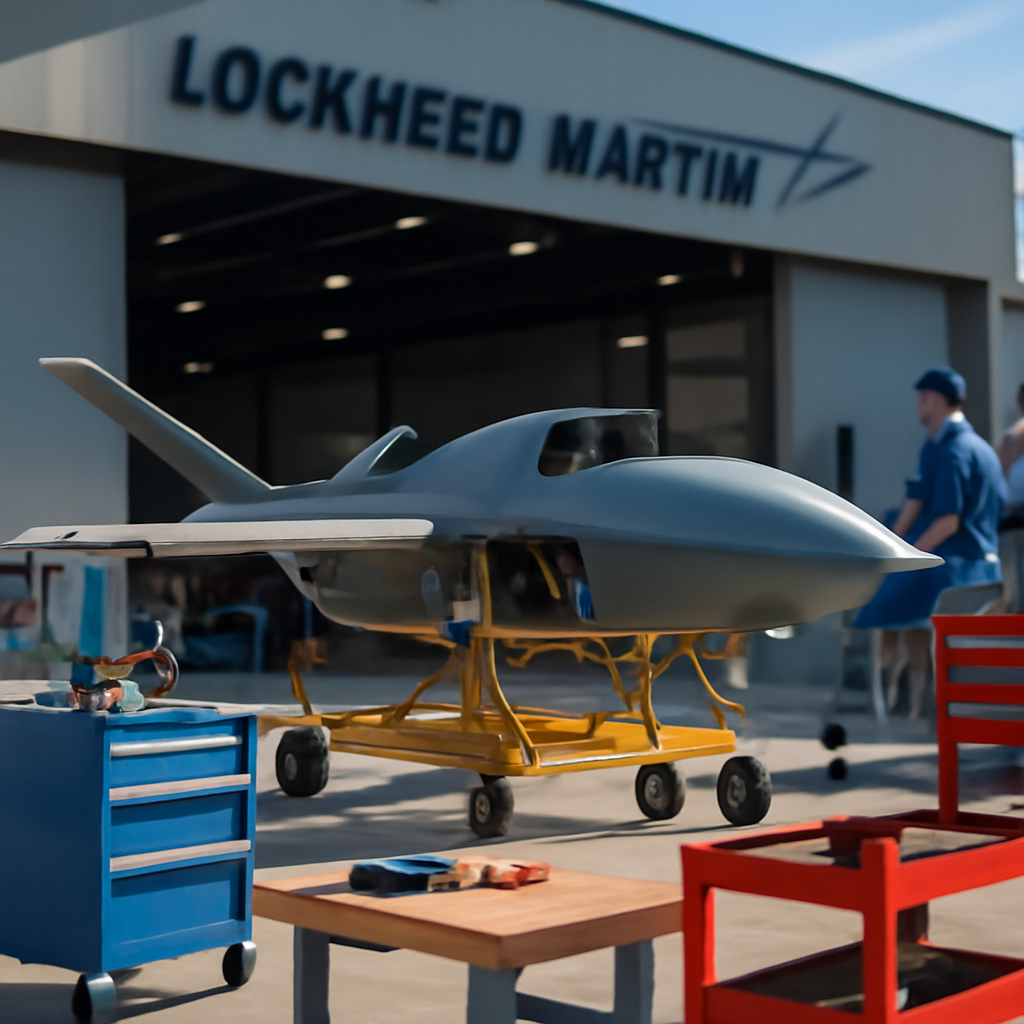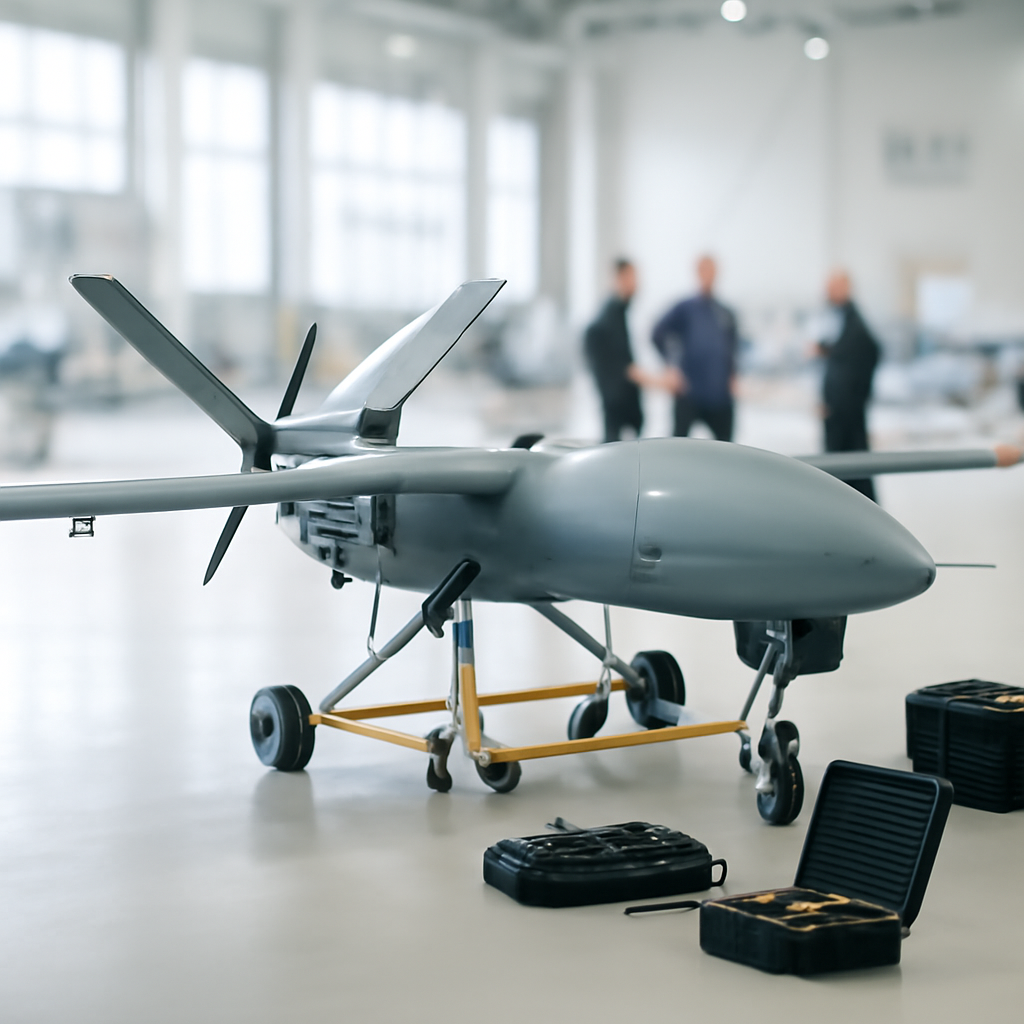
"It is designed, as you can likely see, to be both survivable and affordable and flexible across the range of missions that our customers need," said Ron Fehlen, Lockheed Martin vice president and general manager of Skunk Works, as the division laid out fresh details of its Vectis Collaborative Combat Aircraft (CCA) design ahead of the Air & Space Forces Association’s 2026 Air, Space & Cyber Conference.
Airframe shape, intake and low-observable emphasis
Lockheed Martin’s Skunk Works has revealed that Vectis is a tailless lambda-wing drone with a prominent chine line and a shovel-shaped nose. The most significant new disclosure concerns the air inlet: renderings now show a deeply recessed, top-mounted "submerged" intake sitting behind a downward‑sloping v-shaped channel and feeding an S-shaped duct. Skunk Works emphasized the inlet was part of the design from the beginning and tied the choice to survivability, drag reduction and protection against foreign object debris (FOD) in austere basing.
The company contrasted Vectis’ near‑flush top intake to fully flush intakes used on other designs, noting it is not fully flush like the Navy’s MQ-25 Stingray but is "very loosely similar" to shaping seen on the B-21. Fehlen declined to provide detailed survivability discussion for operational security, but said the intake selection reduces frontal drag and helps operations in austere environments.
Scale, configuration and what remains unspecified
Skunk Works provided concrete size figures: Vectis is approximately 34 feet long with a wingspan around 38 feet. The single‑engine platform remains broadly unchanged from last year’s unveiling in planform and layout, but new renderings show revised locations for conformal antennas and sensor apertures typical of low‑observable design. Lockheed Martin has not disclosed engine make or hard performance specifications.

This site is the portfolio.
OSINTSights runs on Cloudflare Workers, D1, R2, and Vectorize, with an AI pipeline on Hetzner ARM. Nubivance designed, built, and operates it. We do the same for clients.
See what we buildWeapons, sensors and modular mission fit
Skunk Works presented Vectis as a multi‑mission aircraft capable of both air‑to‑air and air‑to‑ground roles. A new promotional video depicts internal bays holding at least two munitions — imagery shows what appear to be an AIM‑120 Advanced Medium Range Air‑to‑Air Missile and GBU‑53/B Small Diameter Bomb II (SDB II, also called StormBreaker). The video also shows an electro‑optical/infrared sensor turret behind a faceted, stealthy enclosure under the nose and suggests the internal bay could carry medium‑range air‑to‑air missiles.
Fehlen emphasized modularity and open architecture to ease future capability integration, and said specific requirements for autonomy and command and control would depend on customer choices and could involve third parties.
Autonomy, crewed–uncrewed teaming and command interfaces
Lockheed Martin said advanced autonomy work is central to Vectis development. The company highlighted its Multi Domain Combat System (MDCX) autonomy platform, work on autonomous air intercepts with the X‑62A test jet, and plans to enable F‑22 and F‑35 pilots to control CCA drones from in‑cockpit touchscreen interfaces (likely tablets at first). Skunk Works’ promotional material also shows a traditional ground control station and makes the claim "managed from anywhere."
Production approach, digital engineering and cost targets
Skunk Works described an accelerated digital engineering path: the team took a design "on a napkin" to wind‑tunnel models in under two months, produced a first digital build in six months and had a first part release in eight months. The group is using production techniques it calls "minimal tooling determinant assembly" to reduce touch labor and part count; Skunk Works cited examples of "an 80 percent reduction in labor hours" in some cases. The program is building the first prototype now and aims to have it flying by the end of next year, with plans to fund four more prototypes internally.
On cost, Fehlen said Vectis is "targeting to be [at] the CCA competitive price" and that Skunk Works is making trades to reach service price points. The comment came in the context of a referenced U.S. Air Force target of a roughly $20 million unit price for Increment 1 aircraft once in full production; Lockheed Martin highlighted that some firms are pursuing lower‑cost "attritable" designs that define a different price point and capability trade space.
What this means for the Air Force, the U.S. Navy, and allied air arms
- Air Force acquisition planners: Vectis represents a higher‑end CCA/low‑observable option that Skunk Works positions as survivable and modular; the company acknowledged it was eliminated from the Air Force’s CCA Increment 1 competition for being "gold‑plated" previously and appears to be recalibrating its trade space now.
- U.S. Navy and platform integrators: Lockheed Martin pointed to MDCX work tied to carrier‑based programs and noted parallels with MQ‑25 autonomy; separately, the Navy recently issued CCA‑type target requirements that Skunk Works says read closer to a UCAV, signaling competing service demands for both lower‑cost CCAs and higher‑end stealthy systems.
- Allied and partner air arms: Skunk Works argues Vectis meets international demand for a "survivable, flexible and multi‑mission capability," while noting a broader market remains open for both CCAs and higher‑tier UCAVs pursued by multiple nations.
Lockheed Martin’s disclosure tightens the public record on one of the more stealth‑oriented CCA candidates: a tailless, modular platform with a deeply recessed intake, internal weapon bays, autonomy pathways and a digital production push. The company has set an aggressive prototype schedule and is explicit about balancing survivability and affordability; whether that balance will match service price and capability priorities remains the central question as Vectis moves from digital models to flying hardware.