"Everyone referred to the nuclear triad as the platforms that were controlled through the NC3 architecture," Brian Golden told TWZ.
NC3's centrality to the nuclear enterprise
“Without it, America’s nuclear deterrent isn’t a deterrent at all,” the source states, framing the nuclear command, control, and communications (NC3) architecture as a foundational element that ties the United States’ strategic platforms to decision-makers. The broader modernization of the nuclear force — new B-21 Raider bombers, the LGM-35A Sentinel ICBM program replacing Minuteman IIIs, and Columbia-class ballistic missile submarines — depends on a next-generation NC3 that is secure, survivable and interoperable with both legacy and new systems.
E-4C SAOC recapitalization and the NAOC role
A major recapitalization is underway for the National Airborne Operations Center (NAOC). The existing E-4B Nightwatch fleet is being superseded under the SNC-led E-4C Survivable Airborne Operations Center (SAOC) program. The SAOC airframe is based on the Boeing 747-8i and is planned to deliver a broader mission set and increased communications capacity. The E-4 family has historically served Presidential-level requirements and other national continuity roles — supporting the White House Communications Agency (WHCA), FEMA and transporting the Secretary of War — in addition to carrying an extensive NC3 suite.

Audit-ready is a season. It shouldn't be.
Evidence in spreadsheets, controls drifting between audits, frameworks multiplying on flat headcount. Nubivance runs continuous compliance on Rapid7 Cyber GRC - SOC 2, HIPAA, ISO 27001, PCI, CMMC.
End the scrambleE-6B, E-130J, and the Looking Glass gap
The Navy’s E-6B Mercury performs the TACAMO mission — strategic connectivity with ballistic missile submarines — and also executes the Airborne National Command Post role more recently called “Looking Glass.” Looking Glass is focused on an airborne backup dedicated to U.S. Strategic Command (USSTRATCOM), supplying airborne communications to bombers, ICBMs and submarines and retaining the ability to command remote launches of ICBMs if required. New E-130J aircraft are slated to assume the TACAMO role from aging E-6Bs, and roughly two-thirds of the E-6’s current mission will transfer to the E-130J. However, the E-130J is not planned to take on the Looking Glass role, leaving a capability gap that the Looking Glass-Next (LG-N) program is intended to fill.
Looking Glass-Next: options, requirements, and SNC's pitch
The commander of USSTRATCOM is the customer and decision-maker for Looking Glass-Next, and the USAF has been tasked by the Secretary of War to develop and field it. SNC is positioning itself in that procurement conversation, leveraging experience from the SAOC work centered at the NC3 Center of Excellence within the Aviation Innovation and Technology Center (AITC) in Dayton, Ohio. Brian Golden — a retired USAF colonel and SNC subject-matter expert who previously commanded E-4B NAOC operations — described industry responses as pursuing “aggressively creative options,” and said SNC is evaluating concepts that keep an air platform at the core while integrating multi-domain capabilities.
Golden argued the future Looking Glass must be “very difficult to target and must be dispersed,” and warned that “having an aircraft as the only option for this USSTRATCOM mission is a legacy mindset.” SNC cited space capabilities available through the Sierra Space Corporation and emphasized a layered, open-architecture approach that combines upgraded legacy systems where physics demand them — for example, communicating with very deep submarines — with new, sustainable, scalable and modular technologies. Golden also suggested artificial intelligence might be added as a layer in future NC3 systems.
What this means for USSTRATCOM, SNC, and the USAF
- USSTRATCOM: Will remain the operational owner of the Looking Glass capability and will determine requirements and acceptance criteria for LG-N, prioritizing an airborne backup that can command bombers, ICBMs and submarines while surviving multi-domain threats.
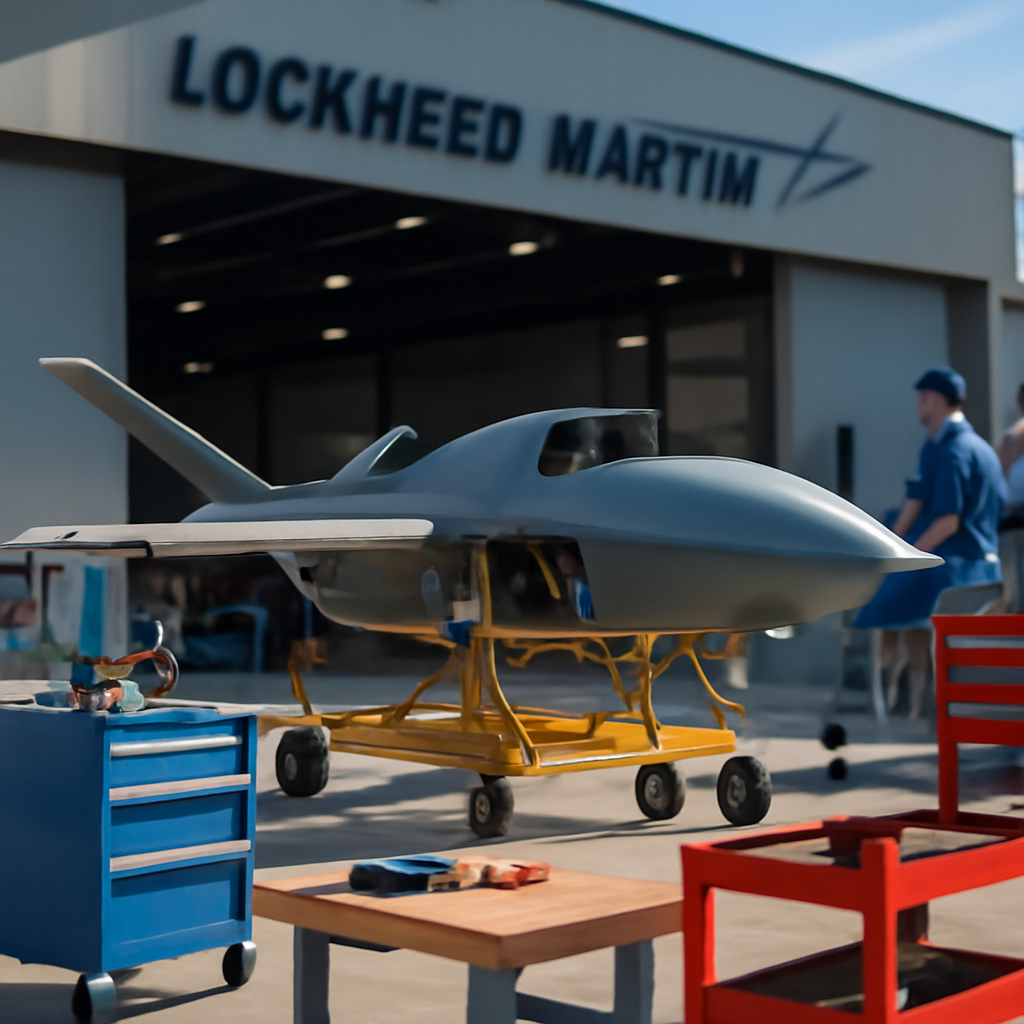
- SNC: Intends to leverage SAOC program experience and the NC3 Center of Excellence to influence LG-N design decisions, pitching both an airframe-centric “E-6C” concept and multi-domain, dispersed solutions incorporating space partners such as Sierra Space.
- USAF: Having been tasked by the Secretary of War to develop and field LG-N, the service will need to integrate requirements from USSTRATCOM with procurement decisions, choosing whether the replacement remains primarily airborne or shifts toward a more distributed, cross-domain architecture.
Looking Glass-Next will decide whether the airborne, survivable backup that once rode on converted 707s evolves into an updated air platform, a distributed network of space and ground nodes, or some hybrid of both. SNC and other industry participants are responding to requests for information now; the commander of USSTRATCOM will remain the ultimate arbiter of the capability. The effort will shape how the nation preserves a resilient path from top-level decision-makers to deployed nuclear forces at a time when adversaries are expanding arsenals and threatening NC3 across space, cyber, ground and air domains.