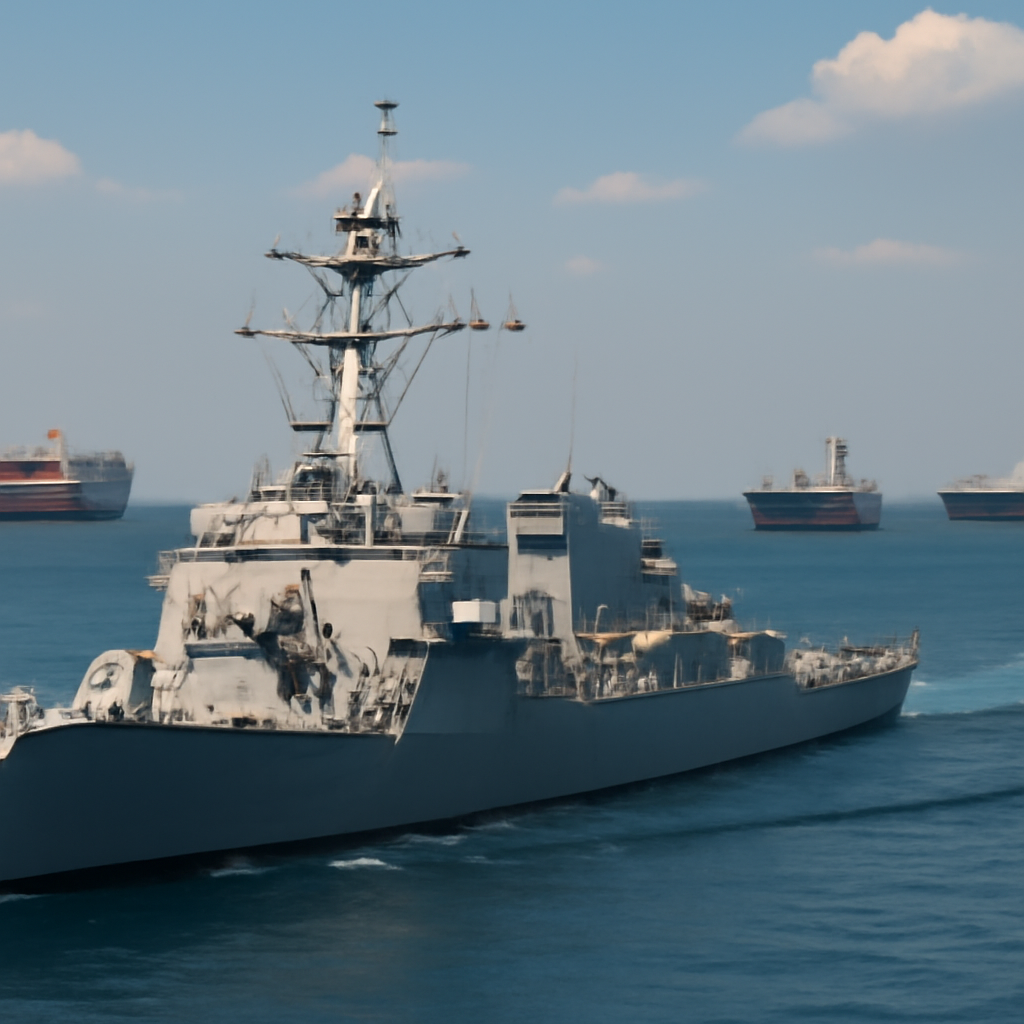
"But it is wrong to call the effort a naval defeat when no US ship or carrier-based aircraft has been lost in combat operations that are ongoing and not yet complete," wrote Steven Wills, a Navalist for the Center for Maritime Strategy at the Navy League of the United States.
The blockade and who is still transiting the Strait of Hormuz
Wills argues that the current U.S. effort—described in his piece as a blockade of Iranian vessels around the Strait of Hormuz—is producing measurable pressure on Iran's economy and war effort even if blockades rarely show immediate effects. He stresses that Iran has not truly closed the strait: Islamic Revolutionary Guard Corps forces continue to threaten shipping with missiles, drones and small craft, yet "traffic still moves through US-guided routes along the strait’s southern rim." Wills also notes that harassment and intermittent attacks remain dangerous, but they are not the same as a sustained closure.
Convoys, AEGIS protection, and surface-warfare training
The article emphasizes that advances in naval technology and U.S. air superiority have reduced the requirement for close escort "convoy" missions in many cases. AEGIS-equipped combatants can protect commercial ships at distances that were not practical during earlier tanker conflicts, and armed helicopters have repeatedly repelled Iranian small-boat attacks, a platform vulnerability point Wills highlights. He credits a renaissance in surface warfare training—specifically the Surface Warfare Tactics Instructor program—with improving surface warships' ability to operate in difficult weapon engagement zones.

Audit-ready is a season. It shouldn't be.
Evidence in spreadsheets, controls drifting between audits, frameworks multiplying on flat headcount. Nubivance runs continuous compliance on Rapid7 Cyber GRC - SOC 2, HIPAA, ISO 27001, PCI, CMMC.
End the scrambleMine warfare: limited visibility, ongoing transits, and historical context
Wills cautions that little unclassified information has been released on U.S. mine detection and clearance operations, making firm judgements difficult. He points out two concrete facts from the ongoing campaign: transits through the Strait of Hormuz continue, and no ship has been confirmed to have struck a mine. Based on those facts, he concludes Iranian mines cannot be said to have closed Hormuz. He also contrasts the current campaign with 1991 and 2003, noting there has been no need for the large-scale clearance efforts that accompanied support for invasion forces; he recalls that post-1991 clearance of waters near Kuwait City took months. Much of the present mine warfare effort, Wills writes, remains classified, and thus merits measured assessment rather than immediate condemnation.
Drone threats, AEGIS responses, and limits to naval drone power
The piece places naval drone combat power in perspective: drones can complicate integrated air and missile defense but, at sea, remain generally slower and less dangerous than cruise or ballistic missiles. Wills cites the early Ukrainian drone successes against "unprepared and aging Russian Black Sea Fleet ships" as an example of drones performing well under specific conditions, while warning that effectiveness faded as force protection improved. He notes that U.S. AEGIS destroyers have destroyed drones repeatedly, including using five-inch guns as a lower-cost counter-drone option, and concludes that Iranian drones "have not achieved victory over US naval vessels." Still, he acknowledges that Iranian drones make littoral operations more hazardous and that U.S. ships may need additional counter-drone weapons to operate closer to shore.
How the Navy, the administration, and commercial shipping are responding
- The Navy: Wills portrays naval forces as performing core tasks well—blockade enforcement, escort missions when called on, mine countermeasures and counter-drone combat—while noting that naval forces are components of larger joint organizations and do not command operations like Epic Fury.
- The administration: Wills frames the choice not to force the strait as a political and strategic decision. He argues the Navy cannot be blamed for failing in a battle it was not ordered to fight.
- Commercial shipping: According to Wills, merchant traffic continues to use U.S.-guided routes along the southern rim of the strait and has benefited from escorting warships and protected transit lanes where those have been applied.
Wills closes with a caution against sweeping judgements. He notes that the United States may not yet have achieved all strategic aims begun under Operation Epic Fury and follow-on strikes, and that the armed forces will draw lessons from the campaign regardless of the eventual political outcome. But on the record he offers here, the absence of lost U.S. ships or carrier-based aircraft, continued transits, and apparent effectiveness of carrier aviation, AEGIS warships and emerging unmanned mine-warfare systems argue against declaring a naval failure while combat operations continue.



