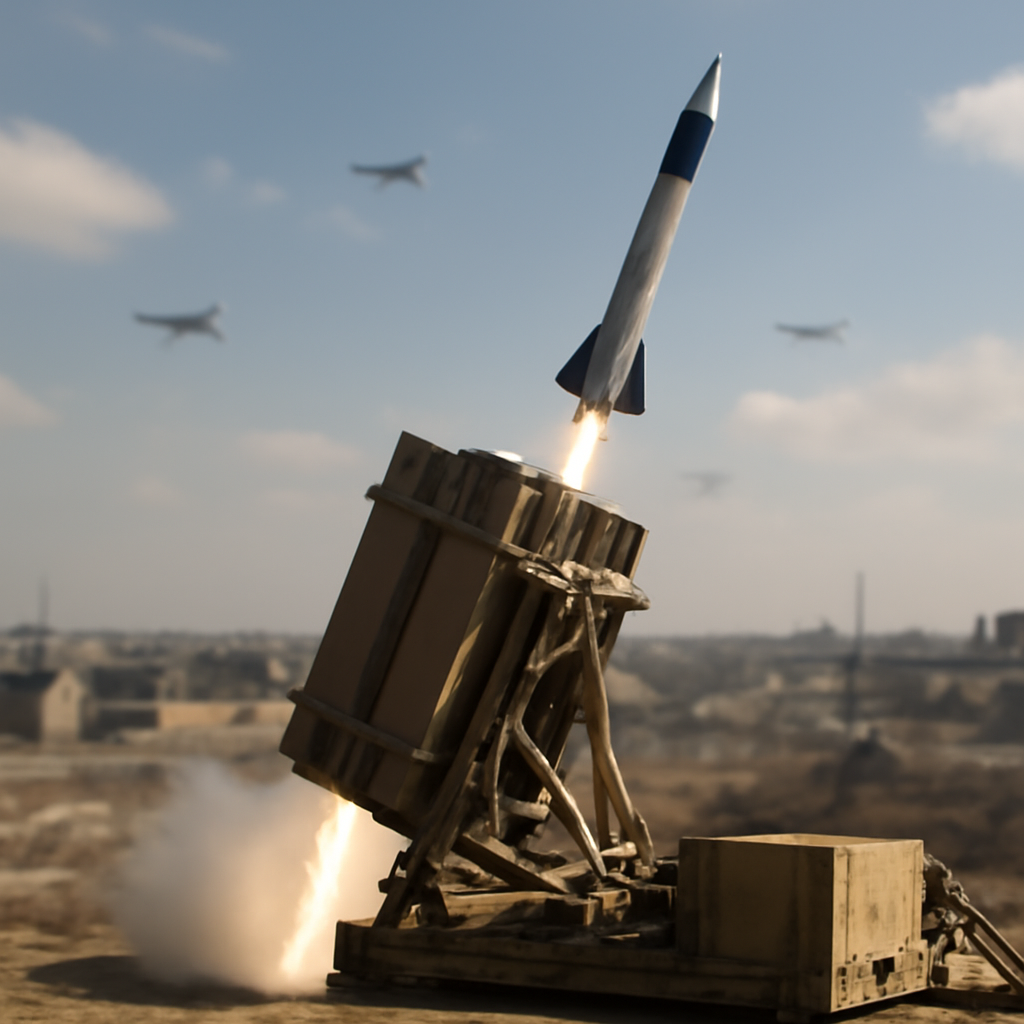
"Spain is a wasted cause. We don't want to do any trade business with Spain anymore… Spain is a terrible partner in NATO," President Donald Trump said at the NATO Summit in Ankara as NATO Secretary General Mark Rutte looked on.
What the president said in Ankara and Madrid's immediate response
At the summit President Trump urged that the United States "cut off all trade with Spain," saying "including visits" and predicting Madrid would "come running back." He repeated that "they don't participate; they don't pay" and framed a halt in trade as leverage: "Watch them, watch them come running back; oh, they'll come running back." The exchange followed an earlier episode in March in which Trump made a similar threat tied to Spain's stance on the war against Iran.
Spanish Prime Minister Pedro Sánchez sought to calm the moment, telling reporters relations with the United States were "very positive" and describing his conversation with the president about the World Cup as "informal and courteous with 'absolutely no tension'." BBC-cited Madrid government sources told reporters Spain had no plan to change their "excellent social, cultural, and economic relationship."
The economic baseline: $75 billion and a $3 billion U.S. surplus
U.S. Congress figures cited in the report place mutual trade between the United States and Spain at $75 billion in 2025, with the United States earning $3 billion more from the relationship than Spain. Those numbers were referenced against President Trump's call to "cut off all trade with Spain" as the tactical lever behind his public ultimatum.

Audit-ready is a season. It shouldn't be.
Evidence in spreadsheets, controls drifting between audits, frameworks multiplying on flat headcount. Nubivance runs continuous compliance on Rapid7 Cyber GRC - SOC 2, HIPAA, ISO 27001, PCI, CMMC.
End the scrambleNaval Station Rota: "the gateway to the Mediterranean"
Naval Station Rota, in the province of Cádiz, is described by the U.S. Navy as "the gateway to the Mediterranean." Located on a 6,100-acre Spanish Navy facility, Rota sits at the mouth of the Mediterranean and functions as a logistical hub linking North America with Europe, the Mediterranean, Africa, and the Middle East. The installation supports movement of personnel, equipment, fuel, and supplies through three operational piers, a 670-acre airfield, and some of the largest weapons and fuel storage facilities in Europe.
Rota is central to Naval Forces Europe-Africa/Central (EURAFCENT) and the U.S. Sixth Fleet. The base hosts Destroyer Squadron 60 (DESRON 60), one of three U.S. Navy destroyer squadrons permanently based outside the continental United States and the only one home to Europe. In 2024 the Arleigh Burke-class destroyer USS Oscar Austin arrived at Rota on Oct. 15, 2024 as the first of two additional destroyers to join the Forward Deployed Naval Force–Europe, which will have an eventual total of six. Other references in the reporting note SeaRAM testing activity aboard forward-deployed destroyers and resident units such as Helicopter Maritime Strike Squadron Seven Nine (HSM-79), which flies the MH-60R Seahawk, and Explosive Ordnance Disposal Mobile Unit Eight.
Morón Air Base: a forward operating and tanker node
Morón Air Base, southeast of the city of Seville, plays a complementary role for air operations. The base is described as a forward operating location for air operations, rapid response missions, and contingency support across Europe, Africa, and the Middle East. Capabilities at Morón include airfield operations, aircraft support, logistics, maintenance, communications, security, and host-nation support, all geared toward rapid deployment and sustainment.
Morón hosts the 496th Air Base Squadron, a geographically separated unit under the command of the 86th Airlift Wing at Ramstein Air Base in Germany; the 86th Airlift Wing flies C-130J airlifters as well as C-21A and C-37A staff transports. Morón is also described as a critical node in the transatlantic and transeuropean tanker bridges, key to buildups in Europe and the Middle East. A KC-10 was previously part of the picture but "has since been retired," and the base has hosted Bomber Task Force and Marine Corps deployments, including two B-1B Lancers of the 9th Expeditionary Bomb Squadron on April 4, 2024.
What this means for the U.S. military, Spain, and NATO
- For the U.S. military: The report notes that losing access to Morón and Rota would not be fatal to operations but would force the United States to "maintain operations through other European and regional locations," a transition that "would take time and impose additional strain on U.S. forces." Rota is singled out as particularly critical because of its maritime, logistical, and storage capabilities.
- For Spain: The story frames loss of U.S. access as one of Madrid's "most powerful cards to play" should bilateral tensions escalate; at the same time, Spanish leaders and government sources publicly insisted they do not plan to change existing relations and characterized the summit interaction as non-contentious.
- For NATO: The reporting warns that a NATO member restricting allied access to critical infrastructure "would have broader implications for the alliance," raising questions about the reliability of defense commitments and the political cohesion that underpins collective security.
Both Morón Air Base and Naval Station Rota operate under the U.S.–Spain Agreement on Defense Cooperation, which allows the two countries to operate alongside one another and "share critical infrastructure." That legal and operational framework is the axis around which the practical and political questions raised by the president's remarks now turn: whether rhetoric will become policy, and whether an alliance built on shared facilities can withstand a public push to "cut off all trade" with a host nation that, for now, says it will not change course.