"Cascade Systems has credited its Lima electronic warfare system with diverting 58 of 59 Russian Kh-47M2 Kinzhal aeroballistic missiles fired at the facilities it protects," a result the company has since revised to "more than 60" as of early July 2026.
Cascade Systems’ Lima and the Kinzhal claim
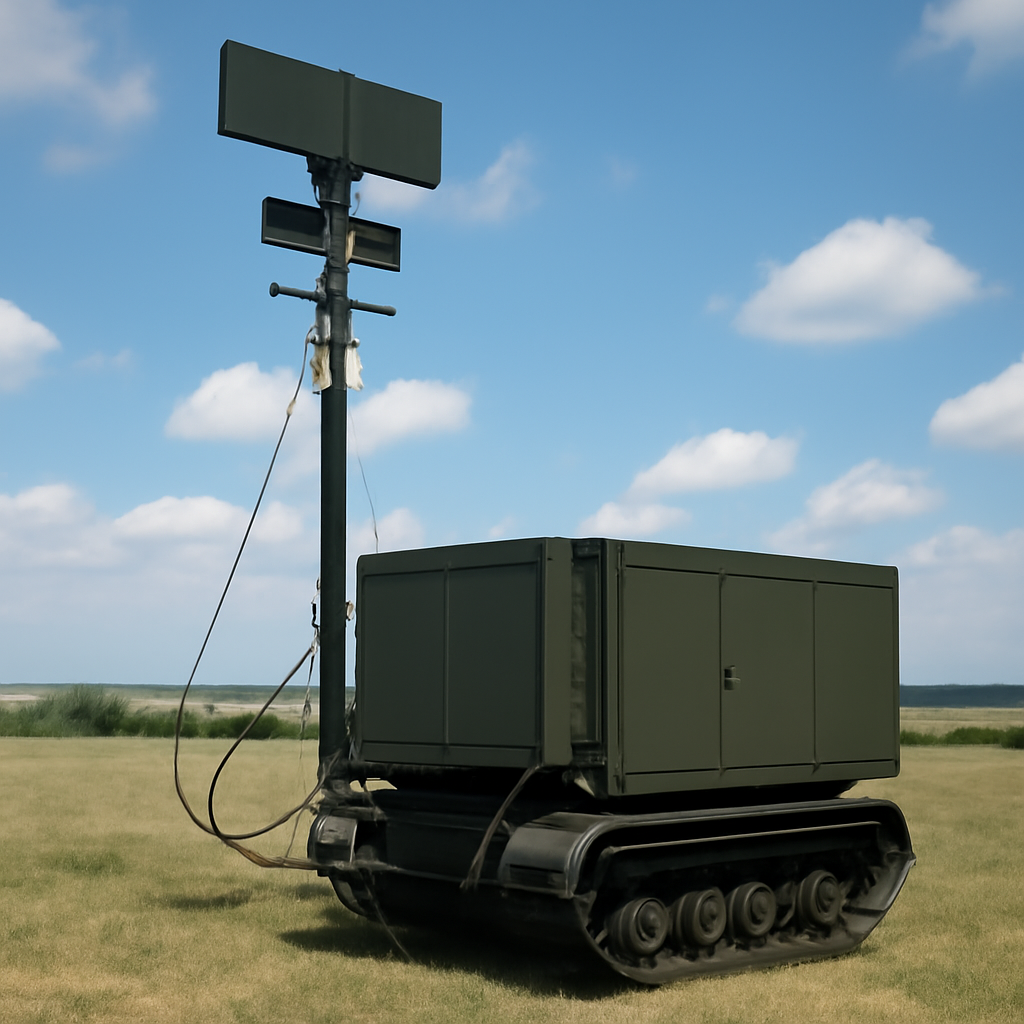
The Ukrainian start‑up Cascade Systems — registered in the United States — has deployed a ground-based EW system called Lima and attributed to it a near‑perfect record against Kh-47M2 Kinzhal aeroballistic missiles. The company initially reported that Lima diverted 58 of 59 Kinzhal fired at protected sites and later raised that figure to over 60. More than 400 Lima units have reportedly been delivered since deployment began.
How Lima attacks satellite navigation
Lima does not rely on brute‑force kinetic intercepts. Instead it targets the satellite navigation signals that Russian precision weapons use, employing three distinct techniques. First, conventional jamming floods navigation bands so receivers cannot acquire real constellation signals. Second, spoofing transmits counterfeit satellite signals with false position and timing data; Cascade’s developers describe shifting a weapon’s coordinates by several kilometres to steer it into an open field. As one Night Watch operator told Forbes, "we influence all missiles flying through it simultaneously," meaning an entire salvo can be affected at once.
The third technique is what Cascade and Ukrainian operators describe as a cyberattack on the receiver: corrupting the block of navigation data a receiver downloads so the weapon ingests bad data and continues to work on that poisoned solution after leaving the covered zone. As the Night Watch commander known as Alkhimyk told the Kyiv Independent, "The third type of signal is a cyberattack," and critically it can leave the receiver operating on incorrect data long after the emitter is out of range.

This site is the portfolio.
OSINTSights runs on Cloudflare Workers, D1, R2, and Vectorize, with an AI pipeline on Hetzner ARM. Nubivance designed, built, and operates it. We do the same for clients.
See what we buildThe antenna duel: Kometa CRPAs and the mathematical shift
Russian weapons increasingly use controlled reception pattern antennas (CRPAs) from the Kometa family to resist jamming and spoofing. A CRPA combines multiple antenna elements so the array can place ‘nulls’ — directions of near‑zero sensitivity — on interference while preserving gain towards satellites. In arithmetic terms, an array can null roughly one fewer interfering source than it has elements: the Kometa‑4 (4 elements) could form three nulls, the Kometa‑8 (8 elements) could defeat up to seven, and Russia later fielded 12‑ and 16‑element arrays.
The Kinzhal itself carries an 8‑element receiver and uses radar guidance in terminal phase plus an inertial navigation system (INS) in mid‑course. Developers told Forbes that a newer 8‑element design required 19 jammers to counter, and that a 16‑element version "could not be beaten even with 104" emitters — a shift attributed to newer CRPA designs reportedly supplied by Chinese developers. That mathematical change forced Ukraine to move from simple jamming to networked spoofing and the data‑corruption technique Lima employs.
Economics: Lima units versus conventional interceptors
Lima’s developers present it as an economical, wide‑area protective layer. Cascade prices a single Lima unit at up to 3 million Ukrainian hryvnia — roughly €58,000 — and estimates 30 to 100 units will cover a major city, or about €5 million. The company notes that €5 million is roughly the cost of a single Patriot PAC‑3 interceptor missile. Cascade’s own costing suggests nationwide coverage against drones and missiles would run near $1 billion, with a further $800 million needed for ballistic threats — $1.8 billion in total — a figure the company compares to roughly the price of two Patriot batteries.
What this signals for the Pakistan Air Force, Pakistan’s cyber teams, and procurement leaders
- Pakistan Air Force (PAF): The PAF has already moved electronic warfare towards the centre of its air‑warfare doctrine and is building cyber capability across all three services. Lima’s convergence of EW and cyber offers a concrete model for low‑cost, non‑kinetic approaches to protecting high‑value sites and urban areas.
- Technologists and cyber teams: Lima’s triad — jamming, wide‑area spoofing, and navigation‑data corruption — underscores the operational significance of “poisoned” navigation solutions that persist after an emitter leaves the area. Defensive work will need to focus on receiver robustness to corrupted navigation blocks and on integration between EW and cyber defenses.
- Procurement leaders: Cascade’s cost comparisons — individual Lima units priced in tens of thousands of euros and nationwide coverage estimated at $1.8 billion versus Patriot interceptors and batteries — present a budgetary trade‑space that procurement officials will weigh when prioritizing layered, kinetic and non‑kinetic air defence options.
Lima illustrates a tactical and economic pivot: deny and manipulate navigation with non‑kinetic means, and do so at scale and at low unit cost. Whether similar systems will be adopted, adapted, or countered elsewhere will hinge on two facts already visible in the record — the ability to corrupt a receiver’s navigation solution so it travels with the weapon, and a rapid technical race on antenna designs that has made the problem one of both hardware and networked algorithms. More than 400 Lima units in the field and the public cost comparisons make that race one procurement teams and air forces cannot ignore.