"Combining the U.K.’s industrial expertise with the Netherlands’ design and seafaring experience to deliver first-rate platforms for our elite amphibious forces, this partnership will strengthen NATO," Prime Minister Keir Starmer said as he announced a joint U.K.–Netherlands program to build a new generation of amphibious transport ships.
The agreement: eight landing platform docks, £2.4 billion, and an early‑2030s entry into service
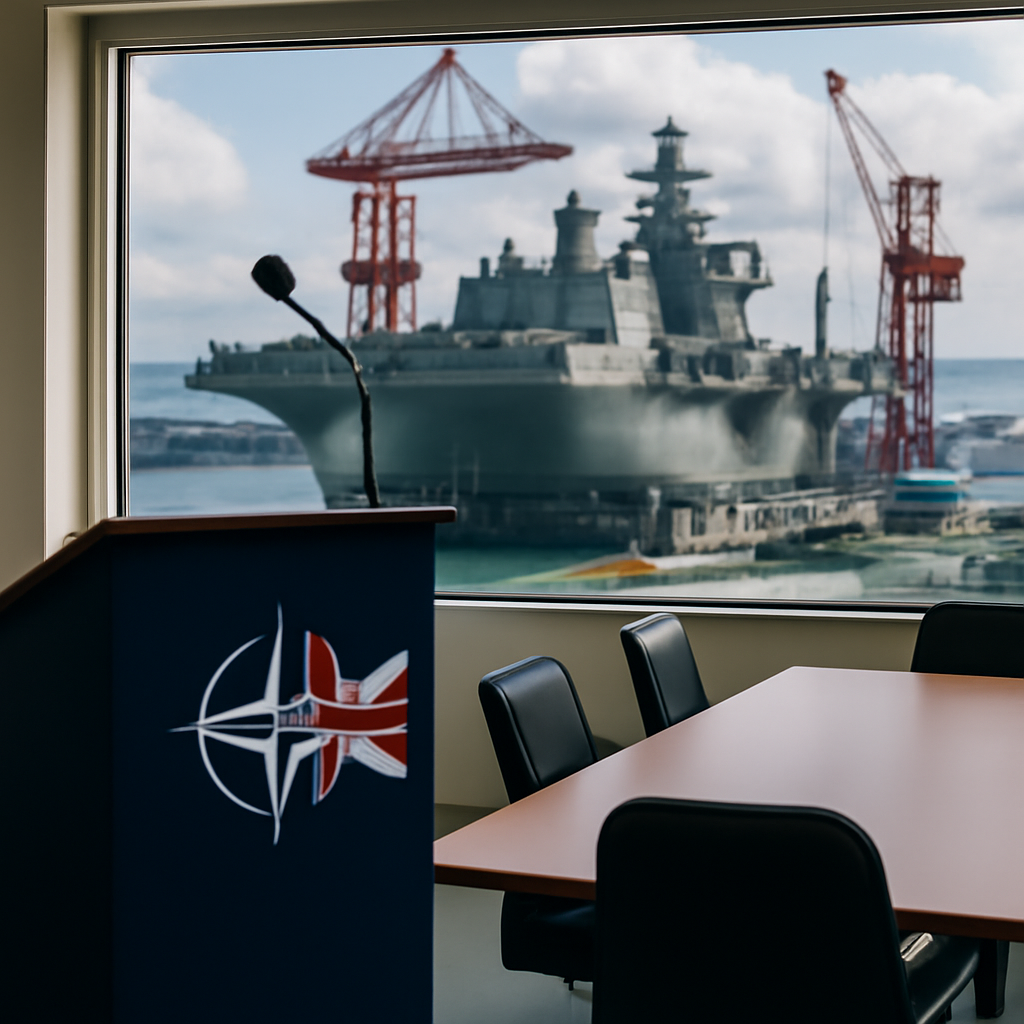
The United Kingdom and the Netherlands will each operate four new landing platform docks (LPDs) under a maritime partnership disclosed at the NATO Summit in Turkey. The bilateral deal is valued at £2.4 billion ($3.2 billion) and covers the eight ships combined; the vessels are expected to enter service from the early 2030s. The U.K. government frames this initiative as the Amphibious Transport Ship Program, superseding an earlier Multi‑Role Strike Ship (MRSS) effort that was judged "too complex" and not reflective of future U.K. Commando Forces.
Design basis and ship characteristics: Dutch design, hybrid capabilities, and drone-ready flight decks
The new LPDs will be based on a Dutch design — Damen is widely expected to provide the design basis, likely drawing from its Enforcer amphibious ship family — although the final design has not been confirmed. The U.K. government states the vessels will measure 525 feet (160 meters) and displace 15,000 tonnes. Damen’s Enforcer family offers ships ranging from 9,000 to 17,000 tonnes, but it remains unconfirmed whether the final layout will follow a conventional LPD form or a through‑deck arrangement that provides a longer flight deck for helicopter and drone operations.
Beyond transporting troops, vehicles and equipment, the ships will feature flight decks designed to operate current and future long‑range drones and autonomous systems. The program is explicitly tied to the U.K. Royal Navy’s stated shift to a "hybrid navy" and sits alongside a wider Defense Investment Plan that allocates more than £5 billion ($6.6 billion) over four years for drones and related capabilities.

Audit-ready is a season. It shouldn't be.
Evidence in spreadsheets, controls drifting between audits, frameworks multiplying on flat headcount. Nubivance runs continuous compliance on Rapid7 Cyber GRC - SOC 2, HIPAA, ISO 27001, PCI, CMMC.
End the scrambleShipbuilding and industry: U.K. yards, Harland & Wolff, and Navantia UK
The new ships will be constructed in U.K. shipyards "alongside Dutch industry." Reporting indicates the program appears to rely upon the Harland & Wolff shipyard in Belfast, Northern Ireland. Navantia UK, the owner of Harland & Wolff, issued a statement saying amphibious transport ships "will be a vital component of Britain’s sovereign naval defense capability going forward" and described them as necessary replacements for the Albion class assault ships.
The arrangement has parallels with a recent program to build five Type 26 frigates for Norway in British yards, suggesting a pattern of combining Dutch design input with U.K. construction capacity. The U.K. government confirmed that increased commonality between the two navies' LPDs will drive joint training, deployments and operations.
Operational role: Royal Marines, NATO cooperation, and the High North
For the Royal Navy and Royal Marines, the LPD program represents a major reset after years of amphibious uncertainty. After HMS Ocean was decommissioned in 2018 and sold to Brazil, the Royal Marines relied on two Albion‑class LPDs until a 2024 U.K. Ministry of Defence announcement said both Albion and Bulwark would be withdrawn the following year. Since then, Royal Marines have used three Bay‑class landing ship docks operated by the Royal Fleet Auxiliary, which have more limited capabilities than LPDs.
On the Dutch side, the Royal Netherlands Navy presently operates two Rotterdam‑class LPDs and the multifunctional support ship Karel Doorman; the new LPDs are expected to replace the Rotterdam class. The U.K. government highlighted that the partnership will strengthen deterrence as close NATO and Joint Expeditionary Force (JEF) partners, and that the ships will take on roles including protection of critical undersea infrastructure and operations across the North Atlantic and High North amid rising strategic focus on those regions.
What this means for the Royal Navy, the Royal Netherlands Navy, and shipbuilders
- Royal Navy and Royal Marines: The new LPDs are intended to restore and modernize amphibious lift and strike capability lost through earlier decommissionings, while integrating longer‑range drone and autonomous systems into expeditionary operations.
- Royal Netherlands Navy: Replacing Rotterdam‑class ships with like vessels built on a common design is expected to improve interoperability with U.K. forces across training, deployments and shared missions under the U.K.–Netherlands Amphibious Force, an arrangement dating back to the Cold War.
- Shipbuilders and industry (Damen, Harland & Wolff/Navantia UK): Dutch design input combined with construction in U.K. yards signals long‑term industrial cooperation; Navantia UK has framed the ships as essential to the U.K.’s sovereign naval capability.
The announcement closes a chapter of uncertainty for British amphibious forces and creates a bilateral program with explicit industrial, operational and unmanned‑systems ambitions. Yet several concrete elements remain to be decided: the final hull and deck layout (conventional LPD or through‑deck), confirmation of the exact Damen Enforcer derivative if used, and detailed shipyard allocation. Those decisions — and their timetable — will shape how quickly the eight vessels move from agreement into service in the early 2030s.