"The Air Force Research Laboratory’s (AFRL) high-priority Vanguard program called Rocket Cargo, which began in June 2021 and focused on launching rockets filled with 30 tons of logistical supplies..." — that program’s original scale remains a useful yardstick as the services reshape how they think about sending materiel through space.
AFRL shifts emphasis from large rockets to smaller reentry capsules
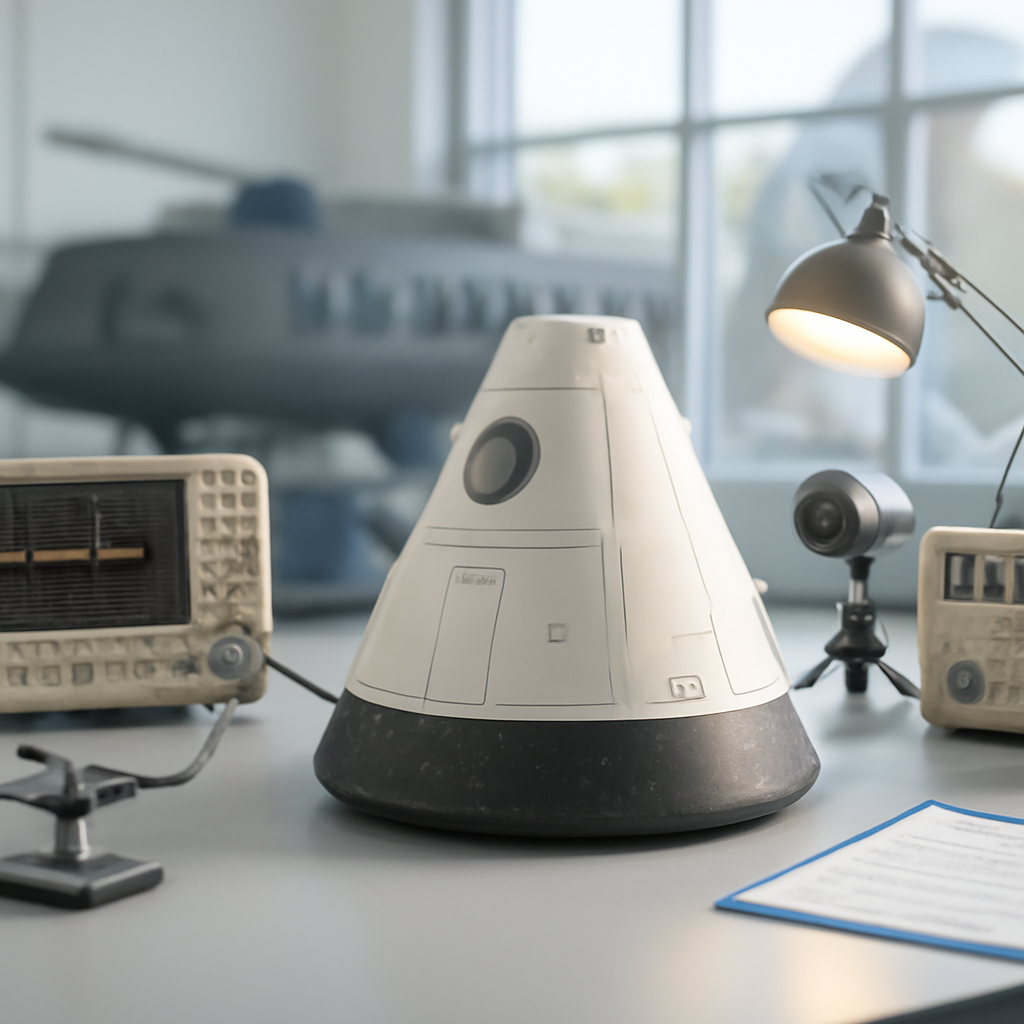
The Air and Space Forces have moved away from the Rocket Cargo model that emphasized large, reusable rockets and toward developing smaller reentry capsules. An AFRL spokesperson explained the rationale in plain logistical terms: reentry capsules offer advantages for "rapidly unloading cargo at the delivery site," the ability to reach "a more diverse range of austere sites and terrain," the option to "deploy multiple reentry capsules in a single launch to deliver cargo to the point of need at several different locations," and "near-term potential for broad vendor diversity" for both capsules and launch providers.
Payload Delivery System (PDS): a joint AFRL effort and its budgets
The Payload Delivery System (PDS) is now the principal AFRL vehicle for developing reentry capsules and is jointly funded by the Air and Space Forces. The Space Force is designated as the lead service while the project "is structured to leverage expertise and resources across the services," according to an AFRL spokesperson. The two services began joint funding in the current cycle: the Air Force budgeted $30.6 million in FY26 and requested $32.3 million for FY27; the Space Force budgeted $21.2 million in FY26 and requested $16.5 million for FY27.
AFRL said it is working with a mix of established firms and startups to find "low-cost pods that can carry a lot of cargo." The lab specifically named engagement with SpaceX, Blue Origin, Rocket Lab, Sierra Space, Varda, Inversion Space, Outpost Space, and "a number of other small businesses." Market tracking site Factories in Space counted 65 registered companies worldwide working on cargo reentry vehicles "as of last September," the source notes.

This site is the portfolio.
OSINTSights runs on Cloudflare Workers, D1, R2, and Vectorize, with an AI pipeline on Hetzner ARM. Nubivance designed, built, and operates it. We do the same for clients.
See what we buildSpace Force Point-to-Point Delivery (P2D) and reference missions
The Space Force’s Servicing, Mobility, and Logistics (SML) program — managed by System Delta 80 — runs Point-to-Point Delivery (P2D) as one of its mission areas. Service budget documents describe P2D as aimed at "orbital supply prepositioning and operational downmass as well as responsive sub-orbital and orbital point-to-point delivery operations." The budget materials add that the near-term focus "will leverage technology developed within both commercial independent research and development (IRAD) and AFRL’s Rocket Cargo Vanguard program to study and develop P2D reference missions."
P2D funding began in FY25 at $3.9 million. The Space Force slated $19.3 million for the program in FY26 and requested $9.7 million for FY27, with a similar annual level projected through FY31 in the service budget documents.
REGAL: experimentation through AFRL Other Transaction Authority agreements
AFRL’s Rocket Experimentation For Global Agile Logistics (REGAL) is an Other Transaction Authority contract vehicle first published in 2021 and updated in 2024. REGAL does not provide funds to develop commercial rockets; instead, it focuses on financing P2D-related technology and demonstrations and includes no-cost agreements in its terms of reference. That structure makes the "overarching value of ongoing work" under REGAL opaque in aggregate.
Individual REGAL awards are public, however. Sierra Space announced an undisclosed REGAL contract in October 2024; Rocket Lab announced an undisclosed REGAL award in May 2025. AFRL awarded Blue Origin $1.3 million and Anduril $1 million under REGAL in September 2025. "In July, the lab added $11.7 million to Blue Origin’s contract bringing the total up to $13 million," the source records.
What this means for commercial vendors, the Air and Space Forces, and logistics planners
- Commercial vendors: Firms with reentry-capable hardware stand to be in demand — the AFRL expressly seeks a "broad vendor base" for low-cost reentry solutions and has been engaging both big players (SpaceX, Blue Origin, Rocket Lab, Sierra Space) and newer entrants (Varda, Inversion Space, Outpost Space) under PDS and REGAL.
- The Air and Space Forces: The services are reallocating funding and program structure. The Air Force zeroed out Rocket Cargo funding in its FY26 budget while the Space Force provided "only a few million dollars" in FY26 and FY27; at the same time PDS and P2D have moved forward with joint and service-specific appropriations and reference-mission work.
- Logistics planners and austere-site operators: The shift to reentry capsules is being pursued specifically for the tactical advantages it promises — faster unloading, delivery to diverse terrain, and distributing payloads to multiple locations from a single launch — all capabilities the AFRL cited as drivers of the new focus.
The Pentagon’s original Rocket Cargo idea — launching 30-ton payloads into space to drop on distant bases — is being phased down even as its technical heirs gain shape. The record in budgets, contracts, and AFRL statements shows a deliberate pivot toward smaller, potentially more flexible reentry capsules, with experiments and reference missions now funded across AFRL and the Space Force. Whether that trade-space delivers the low-cost, high-capacity capability the lab seeks will be answered in the coming rounds of demonstrations, REGAL awards, and PDS and P2D program milestones.