“Ships caught in the Strait due to our amazing and unprecedented Naval Blockade, which will now be lifted, may start the process of ‘heading home!’” President Donald Trump wrote on Truth Social on May 29, announcing that the U.S. naval blockade on Iranian ports ordered in April would be ended — a claim immediately met with operational notices, denials from Iranian outlets, and conflicting reporting inside the U.S. government.
President Donald Trump’s Truth Social declaration
Trump’s post asserted the blockade would be lifted and set conditions: “Iran must agree that they will never have a Nuclear Weapon or Bomb,” and “The Hormuz Strait must be immediately open, no tolls, for unrestricted shipping traffic, in both directions.” He also claimed the United States, “in close coordination and conjunction with the Islamic Republic of Iran, plus the International Atomic Energy Agency,” would unearth and destroy enriched material he referred to as “Nuclear Dust,” which he said was “buried deep underground” after a B2 attack “11 months ago.”
Iranian officials rejected Trump’s account. The IRGC-connected Tasnim News Agency said, “No final understanding has been reached between Iran and the US so far,” called the president’s post “one-sided, self-aggrandizing statements,” and described his nuclear claims as “baseless.”
CENTCOM, NAVCENT and the blockade on the water
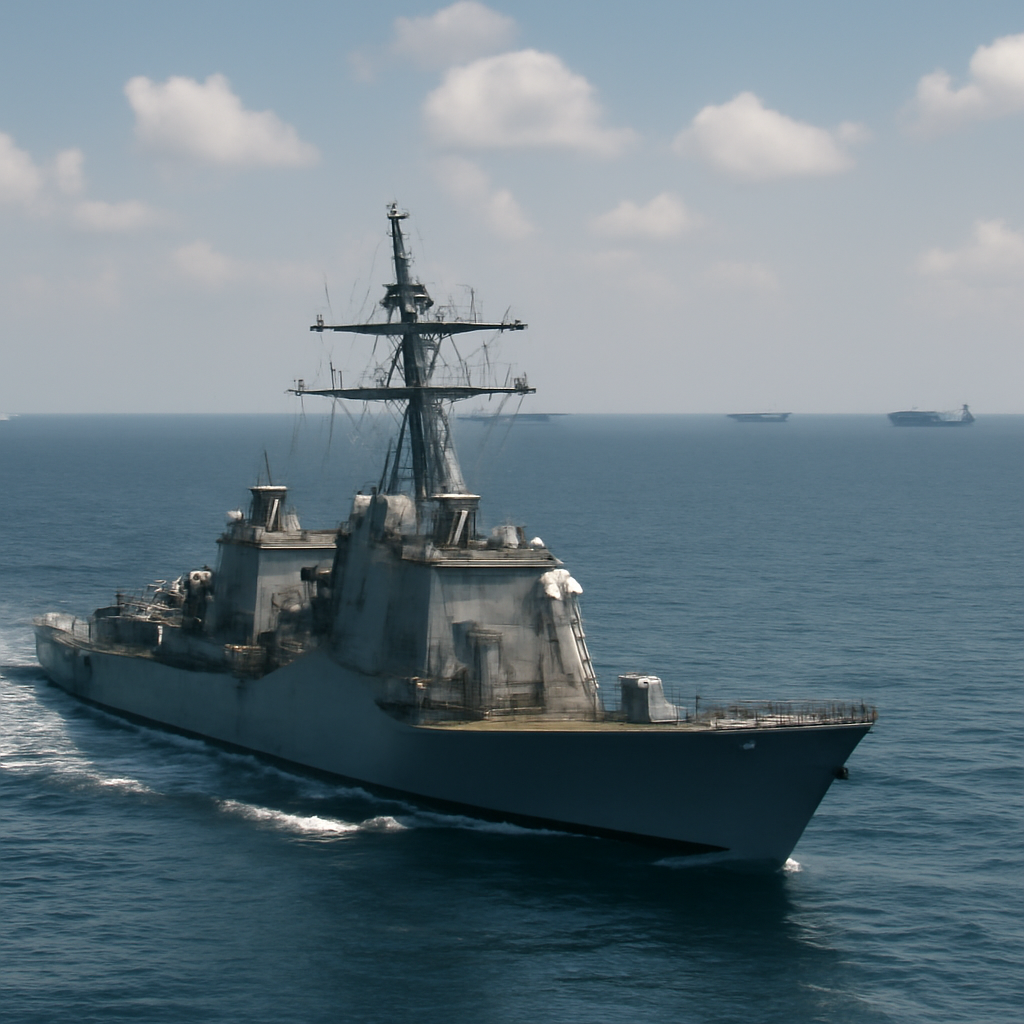
Operationally, the picture remained inconsistent with Trump’s claim. U.S. Central Command (CENTCOM) tweeted on May 29 that “115 commercial vessels have been redirected to ensure no commerce enters or leaves Iranian ports.” Later that afternoon, U.S. Navy Central Command (NAVCENT) issued a formal advisory stating the “military blockade of Iranian ports remains in effect restricting all traffic inbound and outbound from these ports.”
NAVCENT’s enforcement guidance explicitly warned that vessels violating the blockade risk “disabling and destructive fires upon vessels who do not demonstrate immediate compliance with blockading forces,” and advised merchant and neutral ships to maintain a listening watch on VHF channel 16, keep clear of designated areas, and maintain a standoff of 30 nautical miles from U.S. units to reduce misidentification risk. NAVCENT also said the blockade is being “enforced strictly and rapidly.”

Audit-ready is a season. It shouldn't be.
Evidence in spreadsheets, controls drifting between audits, frameworks multiplying on flat headcount. Nubivance runs continuous compliance on Rapid7 Cyber GRC - SOC 2, HIPAA, ISO 27001, PCI, CMMC.
End the scrambleUnmanned systems, mines, and the Strait of Hormuz
U.S. officials have described a counter-mine effort centered on uncrewed underwater vehicles (UUVs). Admiral Brad Cooper told media on April 11 that additional U.S. forces, “including underwater drones, will join the clearance effort in the coming days,” and noted the Strait of Hormuz is “an international sea passage and an essential trade corridor.” The source material notes the U.S. Navy possesses various types of uncrewed undersea vehicles, remotely operated vehicles and an airborne mine neutralization system for minesweeping.
At the same time, NBC News reported the U.S. military “has not confirmed that Iran placed mines in the Strait of Hormuz despite continued searches of the critical waterway.” Searches using underwater drones, water robots and manned and unmanned aircraft have found some objects that could be mines, but “none have been definitively identified,” and a person familiar said, “If anything, the threat has been far less robust than we had feared.”
The memorandum of understanding as reported and regional military actions
Axios reported outlines of an unsigned memorandum of understanding (MOU) that would govern any rollback: the U.S. blockade would be lifted “in proportion to the restoration of commercial shipping,” some sanctions waivers would allow Iran to sell oil, Iran would commit not to pursue a nuclear weapon, and a 60-day window would address disposal of highly enriched uranium and enrichment levels. Axios also said the MOU would discuss sanctions relief, release of frozen Iranian funds, and a mechanism for humanitarian goods; it would reportedly include language about ending the war between Israel and Hezbollah in Lebanon.
Separately, The Wall Street Journal reported that the United Arab Emirates “carried out dozens of airstrikes against Iran beginning in the early days of the war and continuing through the day after the April cease-fire,” conducted in coordination with the U.S. and Israel and targeting locations including Qeshm and Abu Musa islands, Bandar Abbas, Lavan island’s oil refinery, and the Asaluyeh petrochemical complex.
Iranian Parliament Speaker Mohammad Bagher Ghalibaf, quoted by Press TV, characterized Tehran’s approach bluntly: “Tehran secures its diplomatic advantages through missiles rather than talks.”
What this means for mariners, the U.S. military, and markets
- Mariners and commercial shipping: Despite the president’s claim, NAVCENT’s advisory continued to treat the blockade as active and warned of aggressive enforcement measures for noncompliant vessels; CENTCOM reported 115 commercial vessels had already been redirected as of May 29. The source notes that unless Iran simultaneously removes threats to ships transiting the Strait, lifting a U.S. blockade would not free mariners trapped in the Persian Gulf.
- U.S. military and mine-clearance teams: The Navy’s UUVs and airborne mine-neutralization systems remain central to clearing the waterway; searches so far have not produced definitively identified mines, according to the reporting, leaving the scale of the mine threat disputed even as clearance operations continue.
- Markets and investors: Early market reaction reflected optimism about possible progress. CBS News reported U.S. stock indexes rose in afternoon trading on May 29 — the S&P 500 up 0.2%, the Dow up 382 points (0.8%), and the Nasdaq up 0.2% — with major indexes headed for records, reflecting reports of a potential peace and reconstruction framework.
The public record as of May 29 contains competing claims: a presidential announcement on social media, CENTCOM’s tally of diverted ships, NAVCENT’s continuing enforcement advisories, Iranian denials, press reporting on an unsigned memorandum’s contours, and unresolved questions about mine evidence. The White House said a two-hour Situation Room meeting had concluded and reiterated that “President Trump will only make a deal that is good for America and satisfies his redlines. Iran can never possess a nuclear weapon.” The president left that meeting without making a final decision, The New York Times reported citing a senior administration official. Which of these threads — an unsigned memorandum, on-the-water enforcement, or bilateral verification of hazardous ordnance and nuclear material — will determine the Strait’s status remains to be seen.