What is at stake is whether a newly transactional U.S.-Indonesia partnership — centered on critical minerals, supply chains, and co-developed defense capabilities — will deliver the tangible results both capitals have negotiated into law and agreement.
The shift: from “shared values” and strategic patience to a transactional mandate
The relationship between Washington and Jakarta has moved decisively away from the earlier eras described as the Obama administration’s focus on “shared values” and the Biden years’ “strategic patience.” Under the current U.S. administration, the partnership has become more targeted and reciprocal, prioritizing concrete purchases, supply-chain access, and defense capability over abstract cooperation. The source frames this as a deliberate pivot toward a harder-edged business-military alignment that treats Indonesia as a critical industrial and security asset rather than primarily a partner for soft-power goals.
The ART: trade commitments, the “nickel clause,” and digital rules
The recently signed Agreement on Reciprocal Trade (ART) is presented as a step-change in economic relations. Indonesia committed to significant purchases of U.S. energy, Boeing aircraft, and agricultural products; the United States reduced tariffs on Indonesian manufactured goods. Crucially, the ART includes a so-called “nickel clause” designed to guarantee U.S. firms access to high-grade nickel needed by the U.S. defense industrial base — part of a broader effort to “de-risk” critical mineral supply chains.
The ART also functions as a digital and legal blueprint: it prohibits discriminatory digital taxes on U.S. platforms, establishes a permanent moratorium on customs duties for electronic transmissions such as software and cloud services, exempts U.S. products from restrictive local content requirements, and recognizes the United States as an “adequate jurisdiction” for cross-border data flows. The source emphasizes that ART’s long-term impact depends on implementation, but that a framework to incentivize investment is in place.

Audit-ready is a season. It shouldn't be.
Evidence in spreadsheets, controls drifting between audits, frameworks multiplying on flat headcount. Nubivance runs continuous compliance on Rapid7 Cyber GRC - SOC 2, HIPAA, ISO 27001, PCI, CMMC.
End the scrambleThe MDCP: co-development, MRO hubs, and overflight access in design
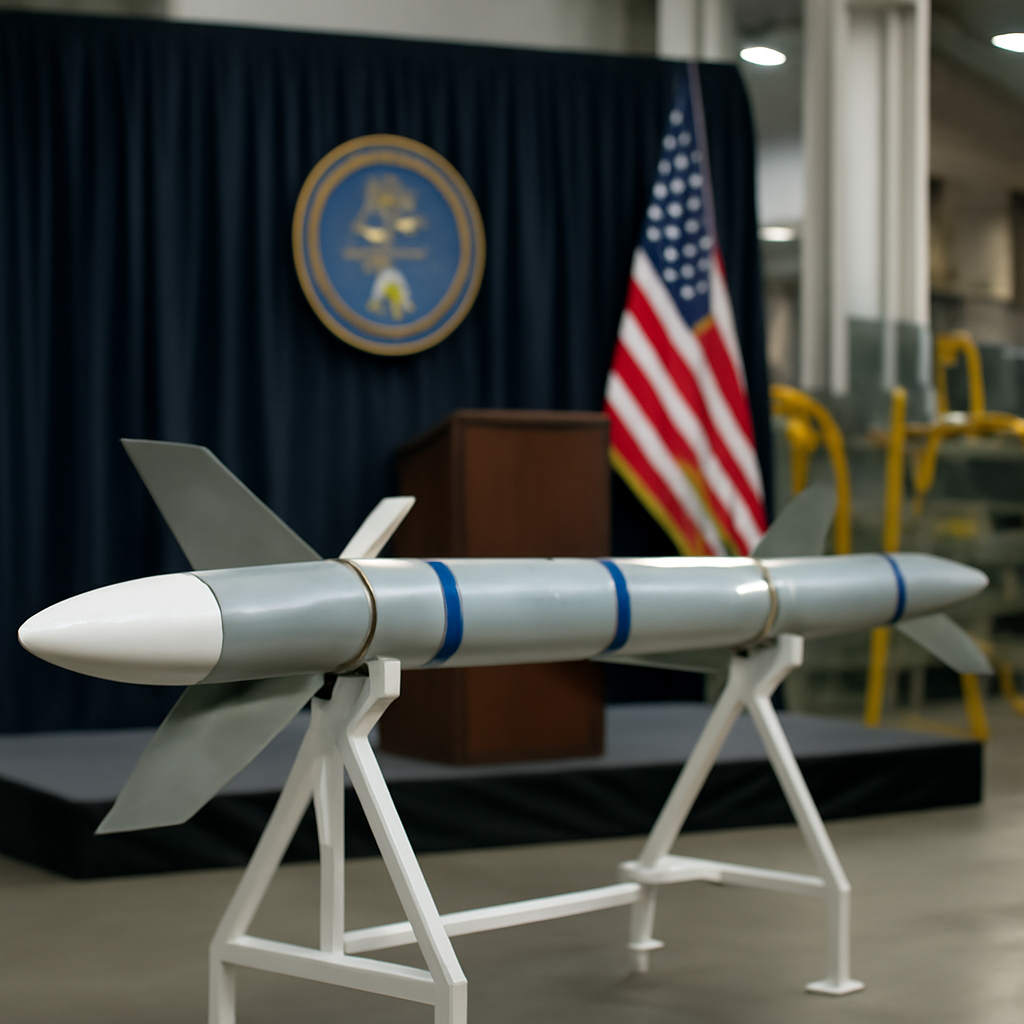
Last week the two nations signed the Major Development Cooperation Partnership (MDCP), which the source identifies as a keystone meant to anchor the broader transactional relationship. Unlike the 2010 and 2015 defense agreements, which focused on training and engagement, the 2026 MDCP is more operational: it commits to co-development of defense capabilities, professional military education, and scaled operational coordination — including larger joint drills and expanded special forces training.
The pact formalizes “Next‑Gen” technology initiatives such as co-development of subsurface drones and autonomous maritime systems, and it establishes maintenance, repair, and overhaul (MRO) hubs in Indonesia to keep equipment – including U.S.-compatible systems – operationally ready. Those hubs are framed as technical centers rather than foreign bases, designed to respect Indonesia’s constitutional “non-base” stance. Sensitive discussions remain over a U.S. request for “blanket overflight access”; Jakarta insists that any such protocol is still in the “initial design stage.”
Education and exchange: Fulbright, Peace Corps, YSEALI, and USINDO
The source describes a continuity of people-to-people programs that have been refocused to serve industrial and policy objectives. Legacy programs such as Fulbright (est. 1952) and the Peace Corps (re‑established 2009) now prioritize STEM, green energy research, and digital literacy. Young Southeast Asian Leaders Initiative (YSEALI) (est. 2013) and USINDO have evolved into specialized platforms: YSEALI offers tracks in sustainable energy and digital governance, while USINDO provides access to policy briefings and Indonesian language immersion. The source argues these programs now produce leaders equipped with the technical vocabulary to manage multibillion-dollar economic and defense commitments.
How the U.S., Jakarta, and regional neighbors are positioned
- The United States: Gains a framework to secure critical minerals, digital protections for U.S. platforms, and deeper defense co-development — but the source warns of risks from overextension and the limits of relying on a non-treaty ally.
- Jakarta (President Prabowo Subianto): Wins accelerated military modernization, high‑tech investment, and the ability to negotiate “as a peer,” while balancing domestic concerns about the expanded role of the military following the 2024 Law on the Indonesian National Armed Forces.
- Regional neighbors and competitors: Face a denser security environment; the partnership’s drones, MRO hubs, and potential overflight access complicate strategies in maritime arenas such as the South China Sea and may pressure other states’ non-aligned postures and ASEAN’s Zone of Peace, Freedom and Neutrality.
The agreements — ART and MDCP, supported by refocused education and exchange programs — mark a historic break from decades in which Indonesia was often treated as a developing nation “in need of help.” Whether this transactional architecture becomes a durable realignment will depend on execution: implementation of the ART provisions, operationalization of MRO hubs and co-developed systems under the MDCP, and Jakarta’s political management of its military’s role. The question the two governments must now answer in practice is straightforward and exacting: can they deliver what they have pledged?