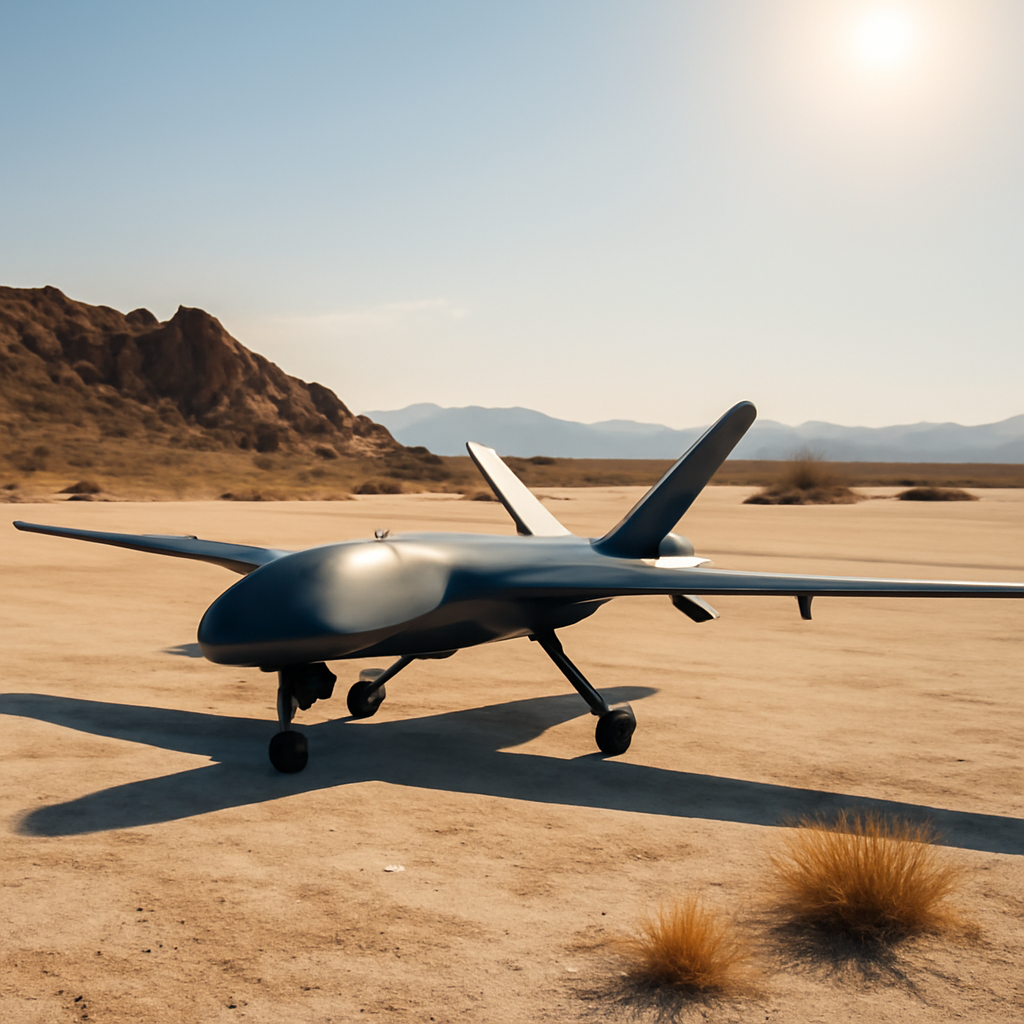
Last month, then‑Ukrainian Minister of Defense Mykhailo Fedorov announced that the Netherlands was paying for approximately 700 cruise missiles for Ukraine — a figure almost certainly referring to the Ruta Block 1 and a revealing data point for a weapon now showing the first public signs of combat use.
Imagery and footage circulating on Russian Telegram
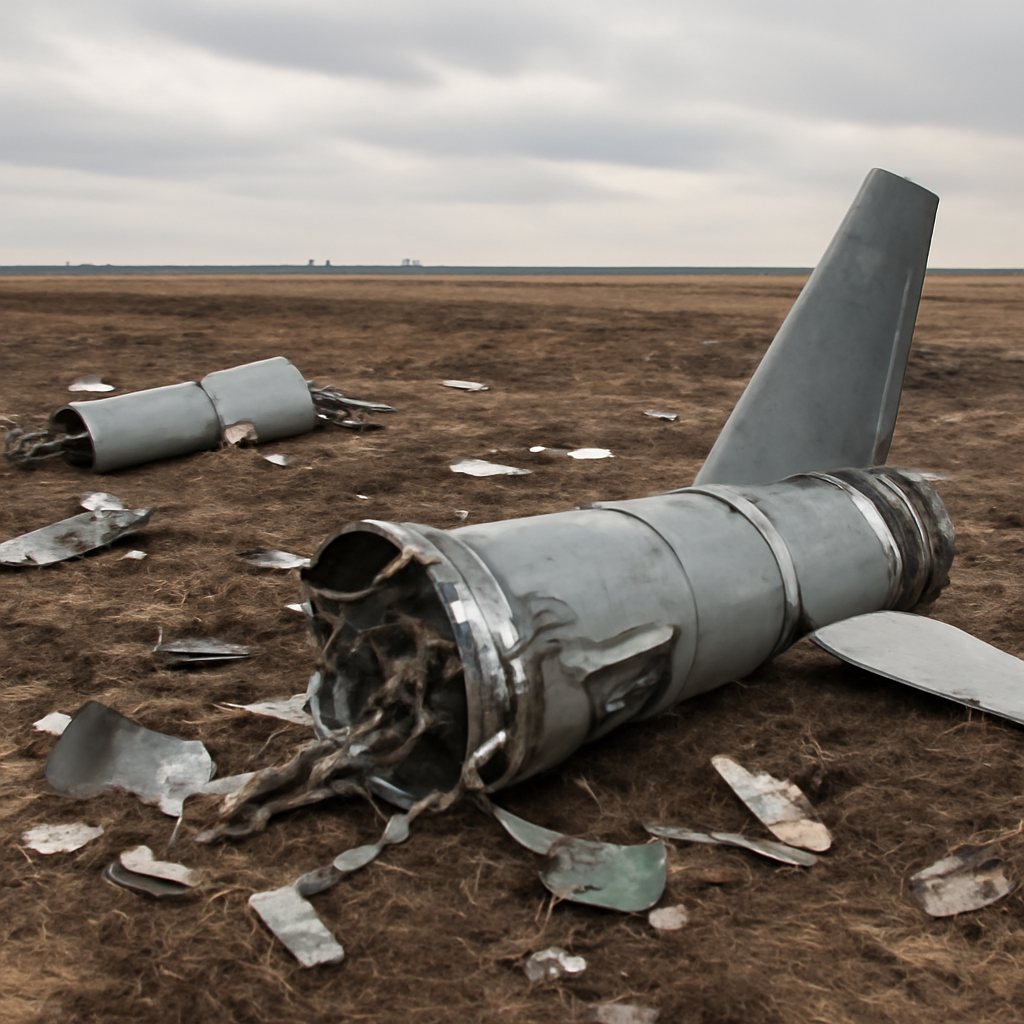
Photos and short video clips posted to Russian Telegram channels and X show wreckage identified by those posters as a Ruta Block 1. The recovered debris, as presented in those posts, includes fuselage sections, internal components, and part of the missile’s tailfin assembly. One post declared the footage “a flight of Ruta Block 1 drone missile. 150 kg warhead and 300 km range,” a claim shared via the MAKS 26 (@Maks_NAFO_FELLA) account.
Those same Russian military bloggers also asserted that air defenses intercepted the missile. The imagery and footage have not been independently verified, and the published pieces concede the possibility that the wreckage could represent a previously undisclosed Ukrainian cruise missile with broadly similar characteristics.
Ruta Block 1: design, navigation, and mission profile
The Ruta Block 1 is ground‑launched via a booster and then sustains flight on a turbojet engine produced by the manufacturer, Destinus. The system is described as flying at low altitude to its target and using a combination of inertial, satellite, and visual navigation systems, a mix that the manufacturer says provides resilience in GPS‑contested environments. It carries a 150‑kilogram warhead and a range of more than 300 kilometers.
Destinus positions the Block 1 as a lower‑cost, mass‑producible cruise missile optimized to strike high‑value fixed targets with pre‑programmed terminal guidance. The weapon is intended to enable sustained long‑range precision attacks while reducing reliance on scarcer, more expensive Western‑supplied weapons.

The cyber insurance questionnaire just landed. Now what?
SOC 2, HIPAA, insurance renewals - someone has to own security strategy. Nubivance provides fractional CISO leadership without the full-time salary.
Get a security leadProduction, deliveries, and the Ruta family
Destinus, the Netherlands‑based company founded by Mikhail Kokorich, has been reported to manufacture the Block 1 in the Netherlands and to have delivered the weapon to Ukraine since at least 2024. Public comments and industry posts suggest deliveries increased through 2025.
According to the manufacturer and reporting, the Ruta series is designed around affordability and scale; the Block 1’s turbojet is also made by Destinus, meaning the company does not depend on U.S. engine supply. Destinus is developing larger variants: the Block 2, with range in excess of 800 kilometers and a 250‑kilogram payload; and the Block 3, projected to reach about 2,000 kilometers with a 550‑kilogram payload, suitable for air launch and expected to enter flight testing in 2027.
Destinus is also pursuing production expansion, including a joint venture with Rheinmetall intended to make use of Rheinmetall’s manufacturing facilities in Germany. The company and observers have cited Block 3 as relevant to European efforts to build long‑range conventional strike capabilities under initiatives such as the European Long‑Range Strike Approach (ELSA), which includes France, Germany, Italy, Poland, Sweden, and the United Kingdom.
Operational implications for Ukraine’s long‑range campaign
The emergence of apparent Ruta Block 1 wreckage, if confirmed, would mark a further step in Ukraine’s diversification of deep‑strike capabilities. The Block 1 joins an expanding ensemble of long‑range drones, indigenous cruise missiles, and missile‑drone hybrids that, according to reporting, are increasingly used in attacks against Russian energy infrastructure, command centers, logistics hubs, airbases, ammunition depots, and defense‑industrial facilities far behind the front lines.
Ukraine has generally remained quiet about the operational use of many newer strike systems until after they enter service, and past confirmations often followed Russian photographs of intercepted missiles or strike aftermaths before official Kyiv announcements. Whether the missile depicted in the recent imagery reached its intended target or was intercepted remains unknown; what the published evidence does show is the strongest public indication to date that the Ruta Block 1 has moved from declared development into operational employment.
What this means for Ukraine, Russia, and European defense
- For Ukraine’s military and procurement planners: the Block 1, described as mass‑producible and affordable, offers another tool for sustained long‑range precision effects that can complement other strike systems.
- For Russian air‑defense operators and planners: the addition of a new, low‑altitude cruise missile with visual and satellite navigation presents another class of targets to detect and engage; claims of interception have appeared in Russian sources but are not independently verified.
- For European defense policymakers and industrial planners: Destinus’ roadmap — Block 2 and Block 3, an intended Rheinmetall joint venture, and the Block 3’s long range and air‑launch suitability — feeds directly into discussions about the European Long‑Range Strike Approach and broader needs for conventional deep‑strike capabilities.
The images circulating now do not close the story so much as move it from promise to a new phase of operational reality. Whether the Ruta Block 1 will become a persistent factor in long‑range campaigns depends on production scale, delivery timelines, and the still‑open question of how reliably the missiles perform in contested airspace; the public record so far supplies the clearest indication yet that those pieces are beginning to come together.