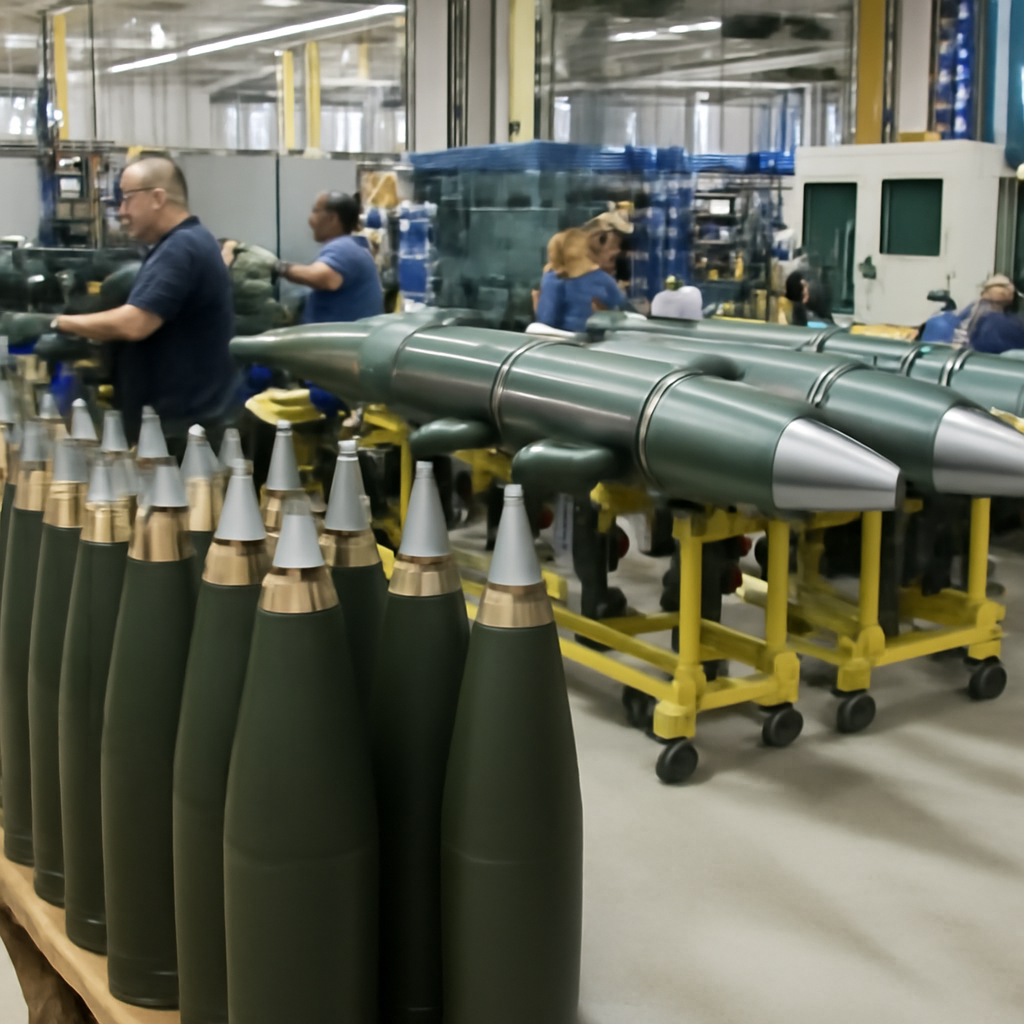
Many of the US military’s critical munitions cost more than one million dollars each.
Pentagon’s fiscal 2027 boosts and “Unleashing the Arsenal of Freedom”
The Pentagon’s fiscal 2027 budget, as presented in the source analysis, includes increased funding for critical munitions and for an initiative framed as “Unleashing the Arsenal of Freedom.” Those allocations respond to extraordinary consumption of American weapons in ongoing wars in Ukraine and the Middle East, and they are intended to expand procurement and accelerate new munitions programs.
CL-20 and novel energetics in Russian, Chinese, and Ukrainian use
Energetics—the explosives and propellants that give missiles, rockets, drones and bombs their punch—have long promised performance gains. The source cites CL-20 as a compound that offers increased performance over older energetics and notes it is being employed in Chinese and Russian weapons. The Ukrainian military has also successfully employed weapons containing CL-20, offering a proof of concept and data the United States can draw from. The fiscal 2024 defense bill mandated pilot programs to incorporate CL-20 into three American weapons.

Audit-ready is a season. It shouldn't be.
Evidence in spreadsheets, controls drifting between audits, frameworks multiplying on flat headcount. Nubivance runs continuous compliance on Rapid7 Cyber GRC - SOC 2, HIPAA, ISO 27001, PCI, CMMC.
End the scrambleCSBA’s force-package framework for valuing new energetics
The Center for Strategic and Budgetary Assessments (CSBA) argues that weapons should be evaluated not in isolation but within “force packages” that reflect how the military actually fights. That framework shifts the accounting from the per-munition price tag to the role each weapon plays in kill chains and campaign-level outcomes. From that perspective, the near-term premium of novel energetics is only one input; the analysis must include how more powerful or longer-range munitions change platform exposure, logistics, and cumulative munition expenditures.
Operational effects: fewer munitions, greater range, preserved platforms
The source sets out several cascading effects that improved energetics could produce. More powerful warheads could reduce the number of munitions expended to achieve objectives by increasing destructive effect and turning some targets from “mission-kill” to catastrophic defeat, thereby reducing follow-on strikes. More energetic propellants could extend range or reduce munition size and weight, letting aircraft, ships and missile batteries launch from farther away or carry more weapons per sortie. Those changes could lower the number of platforms exposed to enemy defenses and reduce attrition—preserving both servicemembers’ lives and a limited pool of advanced platforms the United States would rely on in a conflict with China or Russia.
Pilot programs, hypersonics, and reduced-size munitions
The source recommends expanding the pilot programs already mandated in the fiscal 2024 defense bill as the military rebuilds and grows stockpiles. It advises prioritizing munitions where additional range or explosive power are most consequential and where the added costs or risks are minimized. Concrete candidates include reduced-size munitions and warheads for small unmanned systems, submunitions, and special-purpose weapons designed for hardened or buried targets. The analysis also suggests the added expense of novel energetics may be more acceptable in hypersonic weapons, where maximizing range or power matters for an already expensive missile.
What this means for the Pentagon, Congress, and the defense industrial base
- Pentagon program offices and planners: Consider energetics as an enabler within force packages rather than a discrete line-item cost; expand pilot programs into the munitions where range and power yield outsized operational returns.
- Congress and appropriators: Build on the fiscal 2024 mandate for three CL-20 pilot programs and weigh the long-term fiscal tradeoffs between higher per-munition costs and avoided expenditures to buy, stockpile, or replace additional weapons and platforms.
- The defense industrial base and manufacturers: Prepare for potential scale-up challenges; the source notes higher testing, certification and production costs while novel energetics remain limited in production, implying an industry role in reducing unit costs through volume and process improvements.
The central choice laid out in the source is practical rather than philosophical: pay more today for novel energetics, or accept the hidden long-term bill in added munitions purchases, greater platform exposure, and potential campaign shortfalls. The fiscal 2027 budget increases create the near-term budget room to test that tradeoff; the fiscal 2024 CL-20 pilot mandates create a policy opening to demonstrate it. Expanded, carefully targeted pilots—focused on hardened-target warheads, reduced-size munitions for small unmanned systems, and select hypersonic applications—would produce the empirical basis needed to decide whether the extra cost per warhead buys campaign-level savings and survivability.