"We have forces up there deterring and preventing them from continuing to [lay mines], and will continue to do so pursuant to the orders of the Secretary and the President," Chairman of the Joint Chiefs of Staff Air Force Gen. Dan Caine told reporters on April 24, describing U.S. efforts aimed at stopping Iranian mine-laying in the Strait of Hormuz.
Gen. Dan Caine: operations underway but details withheld
Caine said U.S. forces were already "deterring and preventing" the Islamic Revolutionary Guard Corp (IRGC) from laying mines, but he did not provide specifics on which assets were involved, when they arrived, or what actions they have taken. The Pentagon and U.S. Central Command (CENTCOM) declined to comment further. A U.S. official, speaking anonymously, added that "Iran likely placed some mines in or near the Strait at some point during the conflict," but that it was not a high volume and that "more than 95% of Iran’s naval mines were destroyed during Operation Epic Fury."
Recent interdictions: Touska, Tifani, and Majestic X
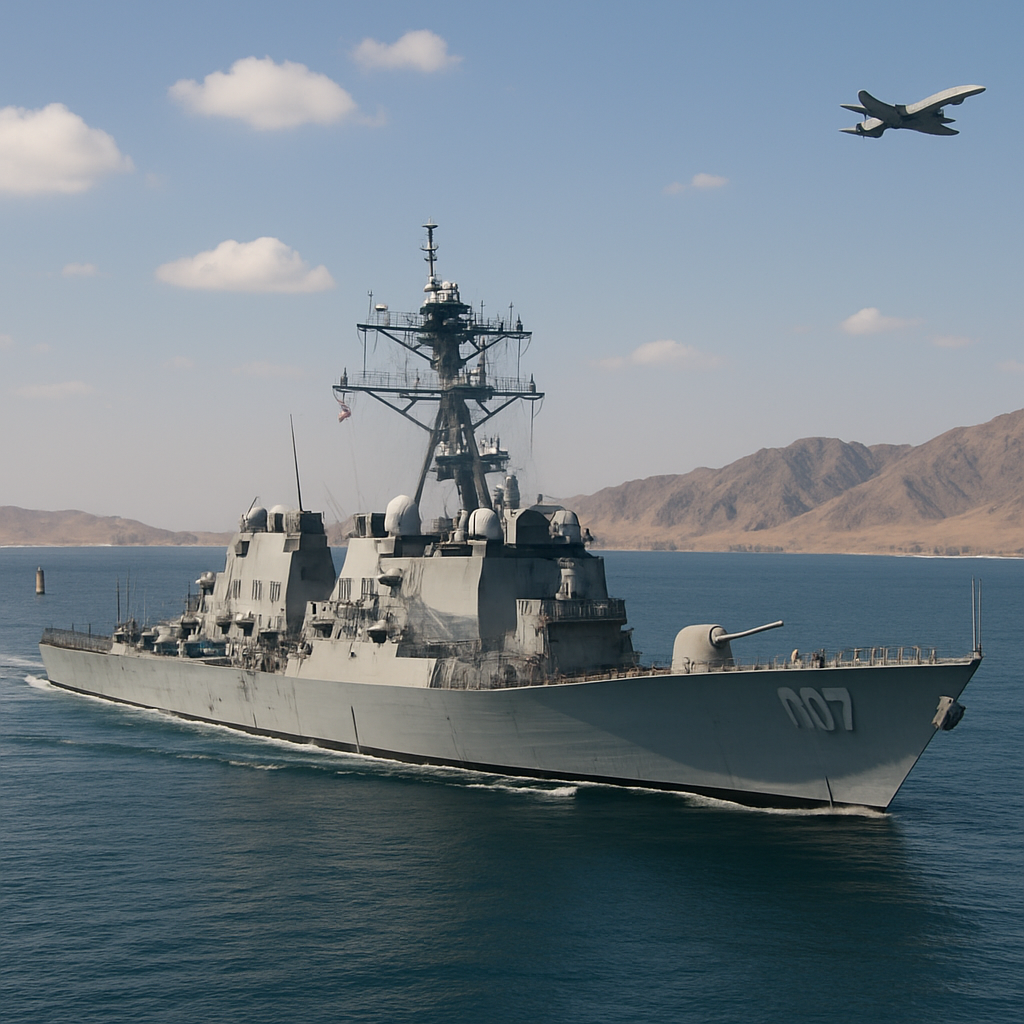
Caine described a series of maritime interdictions that began Sunday with the Iranian-flagged cargo ship Touska. He said the Arleigh Burke–class destroyer USS Spruance disabled the Touska’s engine by firing nine inert rounds from its Mk-45 5-inch gun "precisely into the engine room and engine space on board the Touska." Seven hours later, CENTCOM ordered Marines to fast-rope in from helicopters and "seize the shot," Caine said. Two other Iranian-linked vessels, the Tifani and the Majestic X, were stopped in the Indian Ocean and "remain in U.S. custody," he added.
U.S. Attorney Jeanine Pirro said the Tifani and Majestic X each contained 1.9 million barrels of oil. The president had earlier suggested the Touska might have carried a "gift from China perhaps," a characterization China explicitly rejected. China’s Foreign Ministry said it "rejects any assertion and speculation that lack factual evidence" and warned that "normal trade between countries should not be disrupted." Al Jazeera, citing the Iranian Red Crescent Society, reported the Touska was carrying "vital dialysis supplies and medical equipment"; The War Zone noted it could not independently verify that claim.

Audit-ready is a season. It shouldn't be.
Evidence in spreadsheets, controls drifting between audits, frameworks multiplying on flat headcount. Nubivance runs continuous compliance on Rapid7 Cyber GRC - SOC 2, HIPAA, ISO 27001, PCI, CMMC.
End the scrambleMine-countermeasure inventory and the timeline question
Publicly visible mine-countermeasure presence in CENTCOM is limited. The Independence-class littoral combat ship USS Canberra (LCS 30) is the only confirmed mine sweeper currently in CENTCOM, shown in a Pentagon image sharing post patrolling the Arabian Sea during a maritime blockade. War Secretary Pete Hegseth called "reckless mining" a violation of the ceasefire but declined to give a timeline for clearing the Strait. Asked about a Washington Post report that Congress was told mine clearance could take up to six months, Hegseth said, "We would not speculate on a timeline" while expressing confidence U.S. forces could clear any identified mines "in the correct period of time" and encouraging other countries to join such efforts.
Maritime traffic and regional oil flows
Independent monitoring shows commercial traffic through the Strait has dropped sharply. Kpler’s Risk & Compliance tracker reported traffic remained low at 17 crossings of commercial and non-commercial vessels between April 22 and 23—well below pre-crisis levels. Bloomberg, citing Goldman Sachs, reported that oil output from Persian Gulf nations has been running 14.5 million barrels a day below pre-war levels this month, a region‑wide total the note said is 57% lower than before the outbreak of the Iran war; Goldman Sachs estimated a return to earlier output would likely take "a few months" under a scenario of a full-and-safe reopening of the Strait with no renewed strikes.
Saudi adjustments to alternative routes have helped offset some disruption. Bloomberg reported Yanbu shipments averaged about 4 million barrels a day in the first three weeks of April—roughly five times the route’s pre-conflict rate—but still only about 80% of Riyadh’s target for that route.
What this means for Hapag‑Lloyd, CENTCOM, and seafarers
- Hapag‑Lloyd: The German shipping giant confirmed one of its ships recently transited the Strait but refused to disclose timing or identify vessels for security reasons. The company said of six original ships, four remain in the Persian Gulf with "approximately 100 seafarers" and that it is in close contact with vessels, local authorities and naval forces.
- CENTCOM: The arrival of the USS George H.W. Bush alongside USS Abraham Lincoln and USS Gerald R. Ford marks three carrier strike groups in the region—together described as over 200 aircraft, nine Arleigh Burke destroyers, and 15,000 sailors and Marines—signaling an expanded U.S. force posture to protect sea lines of communication.
- Seafarers and crews: Commercial operators and crews face elevated risk and operational uncertainty. Hapag‑Lloyd emphasized crew safety as its highest priority and said it remains in close contact with naval forces and local authorities while monitoring the situation.
Diplomacy is moving in parallel: the White House confirmed a U.S. negotiating team will travel to Pakistan for talks with Iranian representatives, and Iran’s foreign minister announced a regional tour including Islamabad, Muscat and Moscow. For now, the record is clear on two points: U.S. forces report active efforts to prevent further mine‑laying, and commercial traffic through the Strait of Hormuz remains suppressed as military, legal and diplomatic measures unfold.