“There’s no question that right now it’s a crisis for a lot of companies that are trying to get licenses approved by China and just not getting the licenses,” said Kit Conklin, chief strategy and global affairs officer at Exiger.
Scope: tens of thousands of parts, thousands of systems
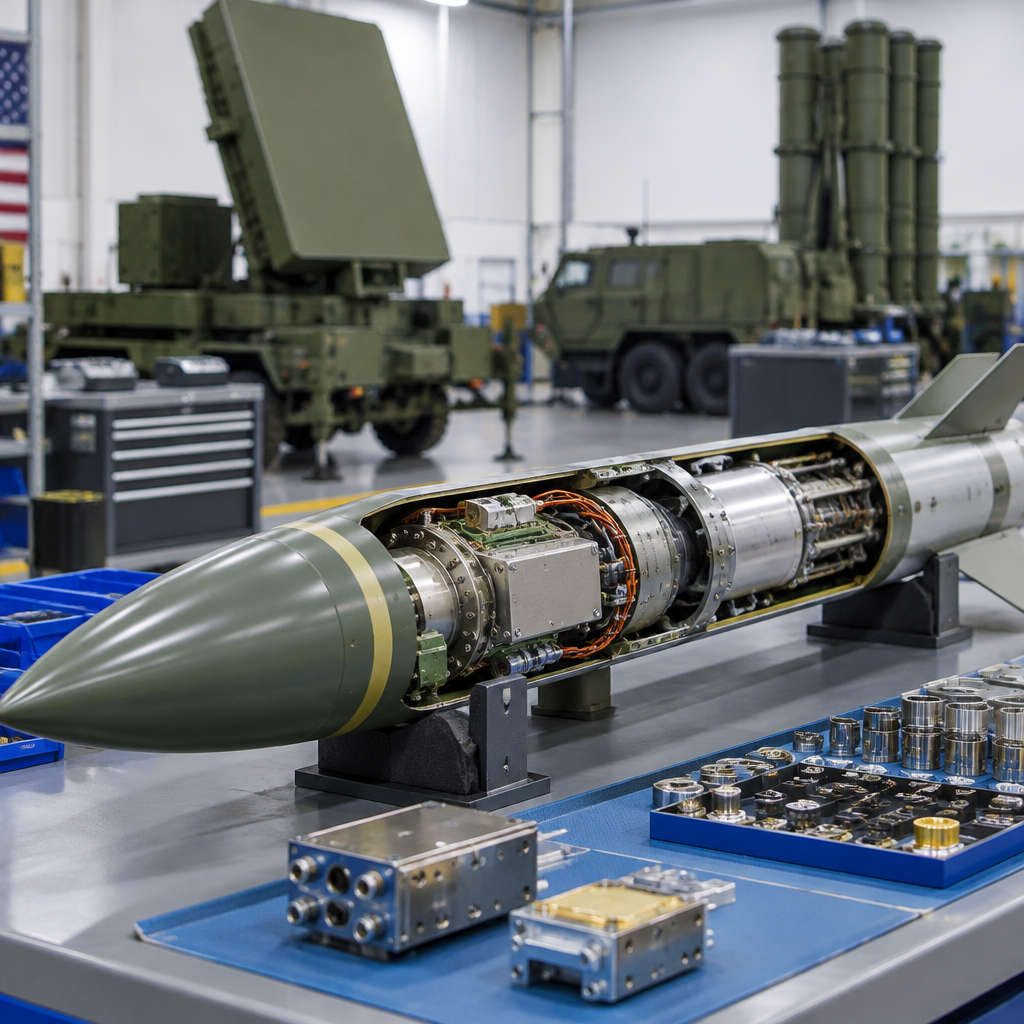
The white paper obtained from the Special Competitive Studies Project and analyzed with AI intelligence from Exiger examined almost nine million parts across 3,000 U.S. military weapon systems. It identified more than 28,000 unique components — spread across roughly 1,400 weapons systems — that contain four critical elements singled out in the report: antimony, gallium, germanium and tungsten. The paper flags immediate urgency because a suspension on Chinese export controls is set to expire in November, a change that could disrupt already fragile supply chains.
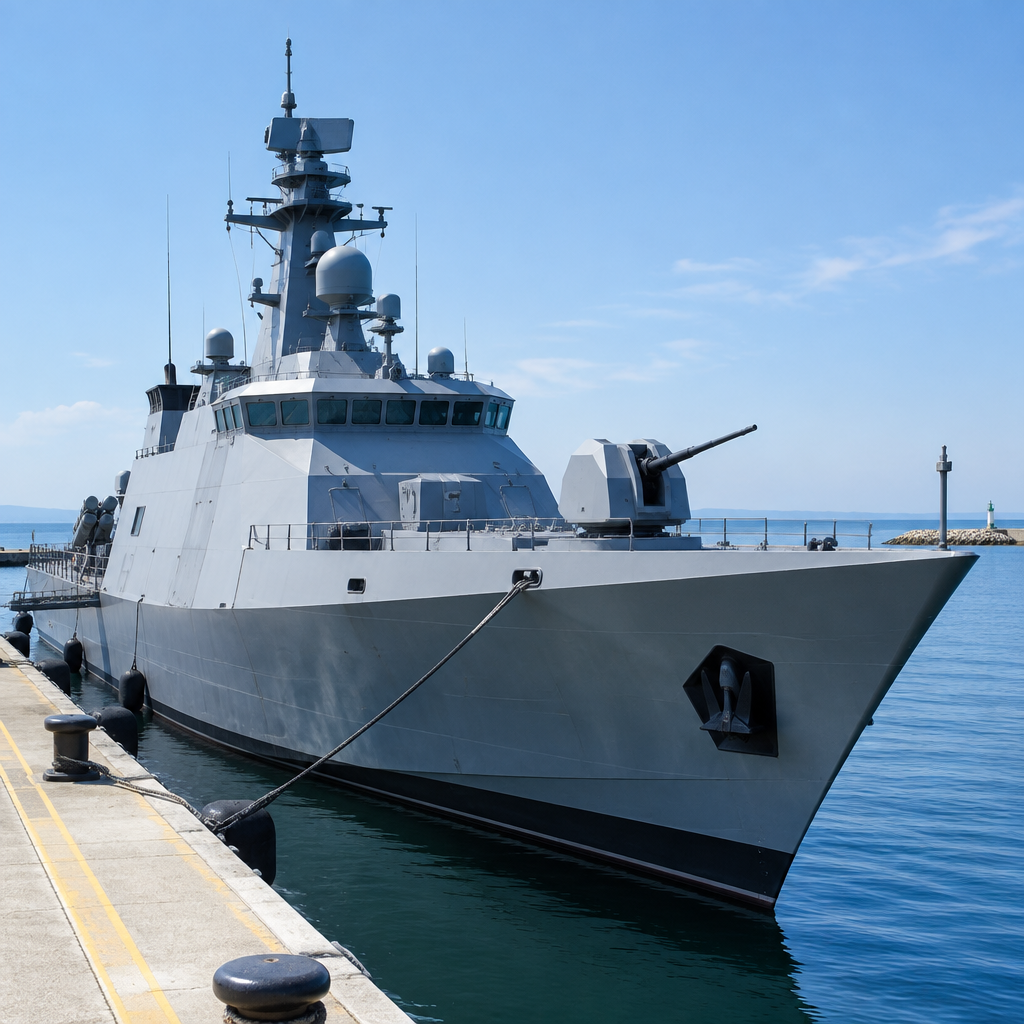
Why the Virginia-class submarine is especially exposed
The report highlights the Virginia-class fast-attack submarine as among the most at-risk platforms. Each boat requires more than 300 critical National Item Identification Numbers (NIINs) that contain the four elements, including 190 parts requiring germanium and 50 unique parts containing gallium. By mass, each Virginia-class sub needs about 9,200 pounds of these elements; by comparison an F-35 Joint Strike Fighter requires about 900 pounds, the paper states.
Germanium — used in optics, night-vision and EO/IR equipment — is produced mostly as a byproduct of zinc ore refining. The Pentagon announced an $18 million investment in the country’s only germanium production facility in St. George, Utah, to expand refining capacity “sevenfold” to more than 20 metric tons annually. China controls about 68% of refined germanium and as much as 99% of gallium production, the report notes, amplifying vulnerability for platforms that need advanced radars and semiconductors.

The cyber insurance questionnaire just landed. Now what?
SOC 2, HIPAA, insurance renewals - someone has to own security strategy. Nubivance provides fractional CISO leadership without the full-time salary.
Get a security leadCastings, forgings and aircraft vulnerabilities
Beyond minerals, the analysis documents how limited capacity for large metal castings, forgings and extrusions creates parallel chokepoints. China produces about half the world’s casting output and is “often the sole option for large castings,” the authors write. More than half — nearly 8,000 — unique supply items containing steel castings carry delivery lead times exceeding 36 weeks; more than 9,400 items containing extruded aluminum (about 47% of such parts) face lead times that long.
Aircraft are especially dependent on these processes. The F/A-18 Hornet family tops the list for dependency on steel castings (3,800 individual parts), followed by the KC-135 Stratotanker (2,570). All ten systems requiring the most metal castings are aircraft. Cadmium plating shortages are concentrated in aircraft as well: the KC-135 leads with 2,780 cadmium-plated unique components, while the C-130, B-52 and C-5 Galaxy each have more than 2,000 such parts.
The report links production bottlenecks to program delays: Virginia-class construction schedules are “three years behind schedule” in some cases, and an earlier Navy timeline analysis found 10 of 12 Virginia subs under construction face 36–44 month delays. A war game simulation cited in the paper found the U.S. could not replace ships, planes and missiles lost to combat specifically because of casting and forging shortfalls.
Single-source failures and shrinking supplier base
Workforce shortages and the decline of small suppliers deepen risk. The number of small suppliers in defense has declined by 43% over the last decade, the paper says. As a case study, it cites the February 2025 fire that closed SPS Technologies in Jenkintown, Pennsylvania — a fastener maker that produced components for more than 1,000 weapons systems and was deemed critical for 90, including the Nimitz-class carrier, the F/A-18 and the M1 Abrams. For the Tomahawk Land Attack Missile and the MH-60 Black Hawk helicopter the facility was a single-source supplier; operations are expected to remain offline until at least 2028, and the paper calls the outage an “active disruption.”
What this means for policymakers, defense procurement leaders, and the Navy
- Policymakers: The paper points to recent moves — a July executive order collecting data on element requirements and Project Vault, a $12 billion White House initiative to build a strategic rare-earth stockpile — as leverage points where legislation (for example in the next National Defense Authorization Act) could create coordinated policy and funding. Exiger’s Conklin suggested an executive-branch coordinating agency or “critical minerals czar” to align production needs and resourcing.
- Defense procurement leaders: Long lead times, single-source suppliers and the loss of casting capacity mean sustainment planning must account for extended delays and replacement sourcing. The Army’s effort to extend long-term leases on military land to firms building processing facilities is one operational step noted in the report.
- The Navy and warfighters: Submarine construction and readiness could be directly affected by shortages of germanium, gallium and large castings. The Virginia-class example illustrates how a single platform can be exposed across dozens or hundreds of NIINs and long supplier lead times.
The white paper acknowledges progress — a domestic germanium expansion, the Mountain Pass facility producing more than 50,000 tons of rare-earth oxides annually, and a new Wyoming mine planning to produce ores including gallium and germanium by 2029 (projected 456 tons per year). But the authors warn that domestic scaling is slow — the paper notes the U.S. averages 29 years to open a new mine — and that reductions in Chinese exports could produce immediate, operational effects. With export controls set to change in November and new policies pending, the defense industrial base faces a narrow window to translate investment and executive actions into resilient supply.