"So, we’re just cleaning it, man," NASA Administrator Jared Isaacman said with a smile when asked on NASASpaceflight’s The Flame Trench podcast about the status of the SR‑71 Blackbird once on public display at Armstrong Flight Research Center.
Isaacman's Max Power promise: a new X‑plane, not 844
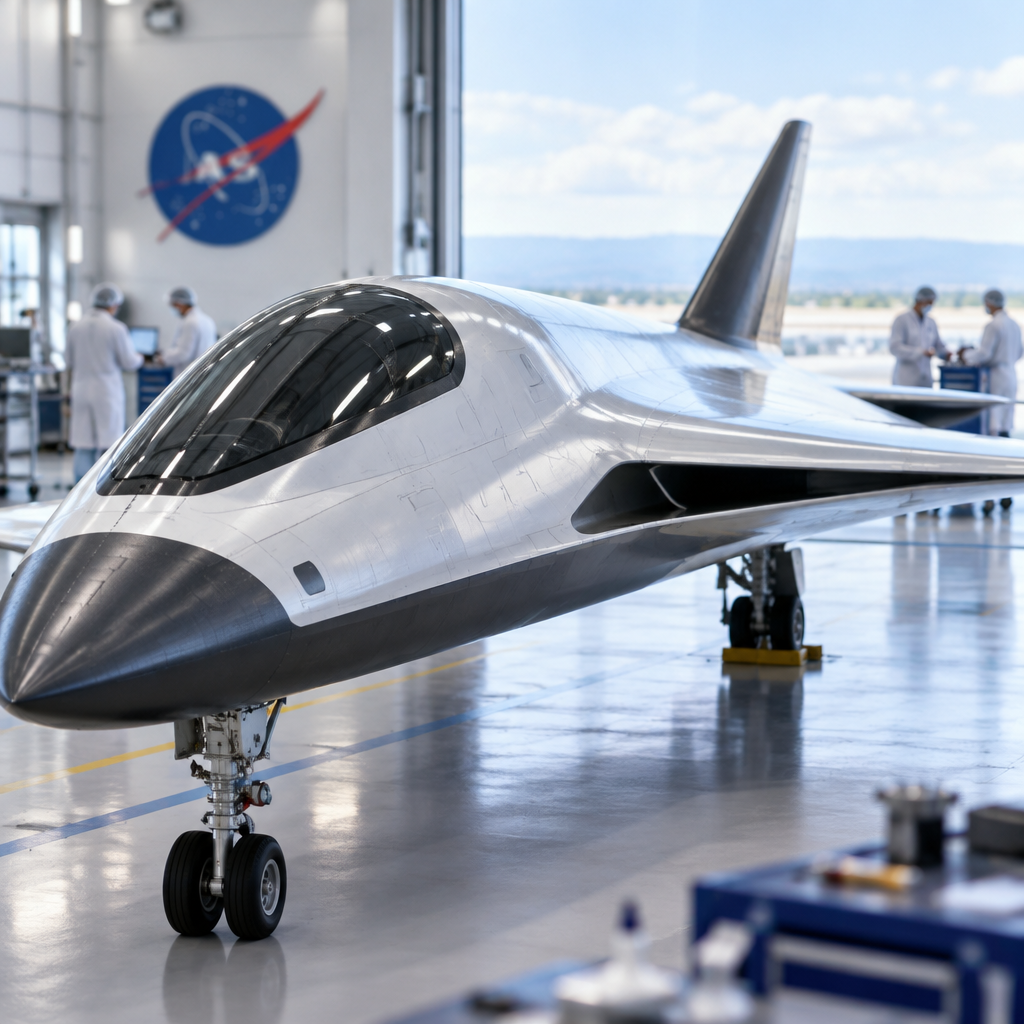
On the podcast, which was posted online last Friday, Isaacman said NASA will announce a new X‑plane at the Max Power exhibition at Kennedy Space Center this coming weekend. He framed the reveal as part of a broader push to "deliver on the promise there will be more X‑planes," a pledge he has reiterated since his second day on the job at a December 2025 town hall. Isaacman explicitly told listeners the upcoming reveal is “not the one you’re thinking about,” distancing the new X‑plane announcement from public speculation about the SR‑71 Blackbird with tail number 844.
The status and history of SR‑71 tail number 844
Tail number 844—the last flying SR‑71—had been on display outside NASA’s Armstrong Flight Research Center, co‑located at Edwards Air Force Base, after its retirement in 1999. Its disappearance from public display earlier this year prompted reporting and public speculation. Isaacman deflected direct questions about whether 844 has been powered on, offering the “we’re just cleaning it, man” quip; he also previously showed a silhouette at a September conference that attendees read as Blackbird‑like, which sparked further discussion about whether NASA had explored returning an SR‑71 to flight.

The cyber insurance questionnaire just landed. Now what?
SOC 2, HIPAA, insurance renewals - someone has to own security strategy. Nubivance provides fractional CISO leadership without the full-time salary.
Get a security leadCurrent X‑plane inventory and recent flight testing
NASA’s most visible current X‑plane effort is the X‑59 Quiet SuperSonic Technology (QueSST) jet. According to the record, the X‑59 has flown 41 test flights since its first flight on October 28, 2025, has reached a top speed of Mach 1.53, and climbed to altitudes around 56,000 feet during testing. The X‑59 is slated to be present at Max Power, where Isaacman said the exhibition will include displays from space systems to VTOLs and drones and an air show component.
Other experimental jets connected to the Armstrong/Edwards complex were also referenced. The F‑16 VISTA—the Variable Stability In‑flight Simulator Test Aircraft—is now designated the X‑62A and remains an active U.S. Air Force testbed based at Edwards. Armstrong’s outdoor museum has additional retired jet‑powered X‑planes on display, including an F‑16XL and an X‑29.
Technical and program considerations about returning 844 to flight
TWZ’s reporting and quoted experts highlight both enthusiasm and practical questions around restoring an SR‑71 to flight. Tim Conners, an engineer who worked on the SR‑71 program at NASA and is now technical director for advanced weapons systems at Tiberius Aerospace, told TWZ that renewed interest in the Mach 2–4 speed regime reflects tactical and material tradeoffs compared with hypersonics. Conners noted that staying in the "titanium regime" allows operation up to about Mach 3.5, with brief excursions toward Mach 4, and that a restored SR‑71 could serve as a high‑speed engine test bed capable of carrying engines in the J58 size class.
At the same time, TWZ has documented significant questions about the viability and practicality of making an SR‑71 flyable again. The outlet has explored how a restored Blackbird might be repurposed, including the possibility of a substantially reworked airframe or conversion to pilot‑optional or fully uncrewed operation—each described as a major undertaking with different technical and programmatic implications.
What this means for technologists, policymakers, and airshow audiences
- Technologists and aerospace engineers: Expect renewed attention on high‑speed propulsion integration and long‑duration engine testing—areas experts in the story identify as difficult to validate with computational tools alone and where a flying testbed could add value.
- Policymakers and NASA leadership: Isaacman’s announcement and prior budgetary moves such as the Aeronautics Flight Accelerator (AFA) initiative signal an agency priority to expand experimental aviation; decision makers will be watching program costs and technical risk if older platforms like 844 become test articles or stepping stones to new X‑planes.
- Airshow attendees and the public at Max Power: The coming weekend will provide the first official indication of what Isaacman framed as a revived X‑plane portfolio, with the X‑59 already scheduled to attend and the promised new X‑plane set to be revealed at the event.
NASA has reiterated publicly that it has a long history of experimental aviation and that it wants "to see more X‑planes flying in the years ahead," and a NASA spokesperson told TWZ the agency looks forward to sharing more as efforts progress. For now, the immediate fact is simple: Max Power will host an X‑plane announcement, Isaacman has downplayed linking that reveal to SR‑71 tail number 844, and the agency's public statements suggest the coming weekend may provide clearer signals about both the new X‑plane and the fate of 844.
Source: TWZ — New X‑Plane To Be Announced At Max Power Airshow: NASA Administrator Isaacman